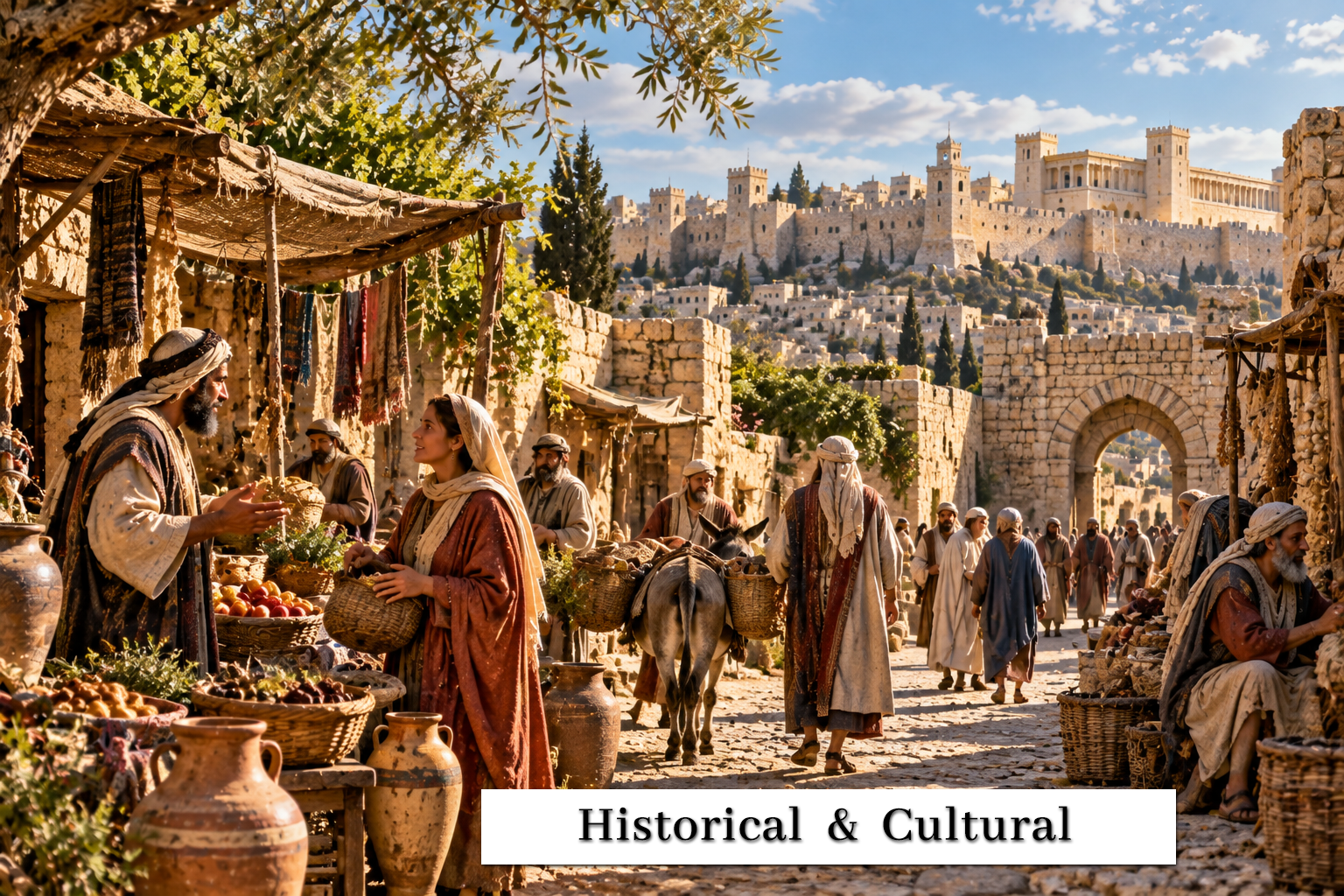
Vineyard Day Laborers and Wages
Commerce and Money
The laborers in the vineyard belong to a precarious day-labor economy in which workers waited to be hired and depended upon a day's wage for ordinary subsistence.

Vineyard Day Laborers and Wages
Commerce and Money
The laborers in the vineyard belong to a precarious day-labor economy in which workers waited to be hired and depended upon a day's wage for ordinary subsistence.
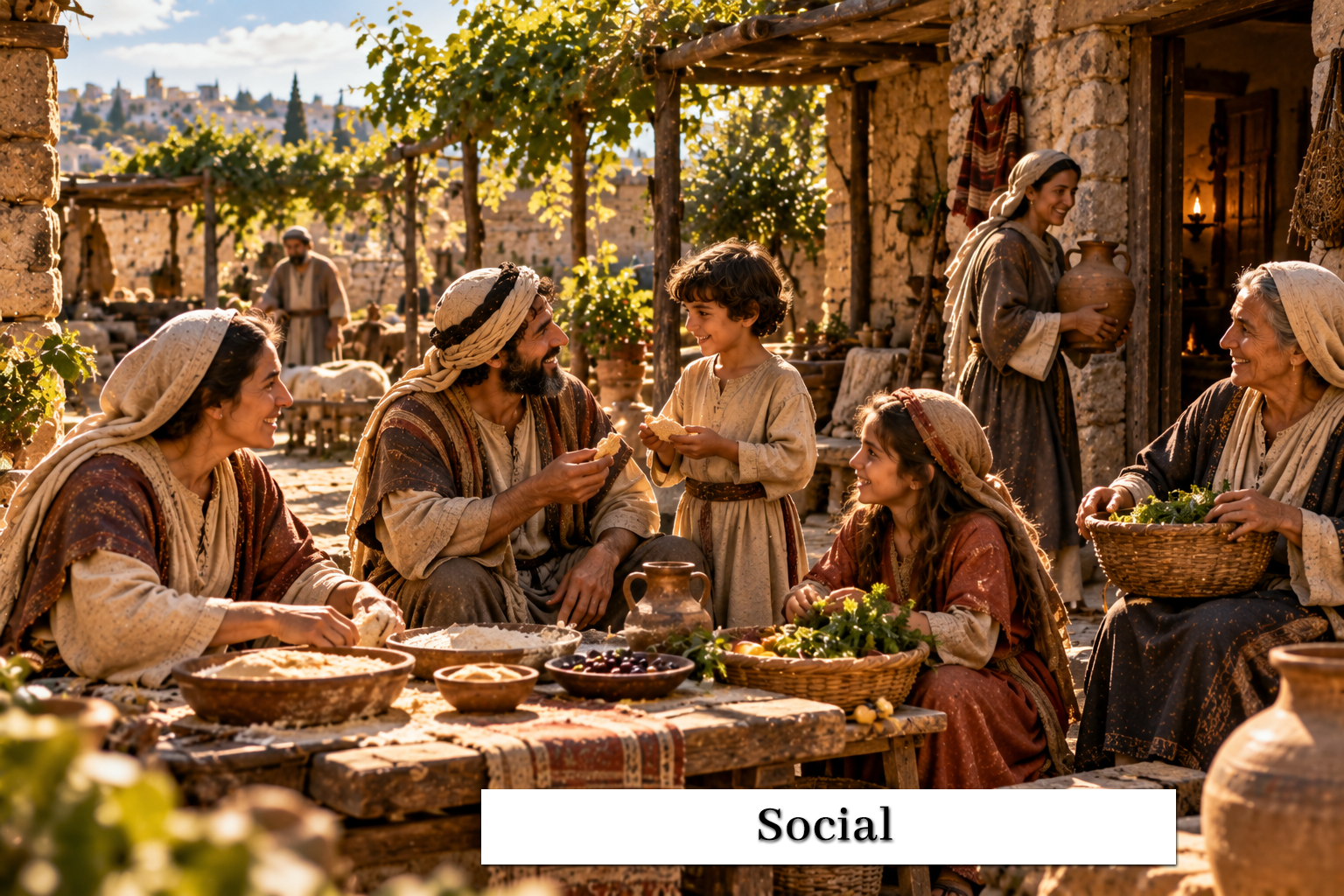
Places of Honor at a Banquet
Social Context
Seating and reclining positions at ancient meals could advertise rank, making Jesus' teaching about choosing the lower place a direct challenge to status competition.
Palm Branches, Hosanna, and the King's Arrival
Historical/Cultural Context
The crowd's acclamations at Jesus' entry into Jerusalem draw on royal and scriptural language: 'Hosanna' is a plea for salvation that became an acclamation of praise.
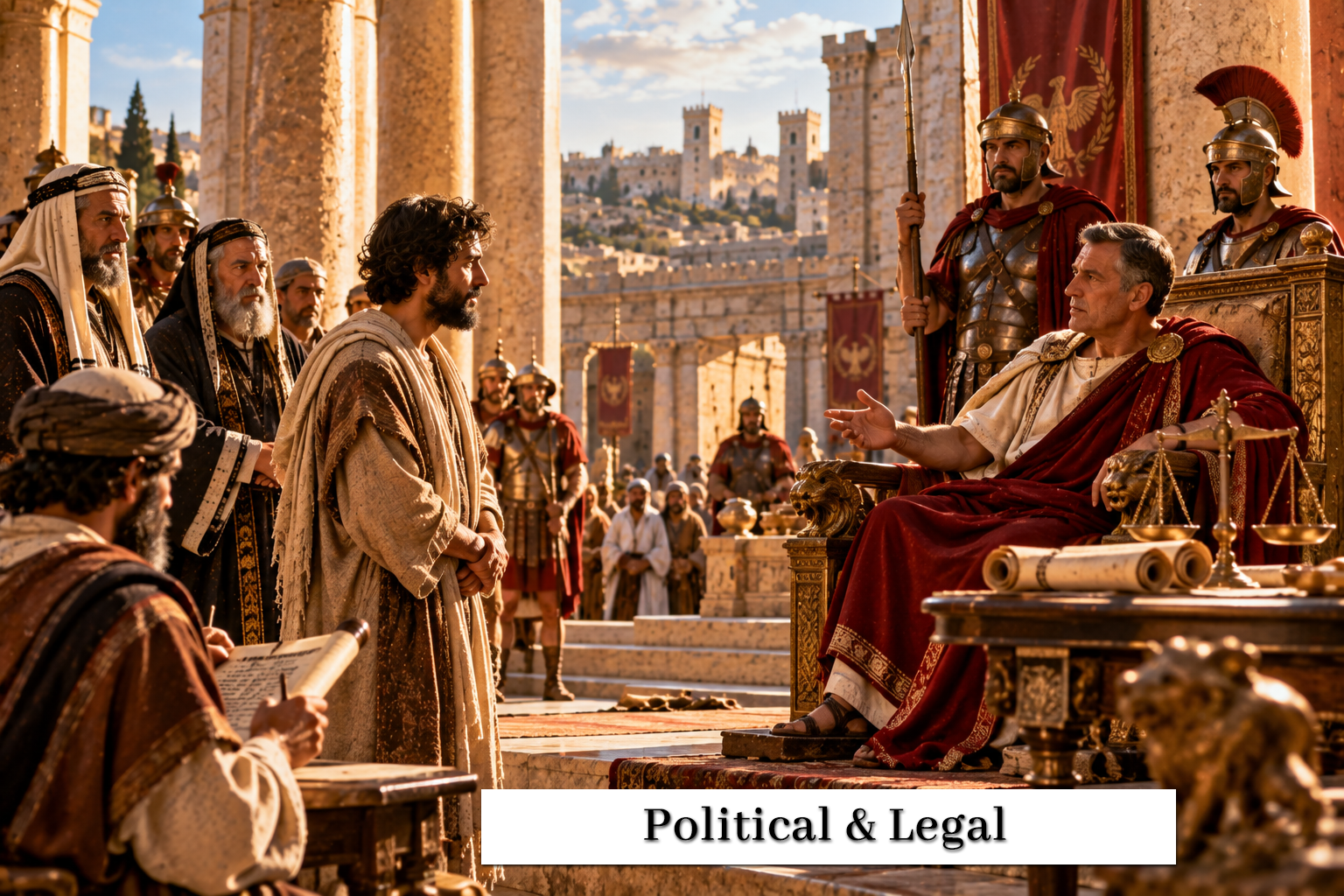
Render to Caesar: The Tribute Coin
Political/Legal Context
The question about tribute to Caesar was politically dangerous because the tax represented Roman rule; Jesus' request for the coin exposes the imperial image and inscription at the heart of the trap.
Levirate Marriage
Marriage and Family
The Sadducees' question about seven brothers relies on the Torah's levirate-marriage provision, under which a brother could marry a childless widow to preserve the deceased brother's family line.
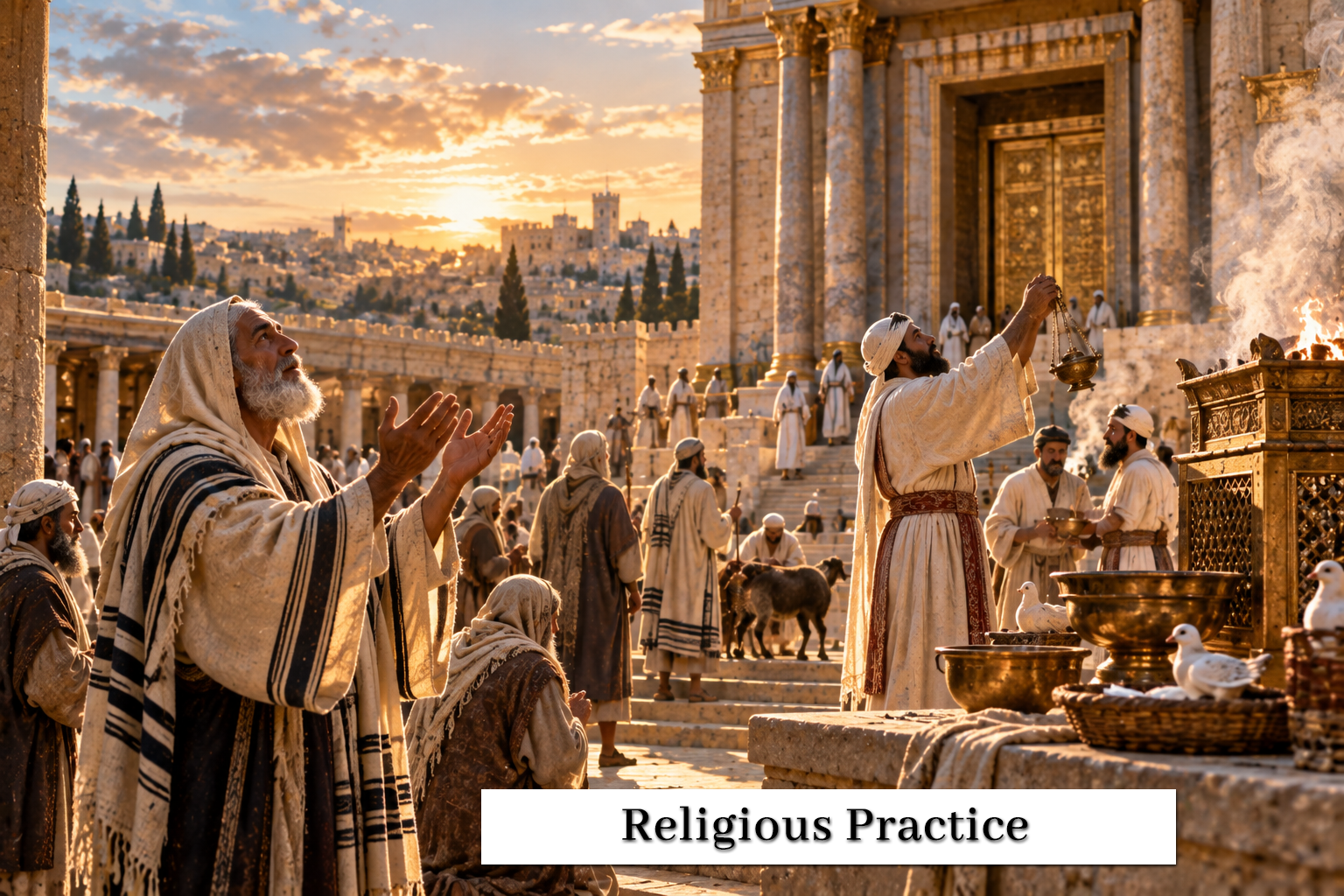
Moses' Seat
Religious Practice
Moses' seat was a recognized image of teaching authority connected with the interpretation of the Torah, which helps explain Jesus' distinction between the scribes' position and their conduct.
Phylacteries and Visible Piety
Religious Practice
Phylacteries were small containers bearing scriptural passages, worn in connection with Torah commands to bind God's words on the hand and between the eyes.
Rabbi, Marketplace Greetings, and Public Honor
Social Context
Public greetings and the title Rabbi could communicate recognized status, making Jesus' criticism a challenge to religious prestige rather than ordinary courtesy.
Proselytes and Conversion to Judaism
Historical/Cultural Context
Jesus' reference to traveling sea and land to make a proselyte reflects the reality that Gentiles could attach themselves to Israel's God and, in some cases, formally enter the Jewish community.
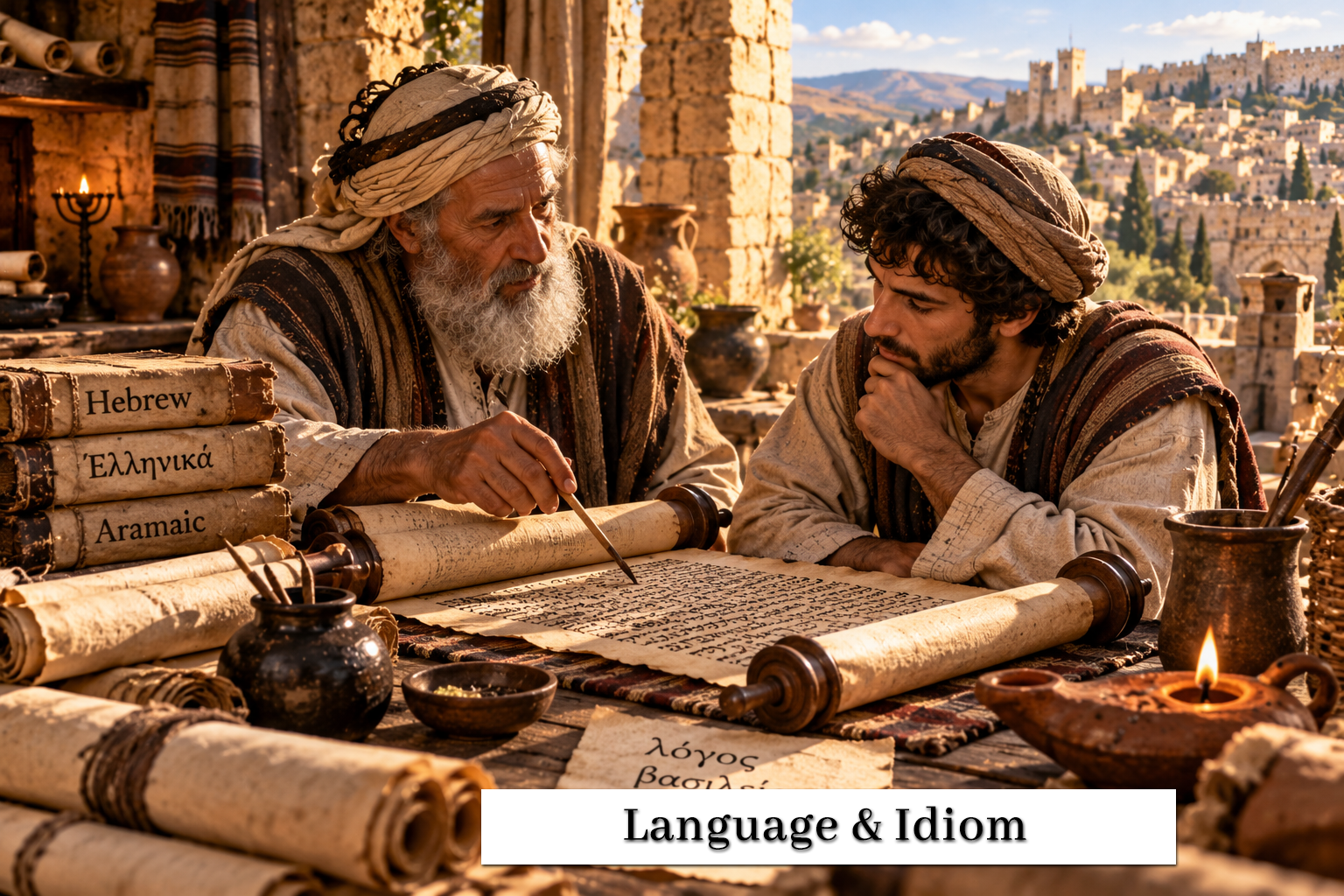
Gehenna
Language and Idiom
Gehenna takes its name from the Valley of Hinnom near Jerusalem, a place with dark biblical associations that became an image of divine judgment.
Oaths by the Temple, Altar, and Heaven
Religious Practice
Jesus' criticism of oaths by the Temple, its gold, the altar, and its gifts exposes attempts to rank sacred formulas while overlooking the God who makes them meaningful.
Tithing Mint, Dill, and Cumin
Religious Practice
Tithing tiny garden herbs illustrates meticulous religious observance; Jesus uses it to contrast scrupulous detail with neglected justice, mercy, and faithfulness.
© 2026 AVisitWithJesus
"For God so loved the world, that he gave his only begotten Son,
that whosoever believeth in him should not perish, but have everlasting life."