
Jesus in Context

Palm Branches, Hosanna, and the King's Arrival

Historical/Cultural Context •  Matthew Mark Luke John
A Visit With Jesus
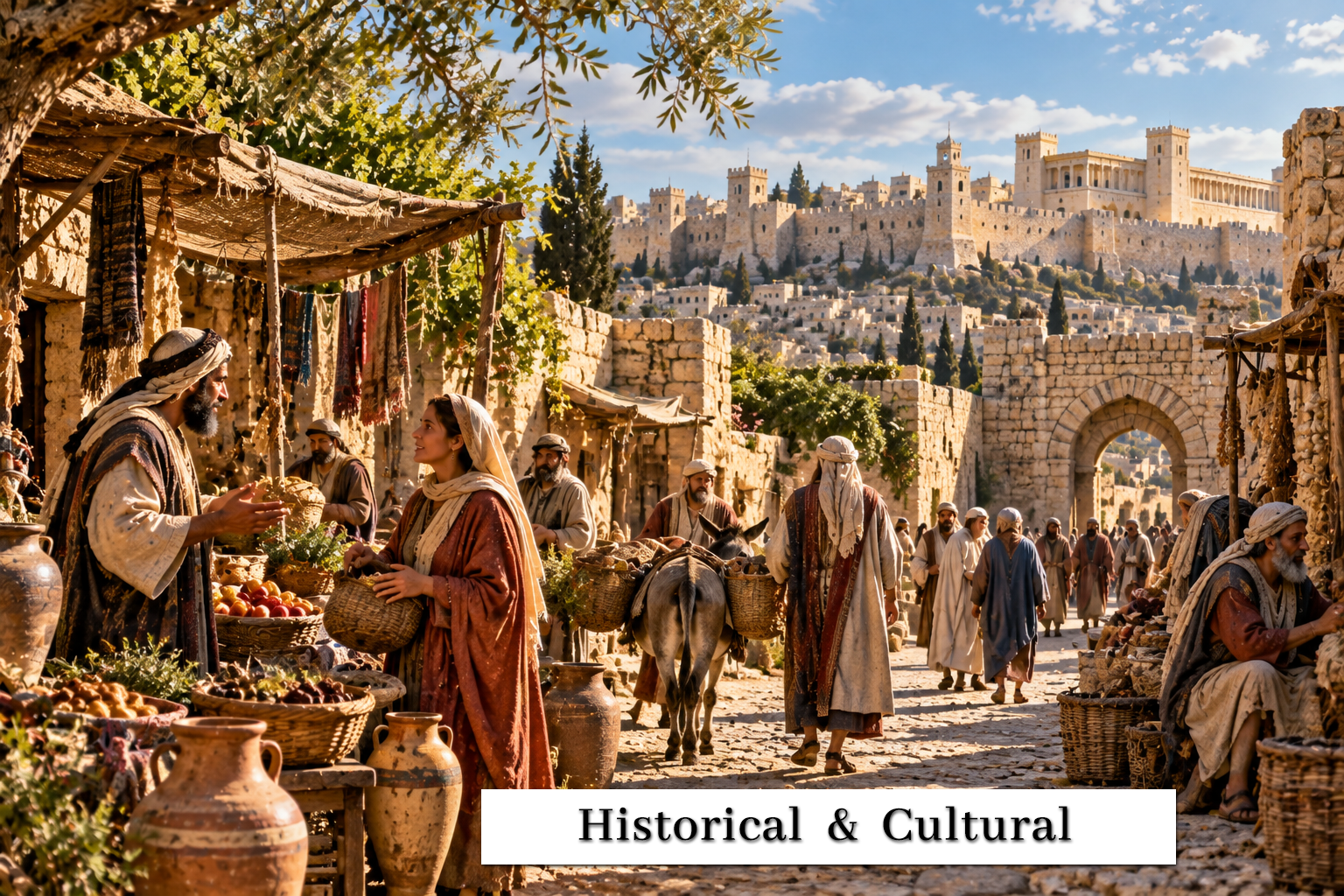
The crowd's acclamations at Jesus' entry into Jerusalem draw on royal and scriptural language: 'Hosanna' is a plea for salvation that became an acclamation of praise.
Historical/Cultural Context

Introduction

The entry into Jerusalem is filled with signs that an ancient Jewish audience could hear as royal and messianic. Crowds spread garments and branches, and they shout "Hosanna" while blessing the one who comes in the name of the Lord.

These are not random expressions of excitement. The scene is saturated with Israel's Scriptures and expectations surrounding God's king.

Historical and Cultural Context

"Hosanna" reflects the Hebrew plea "save, please" found in Psalm 118, a psalm associated with festal worship. By the Gospel period the expression could function as an acclamation as well as a petition. Spreading garments before a royal figure has scriptural precedent, and the Gospel explicitly interprets Jesus' entry through Zechariah's image of Zion's king coming humbly on a donkey.

Different Gospel accounts emphasize branches in slightly different ways; John explicitly mentions palms. Palm imagery could carry celebratory and national associations in Jewish memory.

Why It Matters

The background allows the reader to hear the crowd's words as more than "Hooray." They invoke salvation, Davidic hope, pilgrimage Scripture, and royal expectation.

At the same time, Jesus' manner of entry defines the kind of king he is. He receives royal acclamation while approaching humbly, setting up the Gospel's profound contrast between popular expectations of kingship and the suffering that follows.

Scripture References

Related Places

Related Customs