
Jesus in Context

Oaths by the Temple, Altar, and Heaven

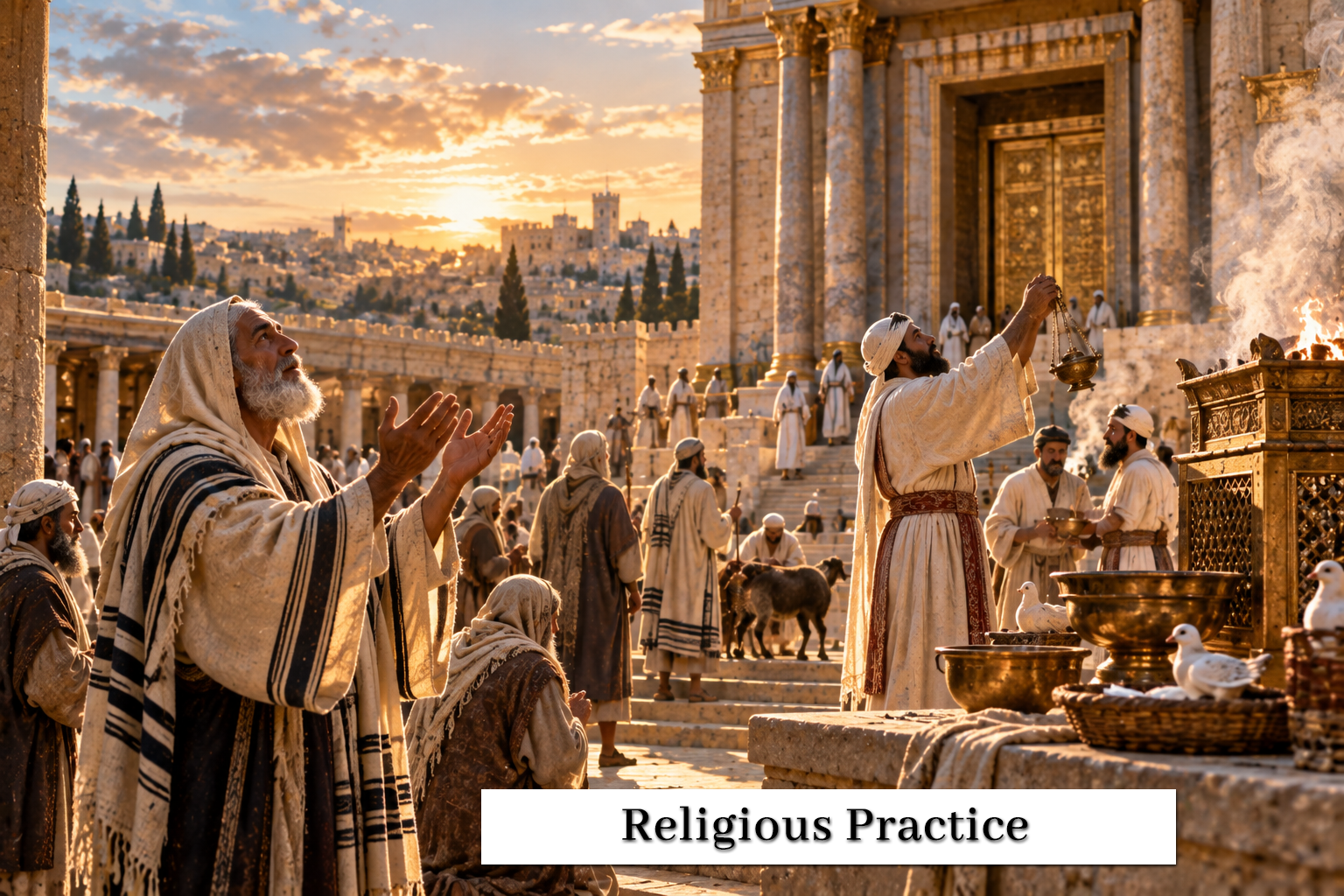
Religious Practice •  Matthew
A Visit With Jesus
Jesus' criticism of oaths by the Temple, its gold, the altar, and its gifts exposes attempts to rank sacred formulas while overlooking the God who makes them meaningful.
Religious Practice

Introduction

Matthew 23 preserves a dispute over oath formulas that can seem remote to modern readers. Jesus describes distinctions between swearing by the Temple and by its gold, or by the altar and by the gift upon it.

The argument belongs to a culture in which solemn oaths invoked sacred realities to guarantee truthfulness and obligation.

Historical and Cultural Context

Oaths were serious acts in biblical and Jewish life because they called upon God or sacred things as witnesses to truth. Questions naturally arose about which formulations were binding and how directly an oath invoked God.

Jesus attacks casuistic distinctions that make some formulas count while treating closely related ones as avoidable. His reasoning moves from gold to Temple, gift to altar, and ultimately from heaven to God's throne and God himself.

Why It Matters

The background shows that Jesus is not merely debating vocabulary. He exposes a system in which carefully chosen religious wording can become a way to evade the moral seriousness of one's word.

His argument reconnects sacred objects with the God to whom they belong. Technical distinctions cannot turn dishonesty into faithfulness.

Scripture References

Related Customs