
Jesus in Context

Render to Caesar: The Tribute Coin

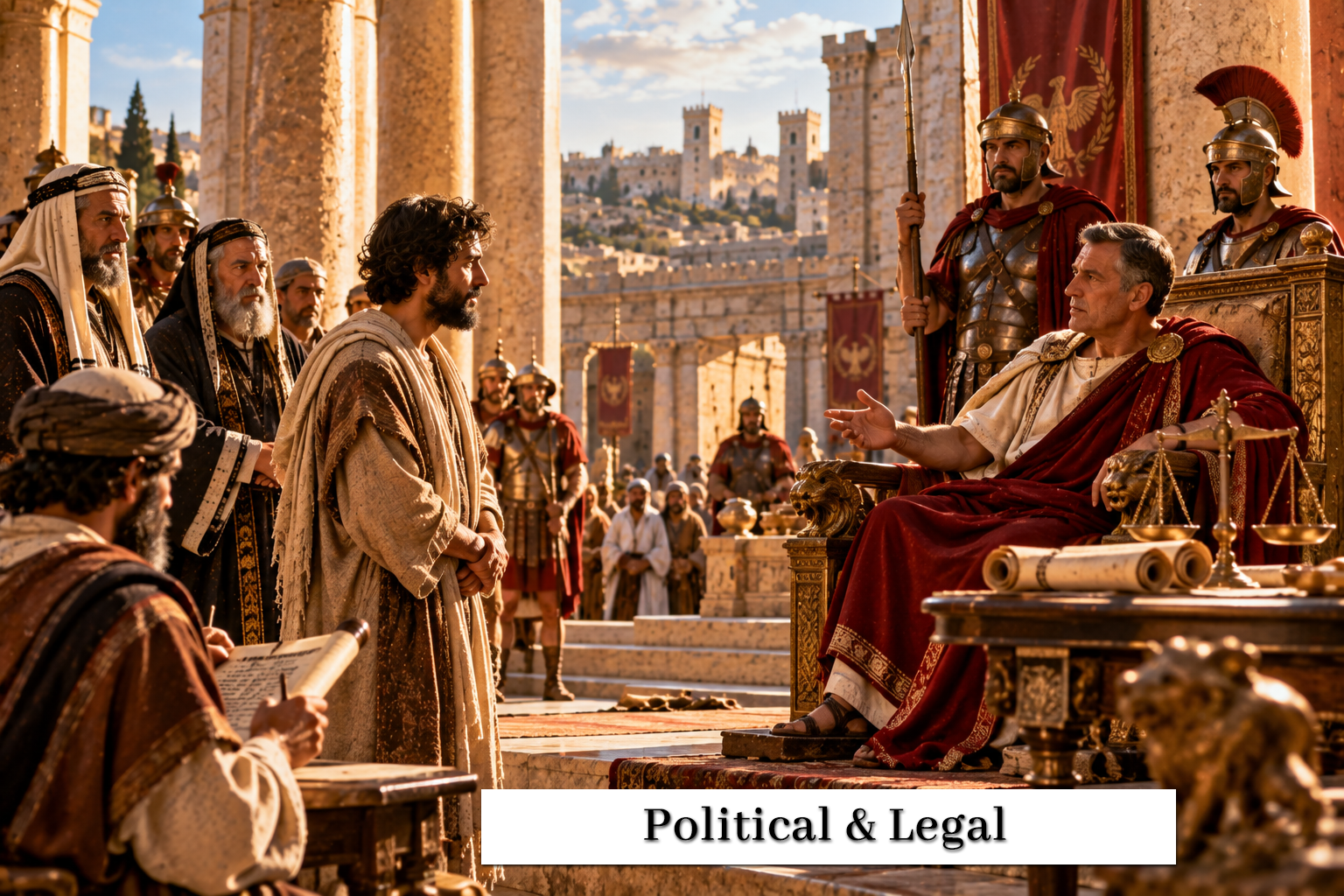
Political/Legal Context •  Matthew Mark Luke
A Visit With Jesus
The question about tribute to Caesar was politically dangerous because the tax represented Roman rule; Jesus' request for the coin exposes the imperial image and inscription at the heart of the trap.
Political/Legal Context

Introduction

"Is it lawful to give tribute to Caesar?" is not a neutral tax-policy question. Roman taxation could symbolize subjection to foreign rule, while open resistance could carry serious political consequences.

Jesus' opponents frame a question designed to make either answer costly. His response begins by asking them to produce the coin used for the tax.

Historical and Cultural Context

The tribute in the Gospel controversy is an imperial tax, distinct from the Jewish Temple payment. The denarius commonly associated with such payment bore the image and titles of the emperor, making the coin itself a small piece of imperial propaganda.

For Jews committed to God's kingship, Roman taxation could be politically and religiously sensitive. Earlier resistance to Roman census and taxation had helped fuel anti-Roman movements. Jesus' question about the image and inscription forces his interrogators to identify the emperor represented on the coin they possess.

Why It Matters

The political setting reveals why the question is a trap. A simple endorsement of the tax could alienate those who resented Roman domination, while a refusal could be reported as resistance to Caesar.

Jesus refuses the offered binary. Caesar may receive what bears Caesar's claim, but God's claim is not thereby reduced. The saying leaves the hearer facing the larger question of what belongs to God—a claim far more comprehensive than the emperor's claim upon a coin.

Scripture References

Related Customs