Going Up to Jerusalem
Geography
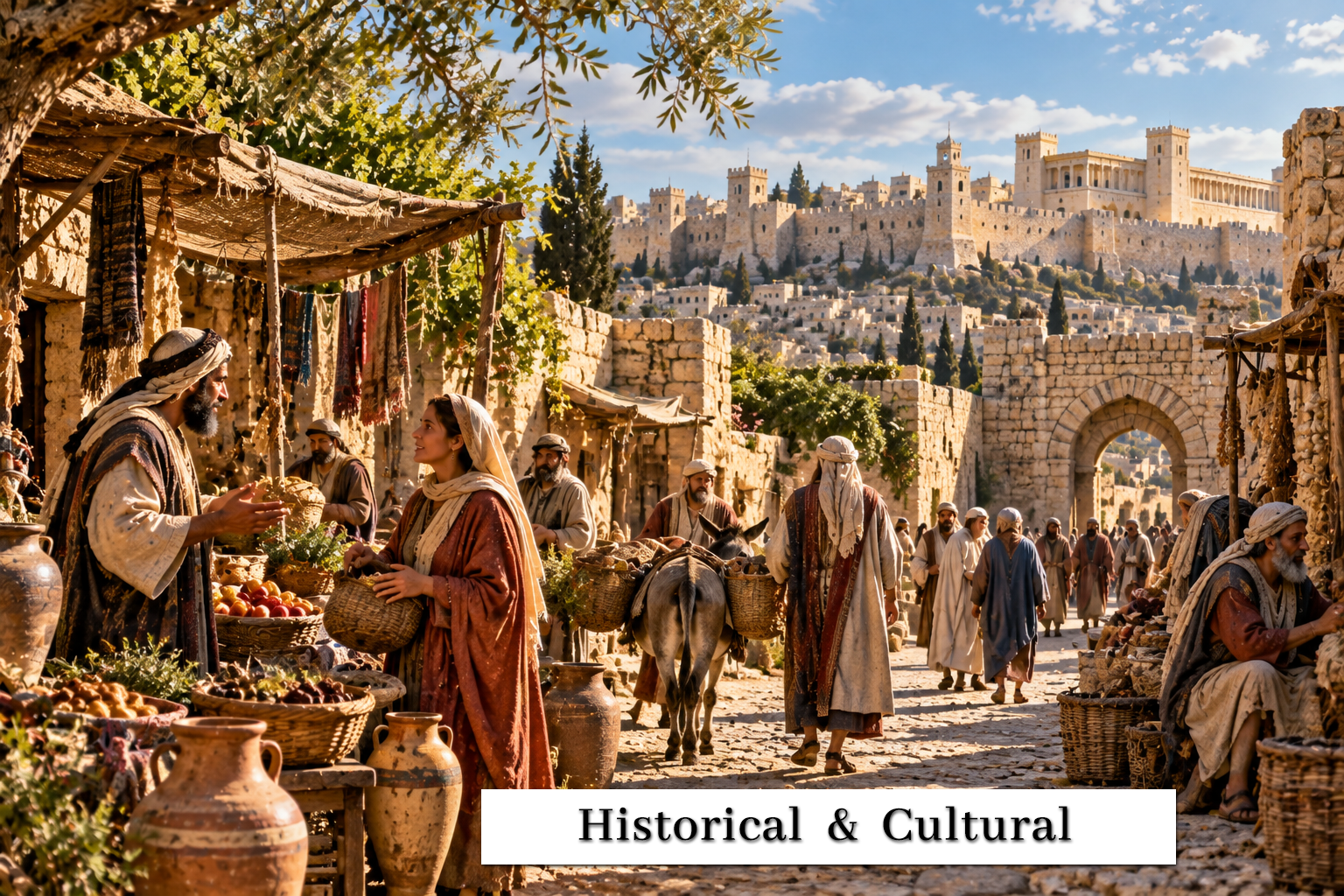
Biblical travelers go 'up' to Jerusalem because the city stands high in the Judean hills; the expression is geographically appropriate as well as religiously resonant.

Going Up to Jerusalem
Geography
Biblical travelers go 'up' to Jerusalem because the city stands high in the Judean hills; the expression is geographically appropriate as well as religiously resonant.
Bethphage, Bethany, and the Mount of Olives
Geography
Bethany, Bethphage, and the Mount of Olives form the eastern approach to Jerusalem and provide the geographical stage for Jesus' royal entry and lament over the city.
Garments on the Colt and on the Road
Social Context
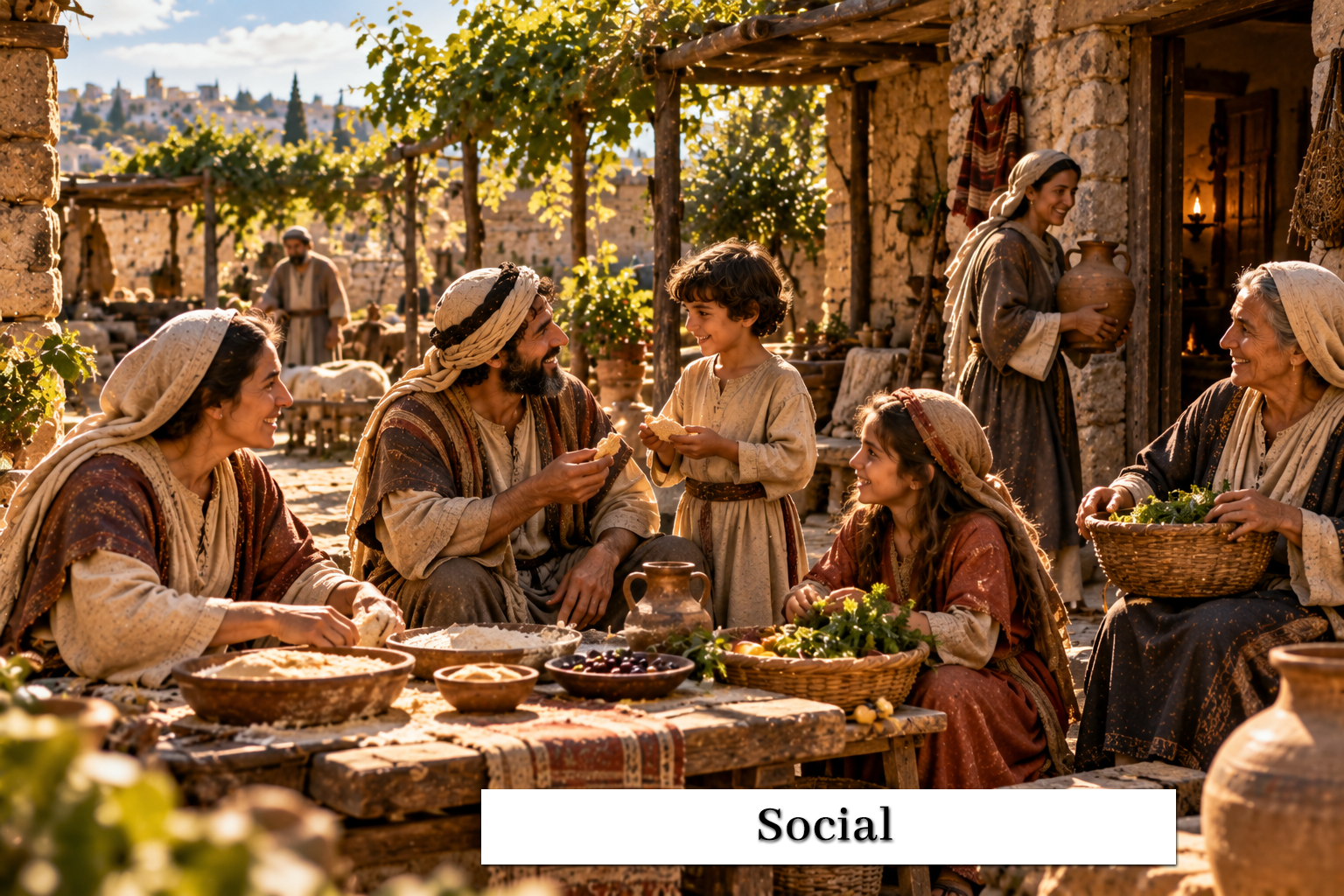
Placing garments on Jesus' colt and spreading them on the road are gestures of honor that help give the Jerusalem entry a royal character.
Psalm 118 and the King's Arrival
Religious Practice
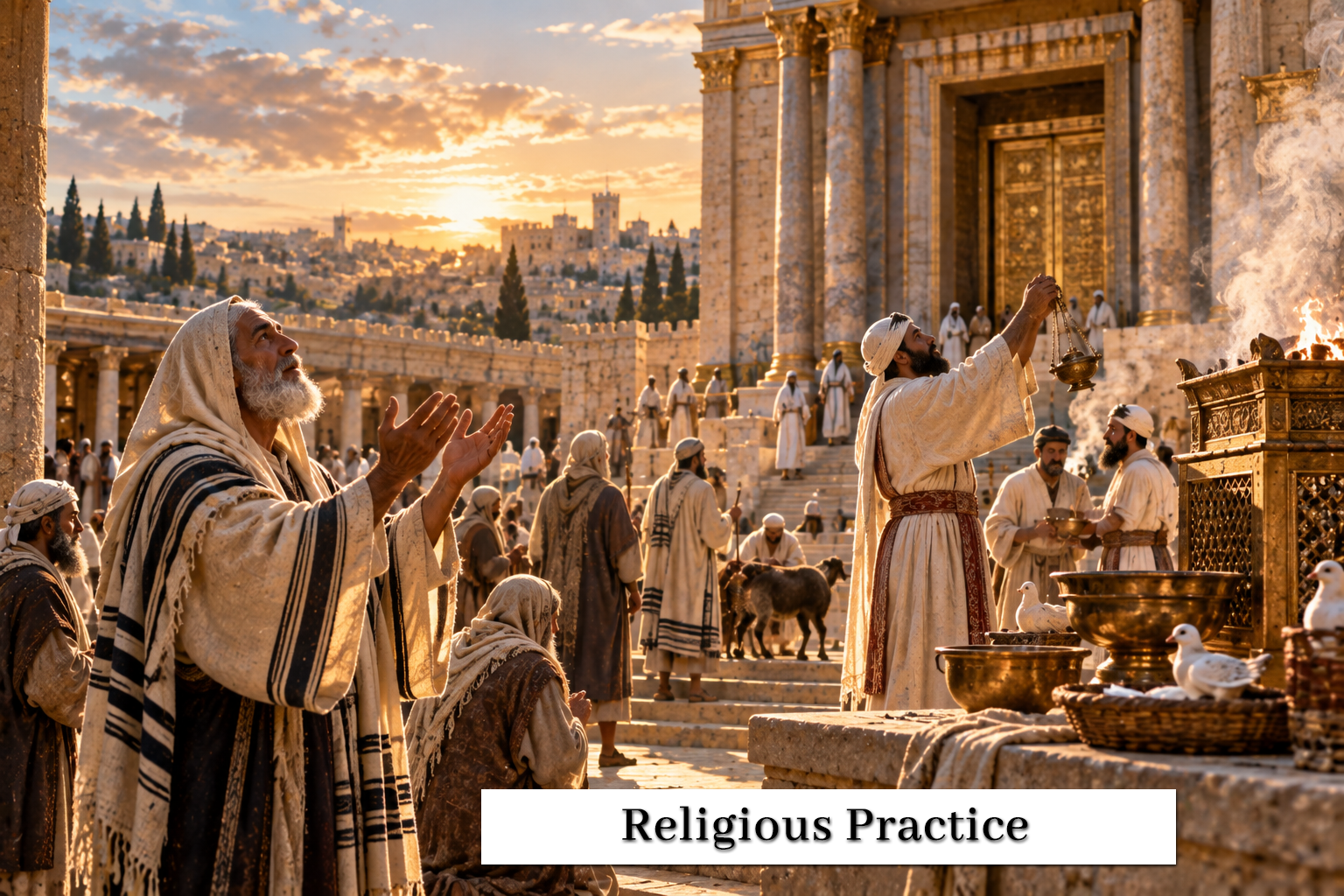
The crowd's acclamation adapts Psalm 118, a festival psalm associated with Jerusalem worship, and explicitly blesses Jesus as the coming King.
Jerusalem Surrounded: Siege and Embankment
Historical/Cultural Context
Jesus' warning that enemies will surround Jerusalem, build an embankment, and tear it down uses the concrete language of ancient siege warfare.
The Temple as a Place of Public Teaching
Religious Practice
The Jerusalem Temple was not only a place of sacrifice; its extensive courts also provided a major public setting for teaching, debate, commerce, and challenges to authority.
The Sadducees and the Resurrection
Religious Practice
The Sadducees' question about seven husbands arises from a real Jewish disagreement over resurrection and uses levirate marriage to press what they regard as an absurd consequence.
The Widow's Two Small Coins
Commerce and Money
The widow's two tiny coins represent a very small monetary amount, but Jesus evaluates her gift by what it costs her rather than by its purchasing power.
Jerusalem Surrounded by Armies
Political/Legal Context
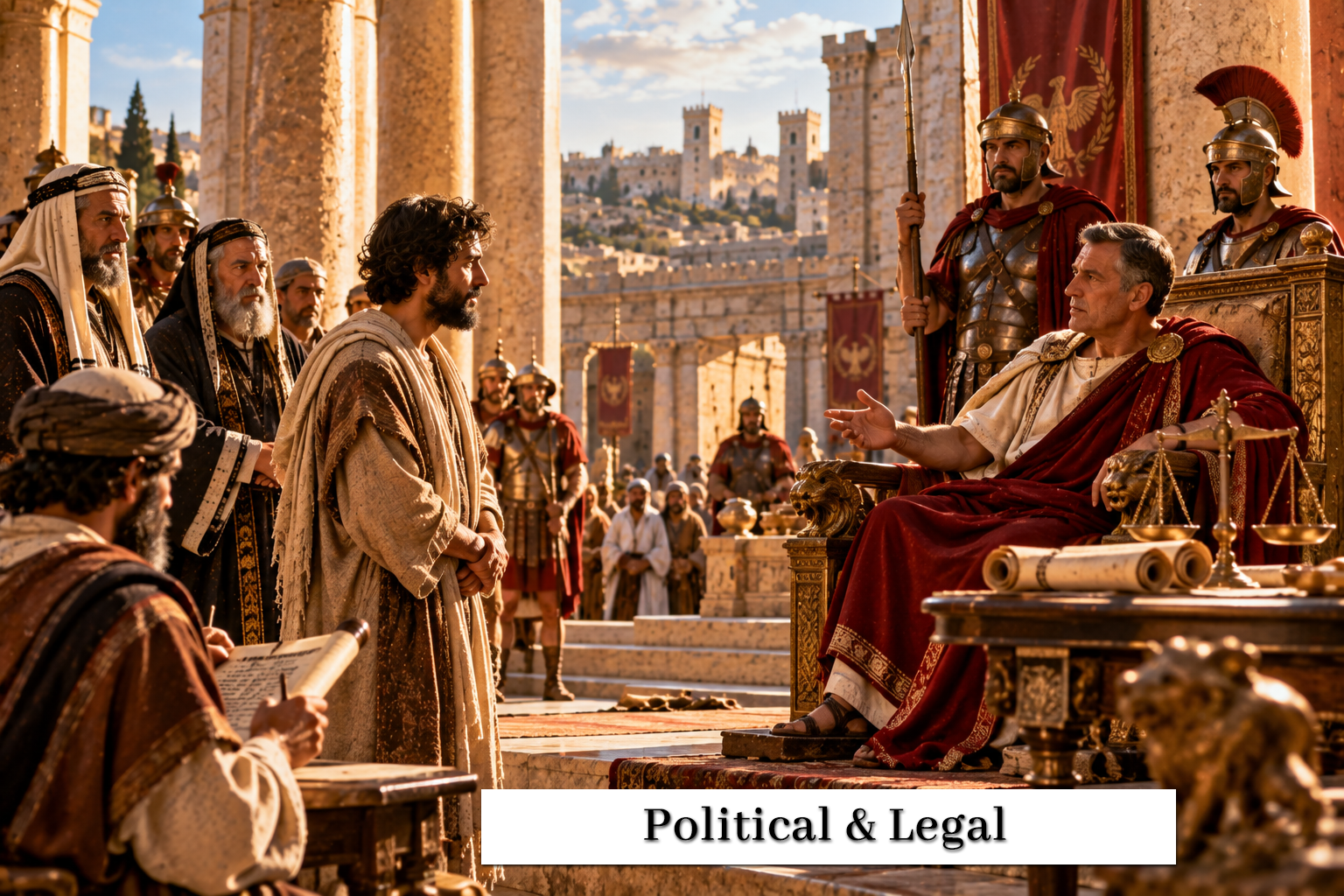
Luke's warning about Jerusalem surrounded by armies describes conquest, flight, captivity, and Gentile domination in the concrete vocabulary of ancient war.
The Furnished Upper Room
Household Life
The disciples prepare the Passover in a furnished upper room, reflecting the multilevel houses and guest spaces available in crowded festival-time Jerusalem.
Cups at the Passover Meal
Religious Practice
Luke mentions cups more than once during the Last Supper, fitting a Passover meal in which wine and blessing formed part of festival observance.
Two Swords Are Enough
Language and Idiom
Jesus' statement about buying a sword and his response 'It is enough' occur on the eve of his arrest, but the subsequent narrative rejects armed defense as the meaning of discipleship.
© 2026 AVisitWithJesus
"For God so loved the world, that he gave his only begotten Son,
that whosoever believeth in him should not perish, but have everlasting life."