
Jesus in Context

The Temple as a Place of Public Teaching

Religious Practice •  Luke
A Visit With Jesus
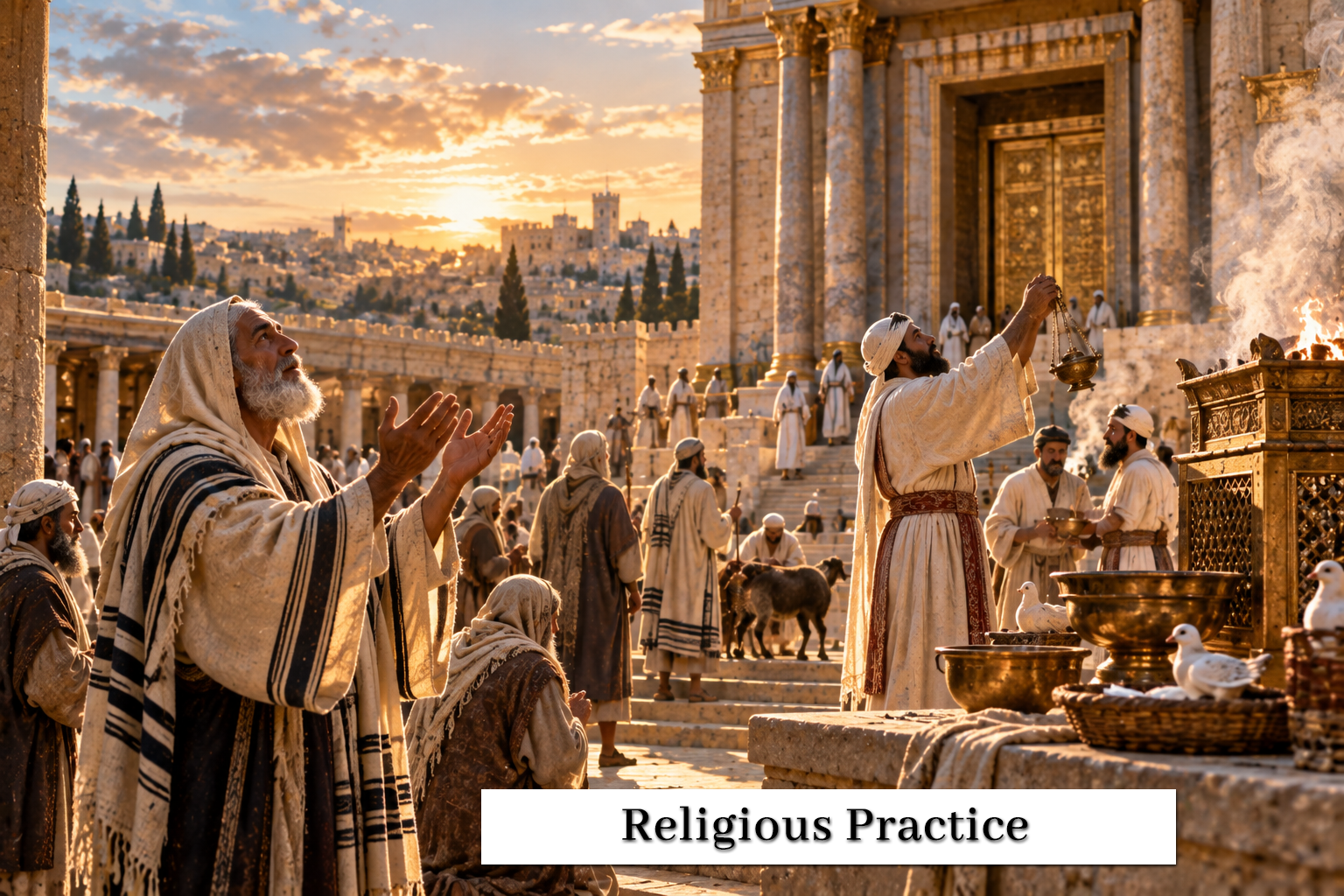
The Jerusalem Temple was not only a place of sacrifice; its extensive courts also provided a major public setting for teaching, debate, commerce, and challenges to authority.
Religious Practice

Introduction

During Jesus' final days, Luke repeatedly places him teaching in the Temple while crowds listen and leaders challenge his authority. Modern readers can imagine the Temple only as a sanctuary building and miss the scale of the surrounding precincts.

The larger complex functioned as one of Jerusalem's great public spaces.

Historical and Cultural Context

Herod's Temple complex included expansive courts and porticoes capable of accommodating large numbers of pilgrims, teachers, worshipers, and commercial activity connected with sacrifice. Teaching and debate could therefore occur within the precincts without taking place inside the sanctuary itself.

Jesus' action against sellers and his subsequent public teaching both occur in this highly visible environment. The leaders' question, 'By what authority do you do these things?' follows actions that directly affect the Temple's public life.

Why It Matters

The architectural setting explains how Jesus can teach daily to large audiences while remaining at the center of controversy. His final Jerusalem ministry is conducted in one of the most symbolically charged and publicly accessible spaces in Jewish life.

The Temple setting therefore magnifies both popular attention and conflict with authorities responsible for its religious order.

Scripture References

Related Places

Related Customs