
Jesus in Context

Psalm 118 and the King's Arrival

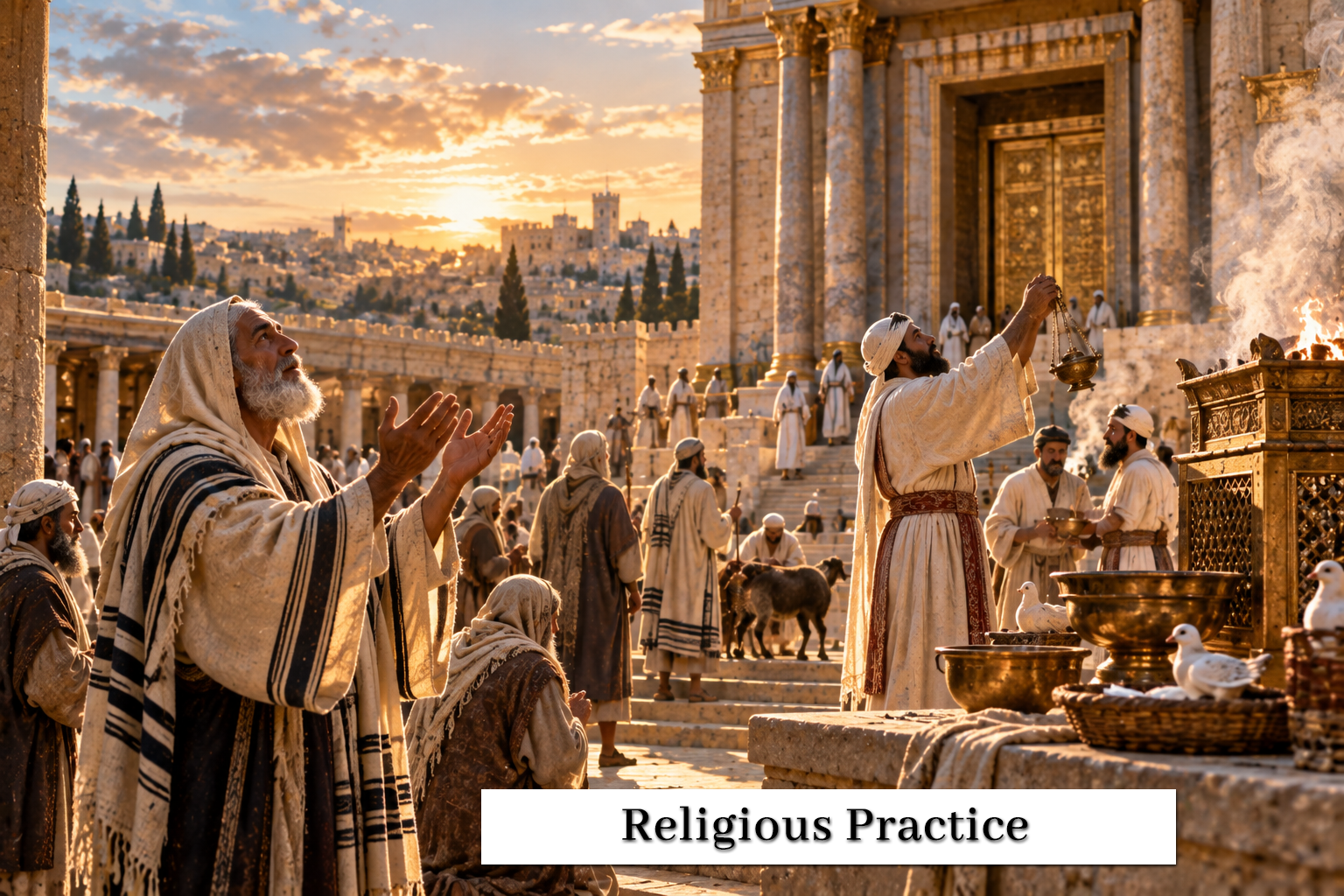
Religious Practice •  Luke
A Visit With Jesus
The crowd's acclamation adapts Psalm 118, a festival psalm associated with Jerusalem worship, and explicitly blesses Jesus as the coming King.
Religious Practice

Introduction

As Jesus approaches Jerusalem, Luke's disciples praise God and proclaim, 'Blessed be the King that cometh in the name of the Lord.' The wording draws from Psalm 118 while making the royal implication explicit.

Some Pharisees consequently urge Jesus to rebuke his disciples.

Historical and Cultural Context

Psalm 118 celebrates deliverance and includes the blessing, 'Blessed is he that cometh in the name of the LORD.' The psalm became associated with Jewish festival praise and belongs to the Hallel collection. In the Gospel entry traditions, its words are applied directly to Jesus.

Luke's form adds 'the King,' sharpening the royal claim. Such language in Jerusalem under Roman rule carried more than private devotional significance, even though the Gospel presents Jesus' kingship in categories unlike ordinary revolt.

Why It Matters

The scriptural background shows that the crowd's words are not spontaneous flattery. They draw Israel's worship language into the interpretation of Jesus' arrival.

It also explains why demands for silence arise. Calling an arriving figure the blessed King in Jerusalem is religiously charged and potentially politically sensitive. Jesus accepts the acclamation rather than distancing himself from it.

Scripture References

Related Places

Related Customs