Lazarus' Cave Tomb and the Stone
Burial and Mourning
John describes Lazarus' burial place as a cave closed by a stone, matching well-attested rock-cut tomb practices in first-century Judea.

Lazarus' Cave Tomb and the Stone
Burial and Mourning
John describes Lazarus' burial place as a cave closed by a stone, matching well-attested rock-cut tomb practices in first-century Judea.
By This Time He Stinketh
Burial and Mourning
Martha's warning about odor after four days reflects the rapid reality of decomposition in a warm climate and reinforces that Lazarus' death is neither recent nor ambiguous.
Lazarus Bound in Burial Cloths
Burial and Mourning
Lazarus emerges from the tomb still bound with burial wrappings and a cloth around his face, reflecting Jewish preparation of the dead and sharply distinguishing his restoration from ordinary life outside the tomb.
The Raising of Lazarus and the Council's Response
Political/Legal Context
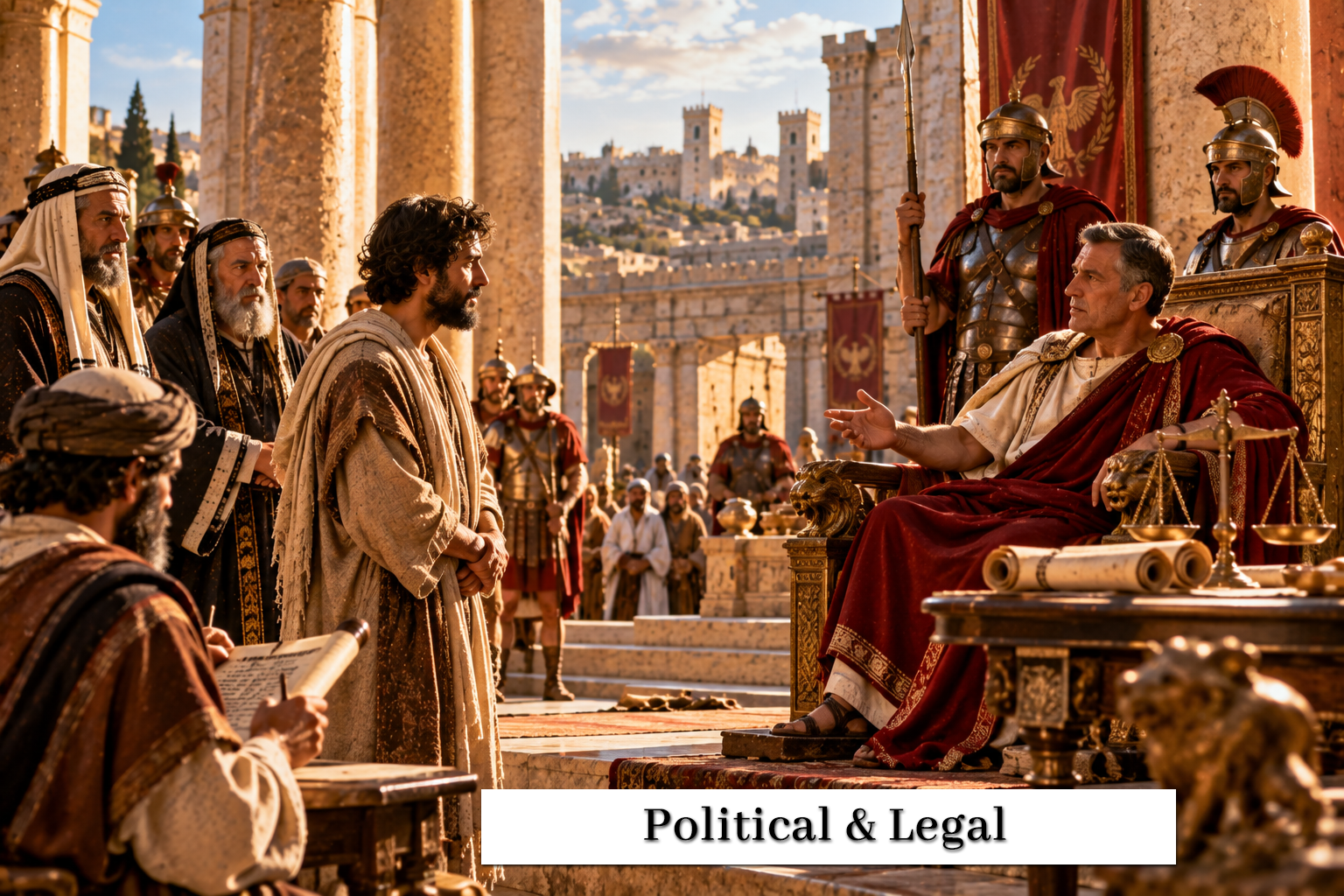
The raising of Lazarus triggers a formal leadership crisis: witnesses report the sign, chief priests and Pharisees gather a council, and the discussion shifts from disputing Jesus to containing a growing movement.
The Romans Will Take Away Our Place and Nation
Political/Legal Context
The council's fear that Rome might take away 'our place and nation' reflects the precarious reality of Judea under imperial rule, where a popular messianic movement could provoke Roman intervention.
Caiaphas: High Priest, Political Calculation, and Unintended Prophecy
Political/Legal Context
Caiaphas argues that one man should die for the people rather than the nation perish, while John interprets the high priest's political calculation as an unintended prophecy of Jesus' redemptive death.
Purification Before Passover
Jewish Religious Practice
Pilgrims arrive in Jerusalem before Passover to purify themselves, reflecting the practical importance of ritual purity for participation in Temple-centered festival worship.
Will He Come to the Feast?
Political/Legal Context
Passover pilgrims search for Jesus while authorities have ordered that his whereabouts be reported, turning a major pilgrimage festival into a setting of expectation, surveillance, and danger.
A Supper at Bethany: Serving and Reclining at Table
Food and Dining
The supper at Bethany reflects ancient meal customs in which hosts served guests and diners could recline at table, while Lazarus' presence makes the meal a visible testimony to his restoration.
Costly Nard and Mary's Anointing
Honor and Shame
Mary's use of an exceptionally costly quantity of nard, her anointing of Jesus' feet, and her use of her hair create an extravagant public act of honor that Jesus connects with his burial.
Three Hundred Denarii: The Value of the Perfume
Commerce and Money
The estimate of three hundred denarii for Mary's perfume represents an enormous sum in ordinary labor terms and makes Judas' objection economically plausible on its face.
The Plot to Kill Lazarus
Political/Legal Context
Lazarus becomes a target because his restored life is drawing people to Jesus, showing how a witness can become politically dangerous without committing any offense.
© 2026 AVisitWithJesus
"For God so loved the world, that he gave his only begotten Son,
that whosoever believeth in him should not perish, but have everlasting life."