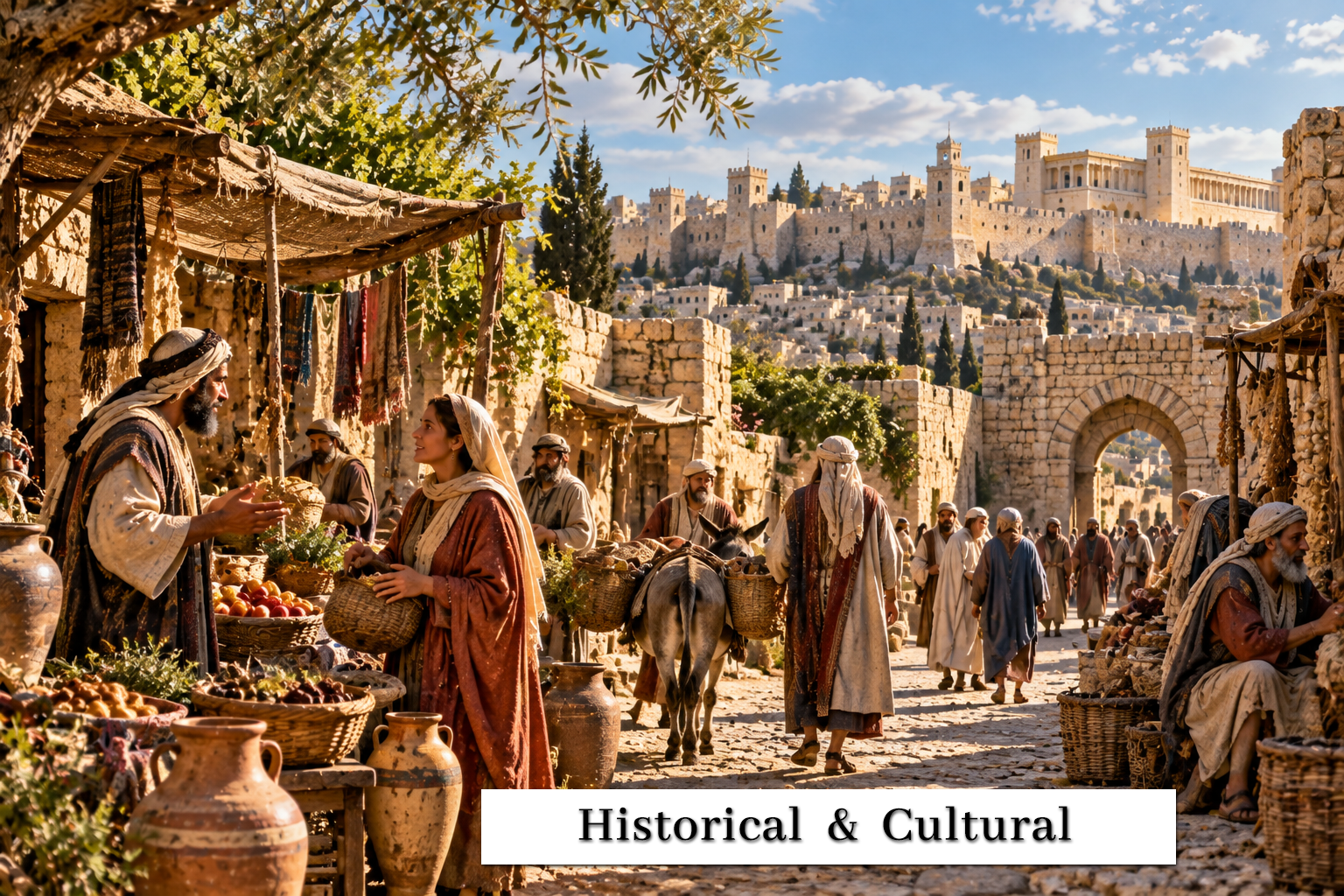
Rulers Who Believed but Would Not Confess
Honor and Shame
John reports that many among the rulers believed in Jesus but would not confess him publicly because they feared synagogue exclusion and valued human approval.

Rulers Who Believed but Would Not Confess
Honor and Shame
John reports that many among the rulers believed in Jesus but would not confess him publicly because they feared synagogue exclusion and valued human approval.
Before the Feast of Passover
Festivals and Holy Days
John introduces Jesus' final private ministry against the approaching Passover and Jesus' conscious awareness that his hour has arrived, joining Israel's deliverance festival with the Gospel's movement toward the cross.
Foot Washing in the First Century
Jewish Custom
Jesus' washing of the disciples' feet takes a familiar act of hospitality and low-status service and makes the Teacher and Lord himself the one who performs it.
Peter Refuses to Let Jesus Wash His Feet
Honor and Shame
Peter's emphatic refusal reflects the social reversal of a master performing a servant's task, but Jesus transforms the washing from hospitality into a sign of receiving cleansing and fellowship from him.
You Ought to Wash One Another's Feet
Servants and Slavery
After resuming his place at the meal, Jesus interprets the foot washing as an example: if the Lord and Teacher performs a servant's work, his disciples cannot claim exemption from humble service.
He Who Eats My Bread Has Lifted Up His Heel
Food and Dining
Jesus applies Psalm 41's image of a trusted table companion turning against his host to Judas, making betrayal by one who shares bread especially grievous in an ancient culture of table fellowship.
Receiving the Messenger and the One Who Sent Him
Social Convention
Jesus' saying that receiving his messenger means receiving him, and receiving him means receiving the Father, reflects the ancient principle that an authorized agent represented the sender.
Reclining at the Meal and the Beloved Disciple
Food and Dining
The beloved disciple's position 'in Jesus' bosom' reflects reclining meal posture, explaining how he could lean back toward Jesus and quietly ask the question Peter signaled him to ask.
The Morsel Given to Judas
Food and Dining
Jesus identifies the betrayer by giving Judas a dipped morsel, an action that belongs naturally to a shared meal and can itself carry the intimacy of a host personally offering food to a guest.
The Money Box, Festival Purchases, and Giving to the Poor
Commerce and Money
The disciples' mistaken explanations for Judas' departure reveal ordinary group finances: as keeper of the money box, he might plausibly be sent to buy festival necessities or distribute aid to the poor.
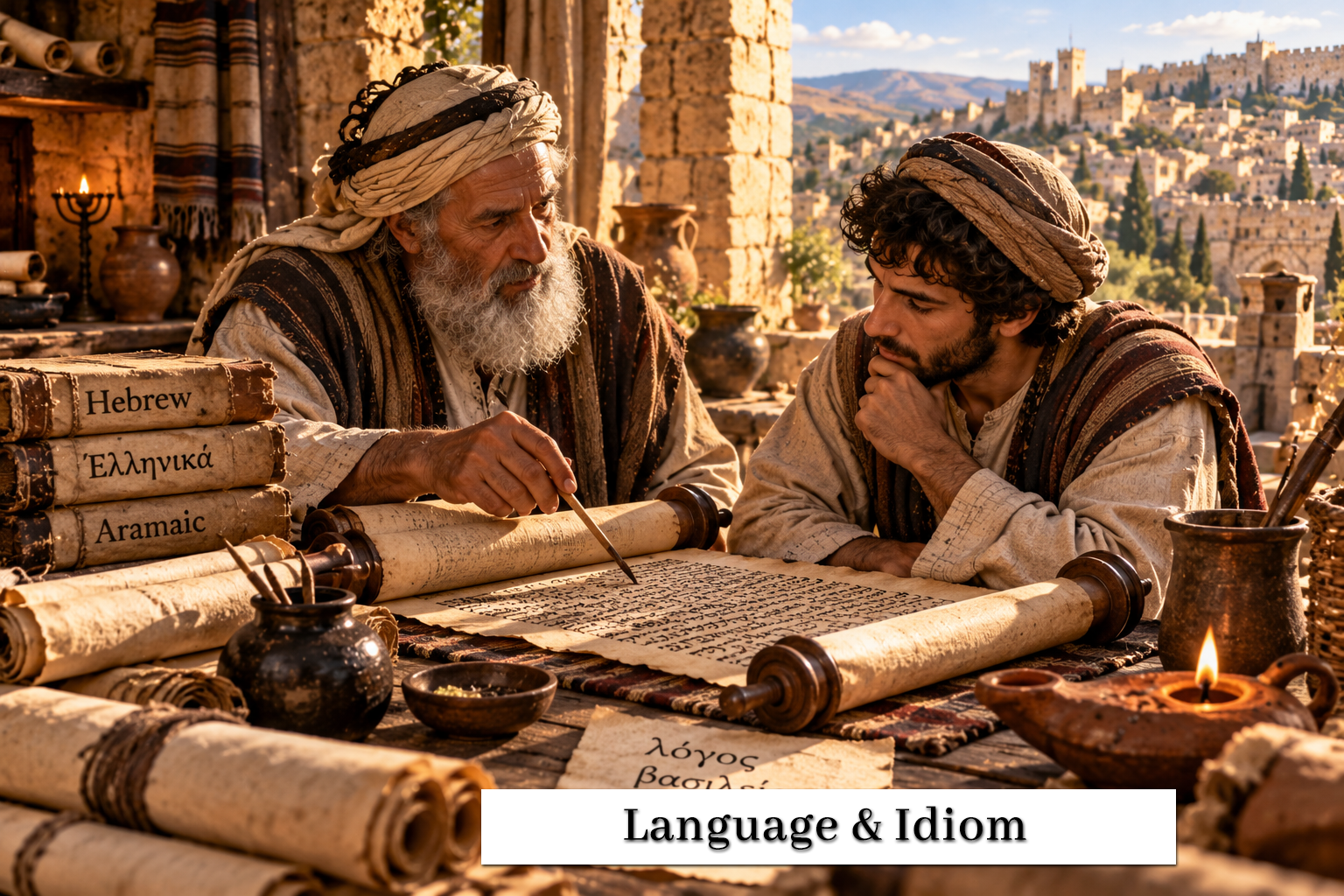
And It Was Night
Language and Idiom
John's brief notice that Judas went out and 'it was night' is literally a time marker while also resonating with the Gospel's sustained contrast between light and darkness.
A New Commandment: Love One Another
Social Convention
Jesus calls mutual love a 'new commandment,' not because love was absent from the Old Testament, but because he makes his own self-giving love the pattern and identifying mark of his disciples.
© 2026 AVisitWithJesus
"For God so loved the world, that he gave his only begotten Son,
that whosoever believeth in him should not perish, but have everlasting life."