John 13 opens 'before the feast of the passover' and immediately says that Jesus knows his hour has come to depart from this world to the Father. The setting frames everything that follows—from foot washing to betrayal and farewell teaching.
Jesus in Context
Before the Feast of Passover

John introduces Jesus' final private ministry against the approaching Passover and Jesus' conscious awareness that his hour has arrived, joining Israel's deliverance festival with the Gospel's movement toward the cross.
Introduction
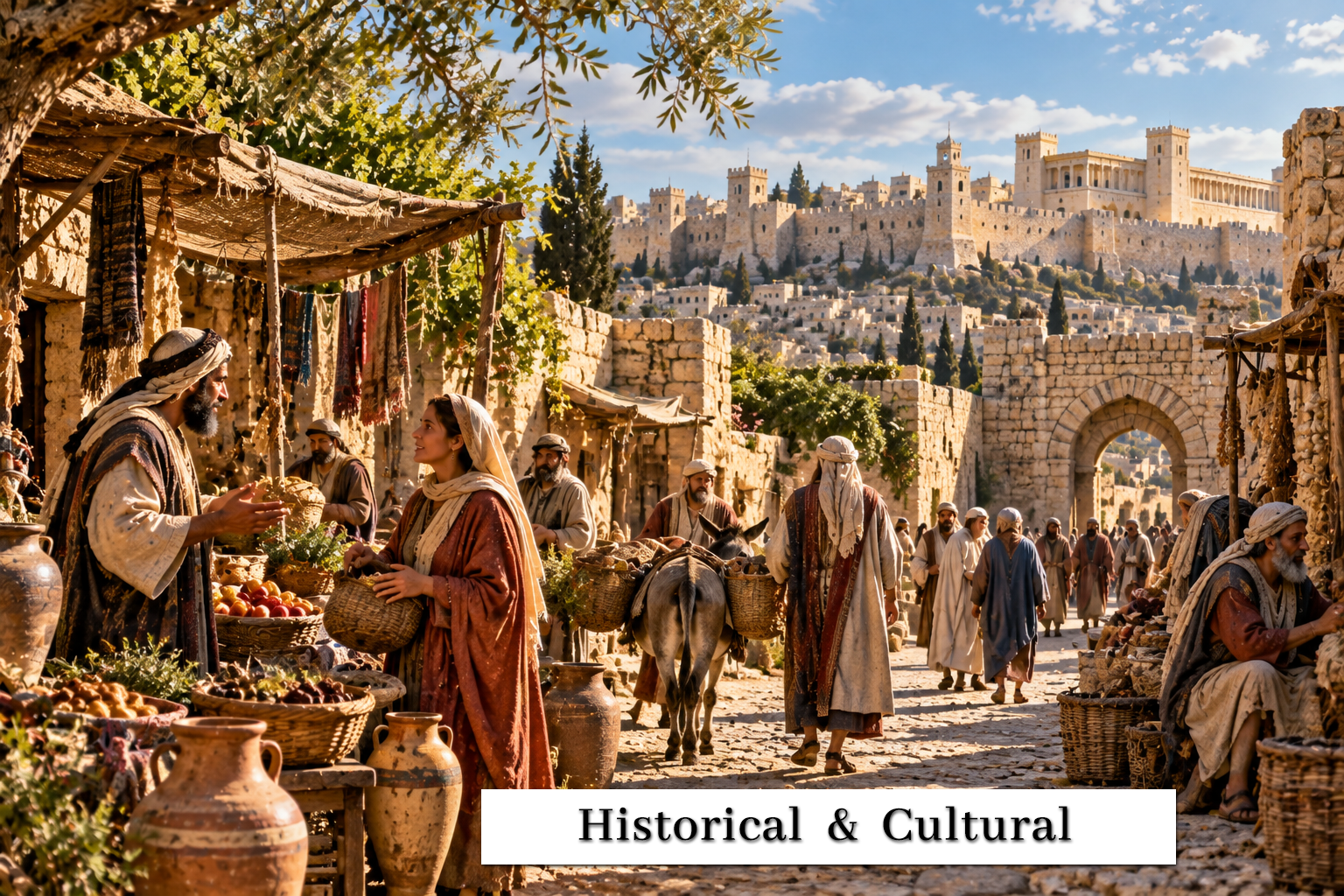
Historical and Cultural Context
Passover commemorated Israel's deliverance from Egypt and brought large numbers of pilgrims to Jerusalem. John's chronology and its relationship to the Synoptic accounts have generated extensive debate, particularly over the precise timing of the meal and crucifixion. The Gospel itself unmistakably places Jesus' death within Passover time and repeatedly develops Passover imagery. John also describes death as Jesus' 'departure' to the Father rather than as an accidental interruption of his mission.
Why It Matters
The festival setting makes the final meal part of a much larger biblical story of deliverance, sacrifice, and covenant memory.
At the same time, John's emphasis is on Jesus' knowledge and love: he enters the hour deliberately, knowing where he came from and where he is going, and loving his own 'unto the end.'