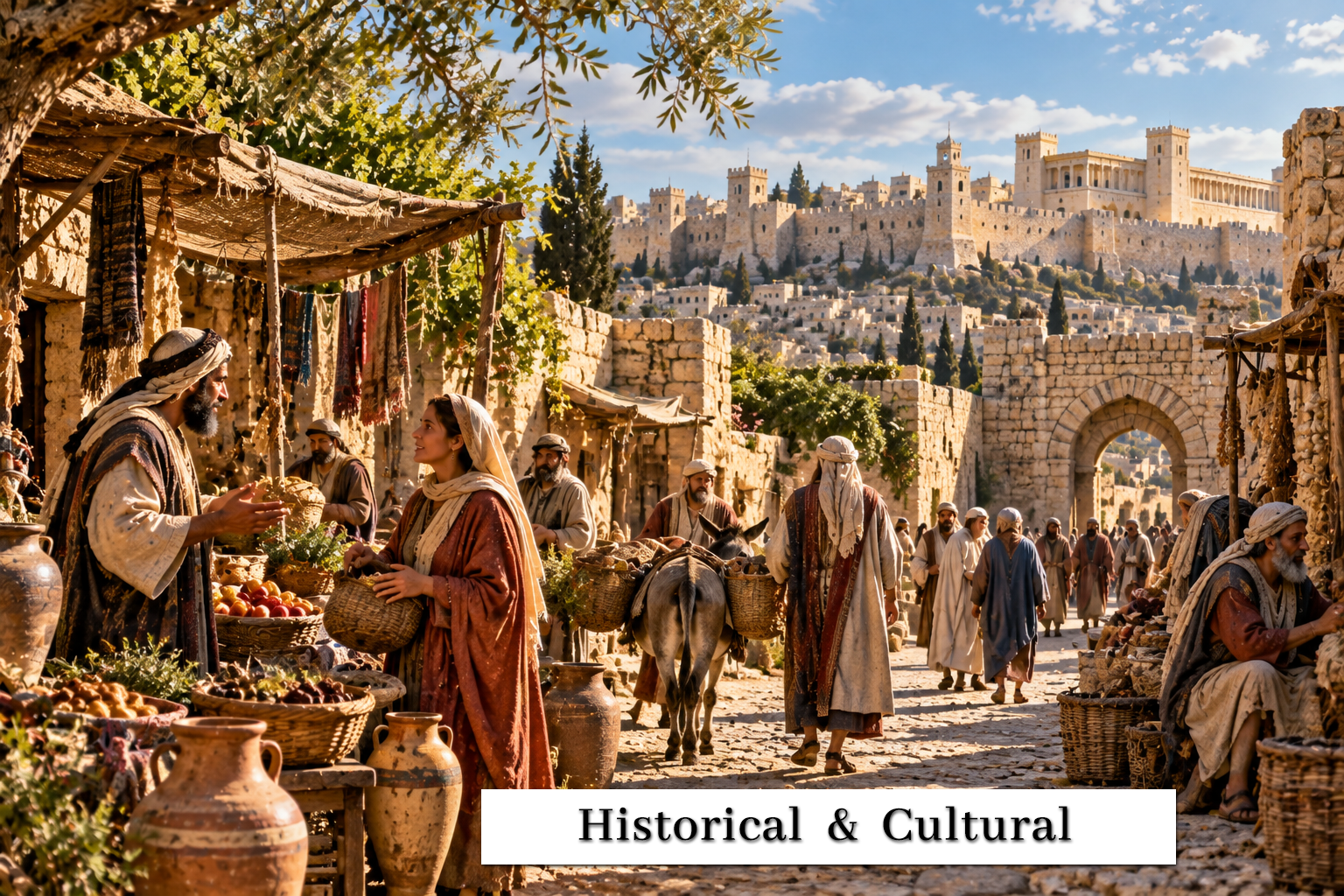
Palm Branches, Hosanna, and a Royal Welcome
Honor and Shame
The crowd's palm branches, acclamation, and title 'King of Israel' combine festival celebration with royal and national symbolism as Jesus approaches Jerusalem.

Palm Branches, Hosanna, and a Royal Welcome
Honor and Shame
The crowd's palm branches, acclamation, and title 'King of Israel' combine festival celebration with royal and national symbolism as Jesus approaches Jerusalem.
The King Comes Riding on a Donkey
Travel and Roads
Jesus' choice of a young donkey deliberately evokes Zechariah's picture of Zion's king arriving humbly, shaping the meaning of his royal entry into Jerusalem.
Greeks at the Feast: 'Sir, We Would See Jesus'
Jewish-Gentile Relations
Greek visitors at the feast approach Philip asking to see Jesus, providing a concrete Gentile horizon just as Jesus announces that his hour has come and speaks of drawing all people to himself.
A Grain of Wheat Falls Into the Ground and Dies
Agriculture
Jesus uses the familiar agricultural cycle of a seed being buried and producing new growth to interpret his approaching death as the path to abundant fruit.
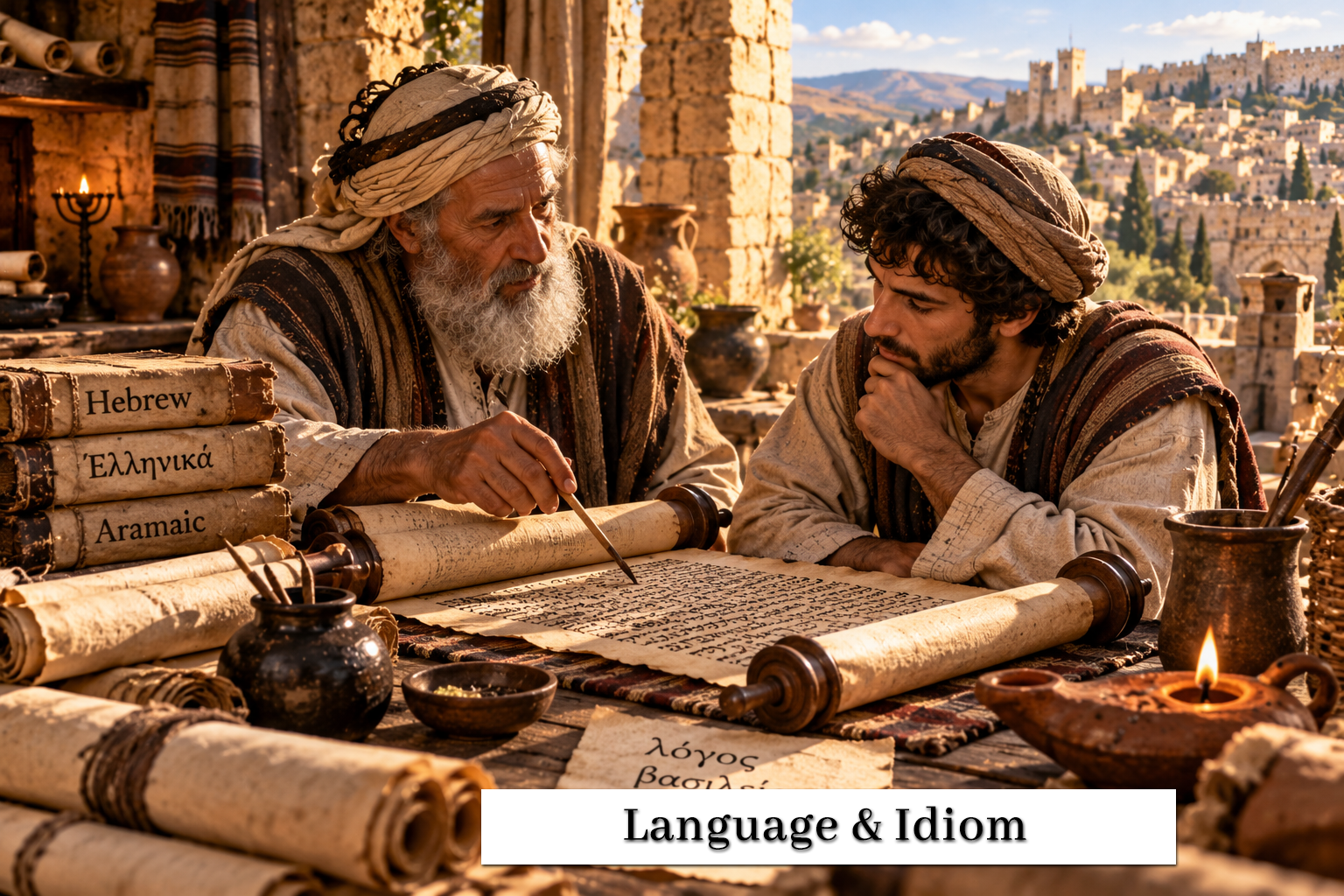
Hating One's Life in This World
Language and Idiom
Jesus' command to 'hate' one's life uses forceful Semitic-style contrast language to demand that loyalty to eternal life outrank self-preservation in the present world.
A Voice From Heaven: Thunder or an Angel?
Language and Idiom
The crowd interprets the heavenly voice variously as thunder or an angel, illustrating how an audible event can be perceived without its divine meaning being equally understood by everyone present.
The Ruler of This World Will Be Cast Out
Language and Idiom
Jesus speaks of the 'ruler of this world' being cast out as his death approaches, using apocalyptic language for the defeat of the spiritual power opposed to God.
When I Am Lifted Up From the Earth
Language and Idiom
John explains Jesus' promise to be 'lifted up' as a reference to the manner of his death, while the same verb also carries the Gospel's paradoxical theme that crucifixion is Jesus' exaltation and glorification.
How Can the Son of Man Be Lifted Up?
Language and Idiom
The crowd's objection that the Messiah remains forever shows how scriptural hopes of an enduring Davidic kingdom could make Jesus' prediction of a lifted-up Son of Man difficult to reconcile with messianic expectation.
Walk While You Have the Light
Language and Idiom
Jesus answers the crowd's question with an urgent light-and-darkness appeal, using the ordinary danger of traveling after daylight to call for response while the Light is present.
Isaiah, Unbelief, and the Hardening of the Heart
Language and Idiom
John uses Isaiah to interpret persistent unbelief, drawing on biblical language of blinded eyes and hardened hearts while placing rejection of Jesus within the larger pattern of prophetic resistance.
Isaiah Saw His Glory
Language and Idiom
John says Isaiah spoke because he saw Jesus' glory, applying the prophet's vision of divine glory to Jesus in one of the Gospel's strongest Old Testament expressions of high Christology.
© 2026 AVisitWithJesus
"For God so loved the world, that he gave his only begotten Son,
that whosoever believeth in him should not perish, but have everlasting life."