After the Greeks seek him, Jesus says that his hour has come and illustrates the point with a grain of wheat: unless it falls into the ground and dies, it remains alone; if it dies, it bears much fruit.
Jesus in Context
A Grain of Wheat Falls Into the Ground and Dies

Jesus uses the familiar agricultural cycle of a seed being buried and producing new growth to interpret his approaching death as the path to abundant fruit.
Introduction
Historical and Cultural Context
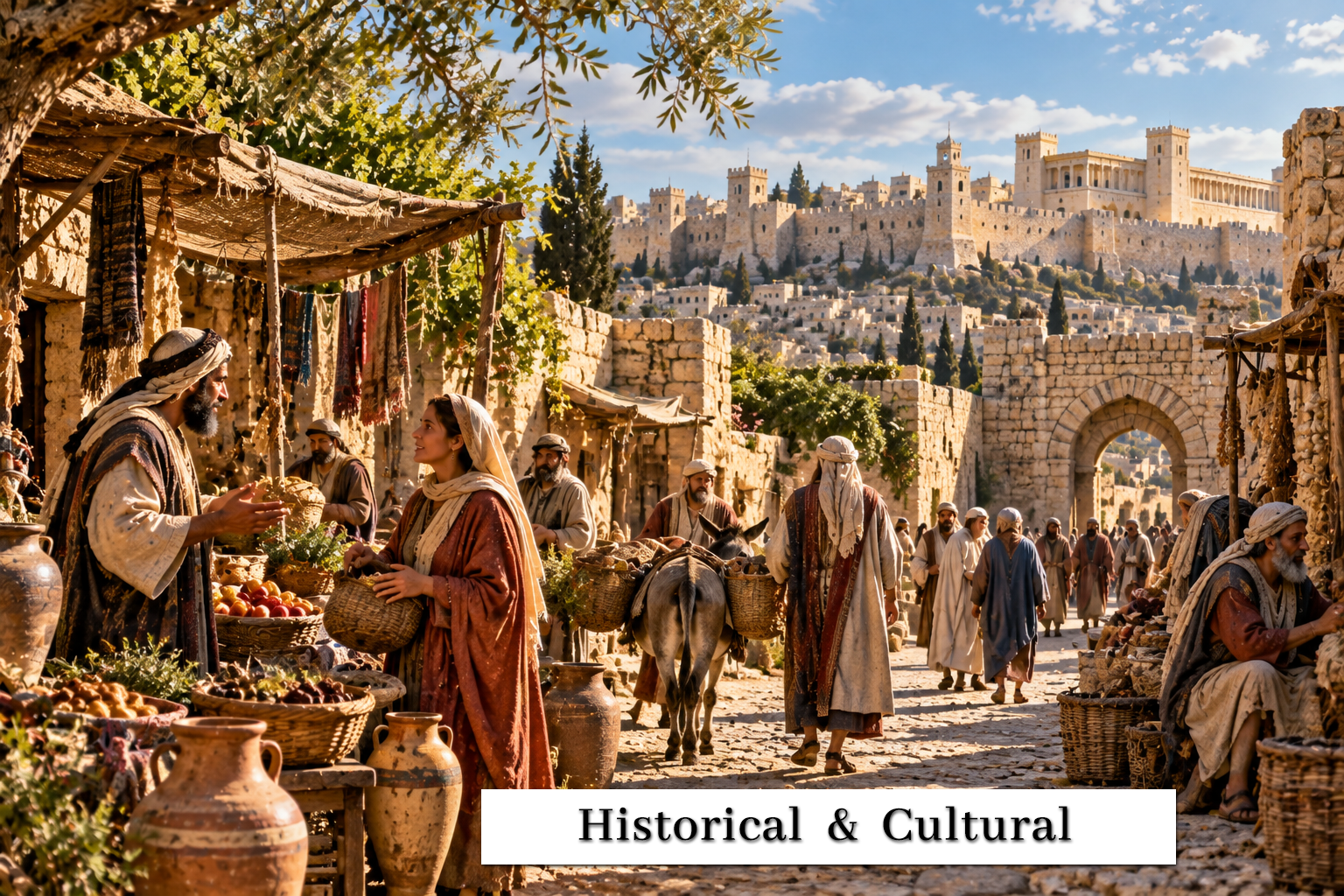
Grain cultivation was basic to ancient Mediterranean life. Seed placed into the earth disappears as a seed and gives rise to a new plant capable of producing many grains. Ancient observers could naturally describe this transformation as the seed 'dying' without making a modern botanical claim about cellular death. Jesus draws on a process his hearers knew from ordinary agriculture.
The image is immediately followed by teaching about losing one's life and serving Jesus.
Why It Matters
The agricultural background makes the paradox vivid rather than abstract. Apparent loss becomes the necessary route to multiplication.
In context, Jesus first interprets his own approaching death and then extends the pattern to discipleship. The arrival of people from beyond Israel is paired with the image of a death that will produce much fruit.