
Jesus in Context

The Money Box, Festival Purchases, and Giving to the Poor

Commerce and Money
A Visit With Jesus
The disciples' mistaken explanations for Judas' departure reveal ordinary group finances: as keeper of the money box, he might plausibly be sent to buy festival necessities or distribute aid to the poor.
Commerce and Money

Introduction

When Jesus tells Judas to act quickly, the other disciples do not understand. Because Judas keeps the money box, some assume he has been told to purchase what is needed for the feast; others think he is to give something to the poor.

Their guesses expose practical features of the group's life.

Historical and Cultural Context

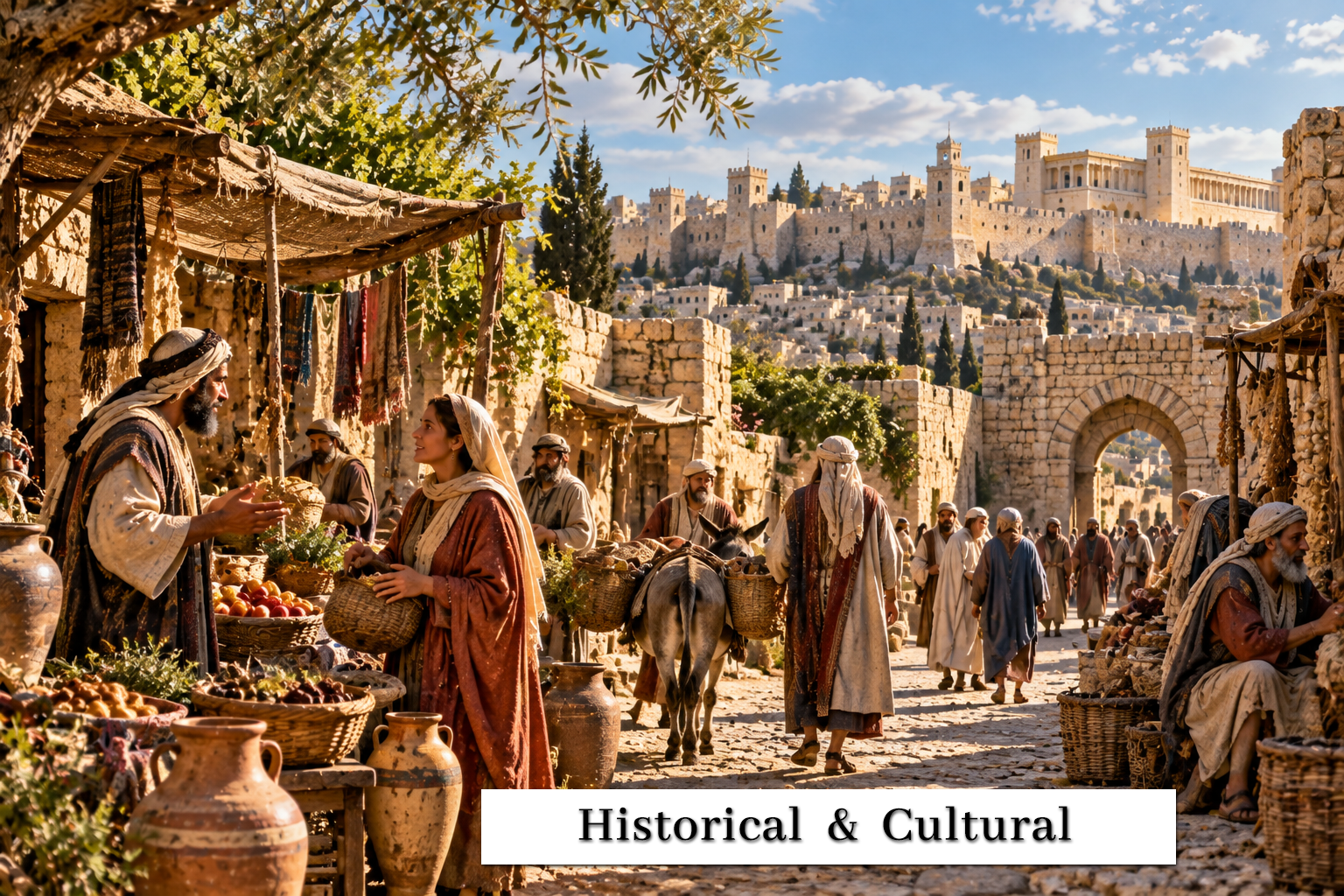
Traveling groups needed shared funds for food and other expenses, and John has already identified Judas as keeper of the common money box. Festival periods also involved purchases and charitable giving. Jewish Scripture repeatedly commands care for the poor, and Passover celebration had strong communal dimensions. The disciples' assumptions show that both expenditure and almsgiving were normal enough possibilities that neither aroused suspicion.

The verse does not by itself settle modern debates over exactly which night John places the meal on.

Why It Matters

The mundane guesses heighten the narrative irony. Judas is leaving to betray Jesus while his companions imagine ordinary service to the group or generosity to the poor.

The detail also shows that Jesus and his disciples maintained a common fund and that concern for the poor belonged naturally within their shared practice.