
Jesus in Context

The Raising of Lazarus and the Council's Response

Political/Legal Context •  John
A Visit With Jesus
The raising of Lazarus triggers a formal leadership crisis: witnesses report the sign, chief priests and Pharisees gather a council, and the discussion shifts from disputing Jesus to containing a growing movement.
Political/Legal Context

Introduction

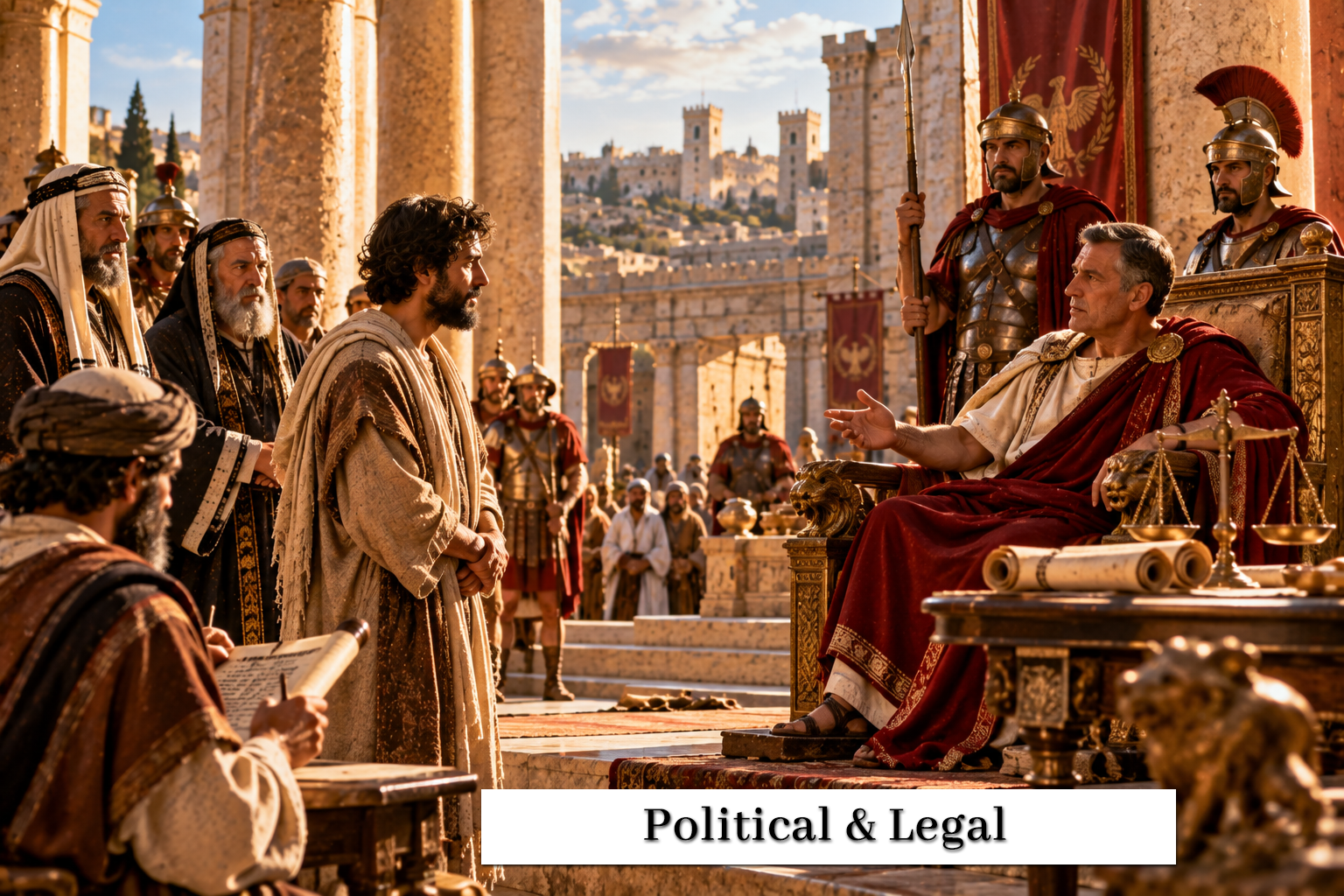
After Lazarus is raised, some witnesses go to the Pharisees and report what Jesus has done. John then depicts chief priests and Pharisees gathering a council and acknowledging that Jesus is doing many signs.

The issue before them becomes what those signs may produce among the population.

Historical and Cultural Context

Jerusalem's priestly leadership and Pharisaic teachers were not one homogeneous party, but John portrays representatives cooperating when Jesus' growing influence appears threatening. The council language evokes the governing leadership commonly associated with the Sanhedrin, though John does not provide a formal roster or procedural transcript. Significantly, the speakers do not deny that remarkable works are being reported; they fear that continued public belief will have consequences.

Why It Matters

The political setting explains why Lazarus' restoration becomes a turning point. A public sign near Jerusalem is no longer treated only as a theological problem.

John portrays leaders calculating what a mass response to Jesus might mean for public order, their own authority, and Rome's reaction. The sign therefore accelerates the movement toward Jesus' death.

Scripture References

Related People

Related Places