Resurrection in Scripture
The New Testament presents the Resurrection not as an unexpected correction to God's plan but as the fulfillment of it. After rising, Jesus tells His disciples that the Law of Moses, the Prophets, and the Psalms must be fulfilled, and He opens their minds to understand the Scriptures. The apostles subsequently proclaim the Resurrection in the same way: as the climactic act of God toward which the biblical story had been moving.
Not every Old Testament passage used in connection with the Resurrection is a direct prediction in the same sense. Some are explicit promises, some are patterns or types, and some receive their fullest meaning through the inspired interpretation of Jesus and His apostles. Keeping those distinctions in view allows the richness of the biblical testimony to stand without forcing every text into the same category.
Long before Easter morning, Jesus told His disciples that His path to glory would pass through rejection, death, and Resurrection. After Peter's confession at Caesarea Philippi, Jesus began to teach plainly that He must suffer, be killed, and after three days rise again. Similar predictions occur repeatedly as He moves toward Jerusalem.
The disciples did not fully understand these sayings before the Crucifixion. After the Resurrection, however, they remembered His words and recognized that the events of Easter had fulfilled what He had already told them.
When opponents demanded a sign, Jesus pointed to Jonah. As Jonah was in the great fish, so the Son of Man would be in "the heart of the earth." Jesus was not claiming that every detail of Jonah's experience was a direct prophecy of His own. Rather, He identified Jonah as a divinely given pattern that anticipated His death, burial, and emergence from the grave.
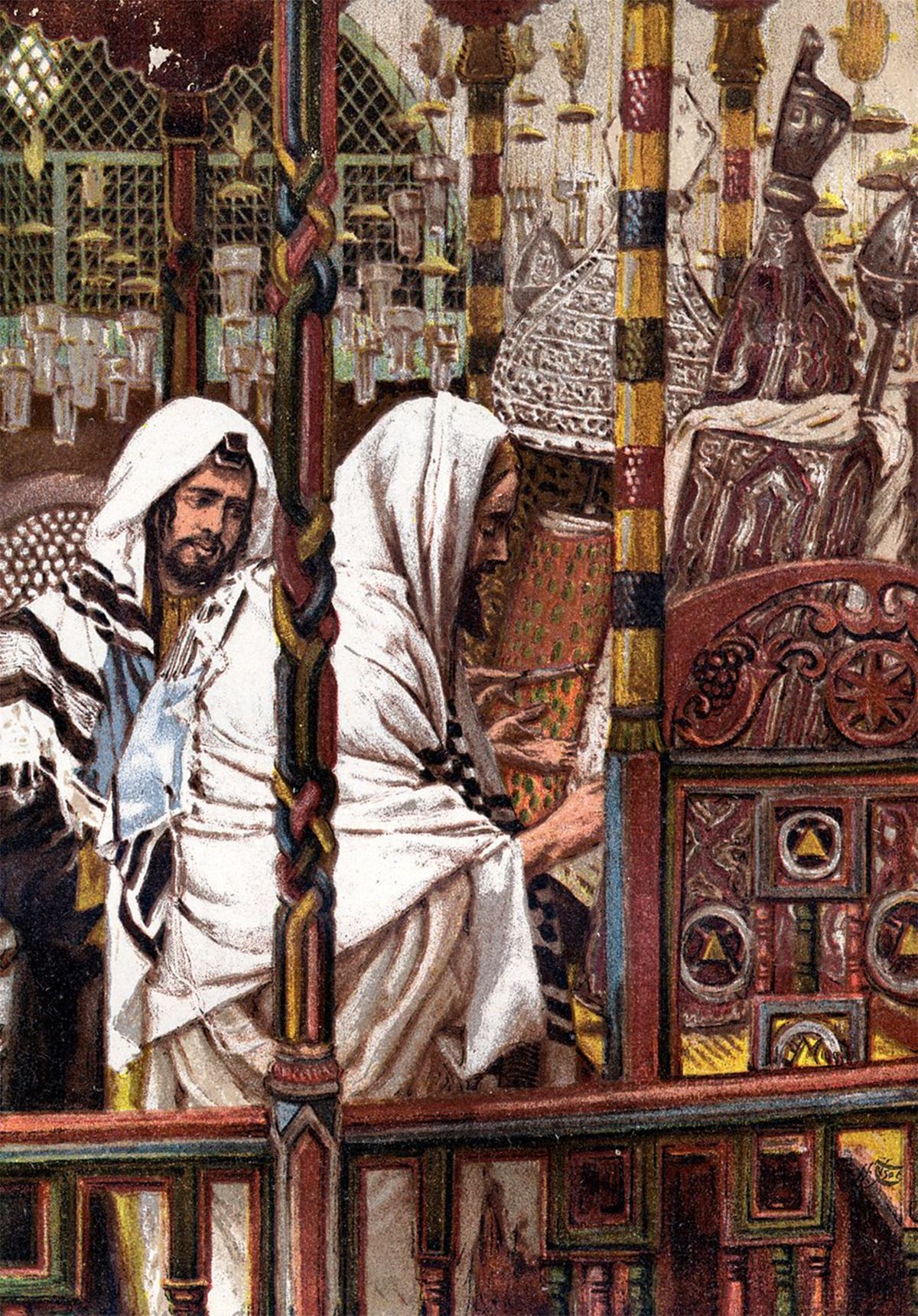
Psalm 16 became one of the most important Old Testament texts in apostolic resurrection preaching. David expresses confidence that God will not abandon him to Sheol or allow His Holy One to see corruption. At Pentecost Peter argues that David himself died and was buried, so the words ultimately looked beyond David to the Messiah.
Peter therefore applies the Psalm directly to Jesus: David foresaw and spoke about the Resurrection of the Christ. Paul makes essentially the same argument in the synagogue at Pisidian Antioch, contrasting David, who saw corruption, with Jesus, whom God raised and who did not.
Psalm 110 does not describe the empty tomb directly. Instead, it provides the biblical language by which the apostles explain what follows the Resurrection: the Messiah is exalted to God's right hand and reigns until His enemies are placed beneath His feet.
Jesus Himself cites this Psalm in discussing the identity of the Messiah. Peter then uses it at Pentecost after proclaiming Jesus' Resurrection, and Paul later employs the same royal imagery when describing the final victory of the risen Christ over every enemy, including death.
Isaiah's Servant is despised, pierced, bears the sins of others, is assigned a grave, and is cut off from the land of the living. Yet death is not the end of the passage. After making His life an offering for guilt, the Servant will "see His offspring," prolong His days, and see the result of His suffering.
Isaiah 53 does not narrate Easter morning in the manner of the Gospels. Its importance lies in the complete movement of the Servant's mission: suffering and death are followed by vindication and continuing life. The New Testament repeatedly identifies Jesus with this suffering Servant and understands His saving death within Isaiah's language.
Hosea calls rebellious Israel to return to the Lord with the confidence that God will restore His people: "After two days he will revive us; on the third day he will raise us up." In its original setting the passage concerns Israel's restoration rather than a direct prediction naming the Messiah.
For that reason, Hosea 6:2 should be used carefully. It contributes to the biblical pattern in which God's saving restoration is described as raising His people up on the third day, but the New Testament never explicitly says, "Hosea 6:2 predicted Jesus' Resurrection." It is best understood as part of the scriptural background rather than as an isolated proof text.
Genesis 22 is first of all the account of Abraham's testing and God's provision of a substitute for Isaac. Yet Hebrews interprets Abraham's willingness to offer his son in resurrection terms: Abraham reasoned that God was able even to raise the dead, and in a figurative sense he received Isaac back.
Christians have therefore long seen in Isaac a pattern that resonates with the Gospel - the beloved son, sacrifice, divine provision, and life received back from the realm of death. The New Testament does not present Genesis 22 as a simple direct prediction of Easter, but Hebrews itself makes resurrection central to the episode's meaning.
The Old Testament progressively reveals a hope stronger than death. Isaiah speaks of the dead living again. Daniel looks forward to a day when those who sleep in the dust will awake, some to everlasting life. Ezekiel's vision of dry bones uses resurrection imagery primarily for the national restoration of Israel, but it powerfully displays the God who gives life where death appears absolute.
By the time of Jesus, bodily resurrection at the end of the age was a recognized Jewish expectation, though not accepted by every Jewish group. Martha can therefore tell Jesus that she knows Lazarus will rise "in the resurrection on the last day." Jesus answers by directing that hope to Himself: "I am the resurrection and the life."
Peter's Pentecost sermon provides a model for apostolic interpretation. He begins with the historical claim that Jesus was killed and that God raised Him. He then turns to Psalm 16 to explain the Resurrection and Psalm 110 to explain Jesus' exaltation.
The argument is not that isolated verses accidentally resemble later events. Peter believes that David spoke as a prophet and that God's promises concerning the Messiah have reached their fulfillment in the crucified and risen Jesus.
Paul's preaching in Acts 13 follows the same pattern. After recounting Israel's history and the coming of Jesus, he announces that although Jesus was executed and laid in a tomb, "God raised him from the dead." Paul then appeals to the Psalms and to God's promises to David to explain what God has done.
This agrees with Paul's own summary in 1 Corinthians 15: Christ died for our sins "in accordance with the Scriptures" and was raised on the third day "in accordance with the Scriptures." For Paul, Easter is intelligible only within the story and promises of Israel's Scriptures.
According to the Scriptures
No single Old Testament verse contains the entire Easter story in advance. The biblical witness is broader and richer than that. Scripture establishes the pattern of God's faithfulness beyond death, promises the vindication of His righteous and anointed One, anticipates the suffering and triumph of the Servant and King, develops the hope of bodily resurrection, and provides types through which Jesus teaches His disciples to understand His own death and rising.
After Easter, the apostles did not abandon Israel's Scriptures for a new religion. They proclaimed that the God of Abraham, Isaac, Jacob, and David had fulfilled His promises by raising Jesus. The Resurrection was astonishing, but in their understanding it was not disconnected from what God had already revealed.
Continue with The Resurrection in Art to see how Christians across the centuries have portrayed the empty tomb, the risen Christ, and His appearances to the disciples.
© 2026 AVisitWithJesus
"For God so loved the world, that he gave his only begotten Son,
that whosoever believeth in him should not perish, but have everlasting life."