Resurrection Appearances
The New Testament testimony to the resurrection is not limited to the discovery of an empty tomb. Its writers repeatedly emphasize encounters in which individuals and groups said that they saw Jesus alive after His death. The Gospels preserve several of these meetings in narrative form, while Paul supplies additional witnesses whose appearances are not described elsewhere in detail.
Paul is especially important because he lists a series of witnesses: Cephas (Peter), the Twelve, more than five hundred believers at one time, James, all the apostles, and finally Paul himself. ( 1 Corinthians 15:5-8 )
John gives the fullest account of Jesus' appearance to Mary Magdalene. After Peter and the beloved disciple leave the empty tomb, Mary remains outside weeping. She first sees two angels and then Jesus, whom she initially mistakes for the gardener. She recognizes Him when He calls her by name and afterward tells the disciples that she has seen the Lord.
Matthew records another encounter as women leave the tomb to report the angel's message. Jesus meets them, they take hold of His feet and worship Him, and He repeats the instruction that His followers are to go to Galilee.
Luke reports that by the time the Emmaus disciples return to Jerusalem, the gathered believers are already saying that Jesus has appeared to Simon. Paul likewise places an appearance to Cephas first in his list. No Gospel preserves a detailed narrative of this private encounter.
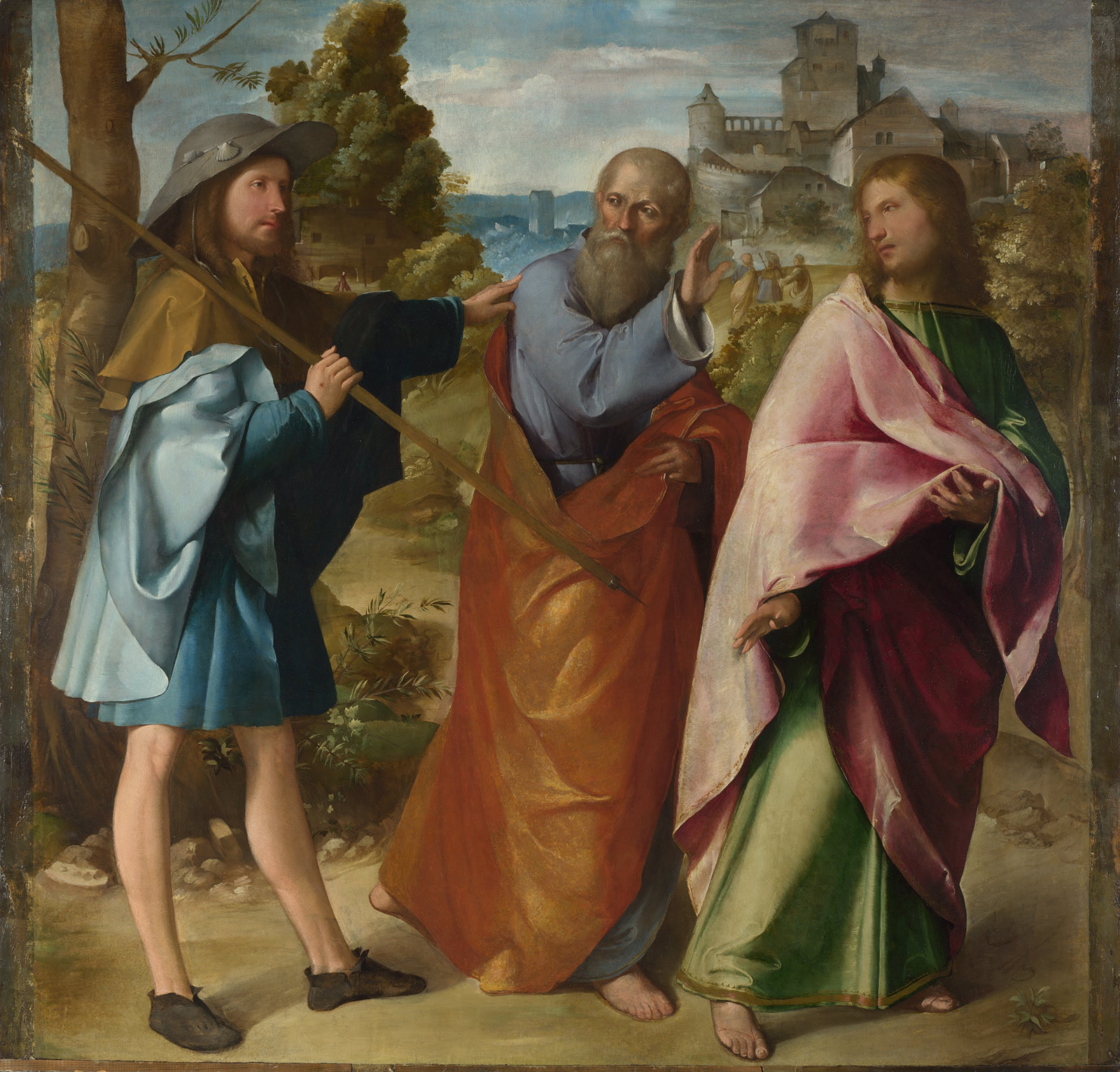
Luke describes two disciples traveling from Jerusalem to Emmaus. Jesus joins them without being recognized, listens as they recount the events surrounding His death, and explains the Scriptures concerning the Messiah. They recognize Him when He breaks bread, after which they immediately return to Jerusalem.
On Easter evening Jesus appears to the gathered disciples. Luke emphasizes the physical character of the encounter: Jesus invites them to look at His hands and feet, tells them to touch Him, and eats in their presence. John records the same evening appearance behind locked doors and notes that Thomas was absent.
Thomas initially refuses to accept the other disciples' testimony without seeing the wounds for himself. Eight days later Jesus appears again while Thomas is present and invites him to examine His hands and side. Thomas responds by addressing Jesus as "My Lord and my God."
John records an appearance in Galilee to Peter, Thomas, Nathanael, the sons of Zebedee, and two other disciples. After an unsuccessful night of fishing, they encounter Jesus on the shore, experience a remarkable catch of fish, and eat breakfast with Him. The episode leads into Jesus' threefold commission to Peter.
Matthew records the eleven disciples going to a mountain in Galilee where Jesus had directed them. There they see and worship Him, though Matthew also notes that some doubted. Jesus then gives the commission to make disciples of all nations.
Paul reports that Jesus appeared to more than five hundred believers at one time and adds that most of them were still alive when he wrote to the Corinthians. The New Testament does not tell us where this appearance occurred or provide a narrative account of it. It is therefore important evidence in Paul's witness list, but its setting should not be asserted beyond what the text supplies.
Paul next names James. The verse does not identify him further, but the James most commonly understood here is James, the brother of Jesus, who became an important leader in the Jerusalem church. The New Testament gives no narrative of the appearance itself, so its details remain unknown.
Paul follows the appearance to James with one to "all the apostles." Because he has already mentioned "the Twelve," this expression may refer to a wider apostolic group. Scripture does not provide enough detail to identify the occasion with certainty.
Finally, Paul includes himself among those to whom the risen Jesus appeared. His encounter occurred later than the Easter-to-Ascension appearances and is associated in Acts with his conversion while traveling to Damascus. Paul repeatedly regarded this encounter as foundational to his apostleship.
Why the Appearances Matter
The resurrection claim in the New Testament is presented as testimony about encounters, not simply as an inference from an empty tomb. The witnesses are varied, the appearances occur in different settings, and some of the people involved are initially confused, frightened, or doubtful. Paul also appeals to a large group of witnesses and observes that many were still living when he wrote.
Those features do not by themselves settle every historical question, but they form an important part of the evidence that must be explained. The next page considers that historical case more directly.
Continue with Evidence for the Resurrection, or use the navigation at the right (or below on a smaller screen).
© 2026 AVisitWithJesus
"For God so loved the world, that he gave his only begotten Son,
that whosoever believeth in him should not perish, but have everlasting life."