a visit with jesus

 Jesus in Context

Festivals and Holy Days

Preparation Day and the Sixth Hour

Festivals and Holy Days

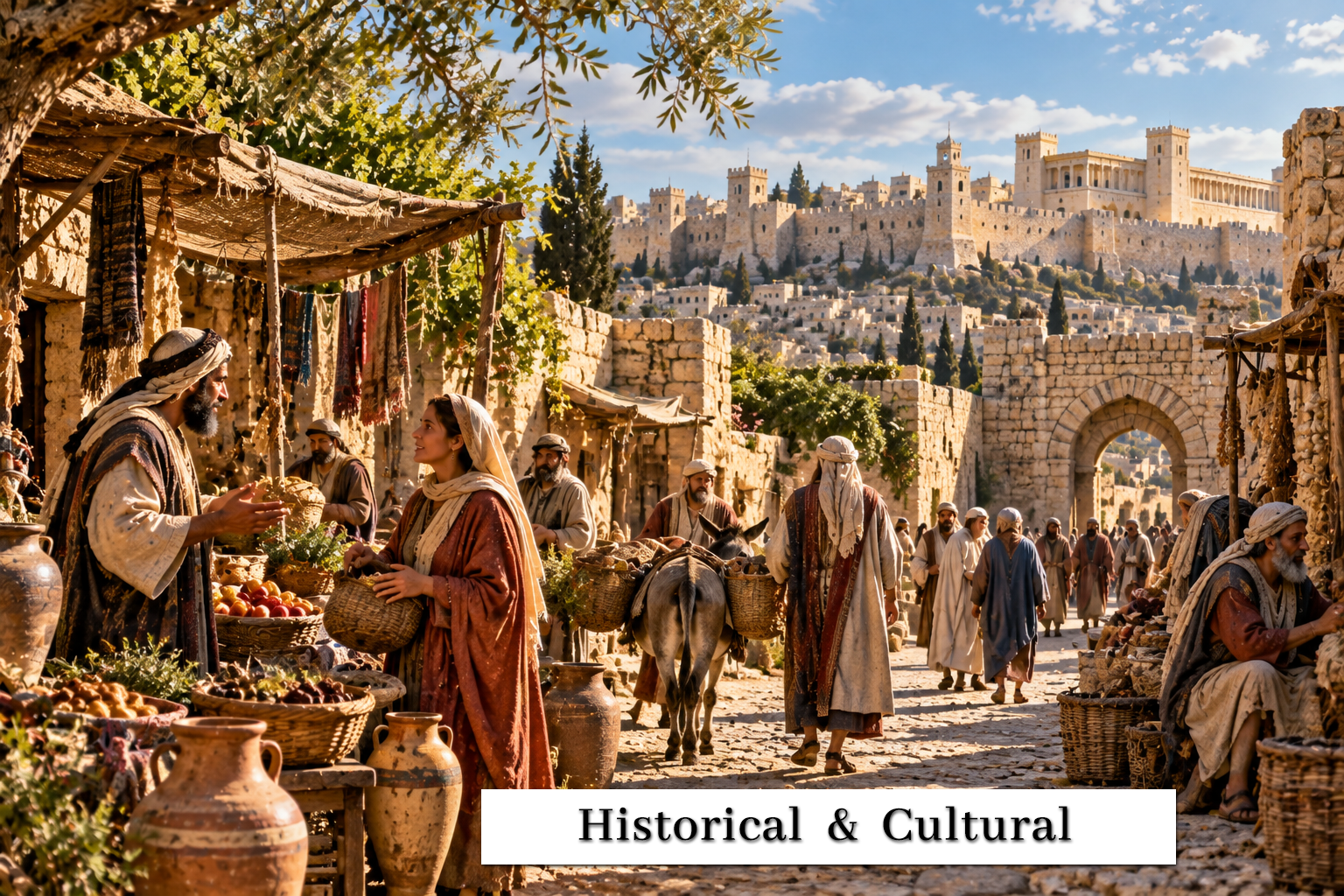
John dates the final proceedings to the Preparation of Passover at about the sixth hour; both 'Preparation' and ancient hour reckoning require care when comparing John's chronology with the Synoptic Gospels.
Scripture: John 19:14

Honor and Shame

We Have No King but Caesar

Honor and Shame

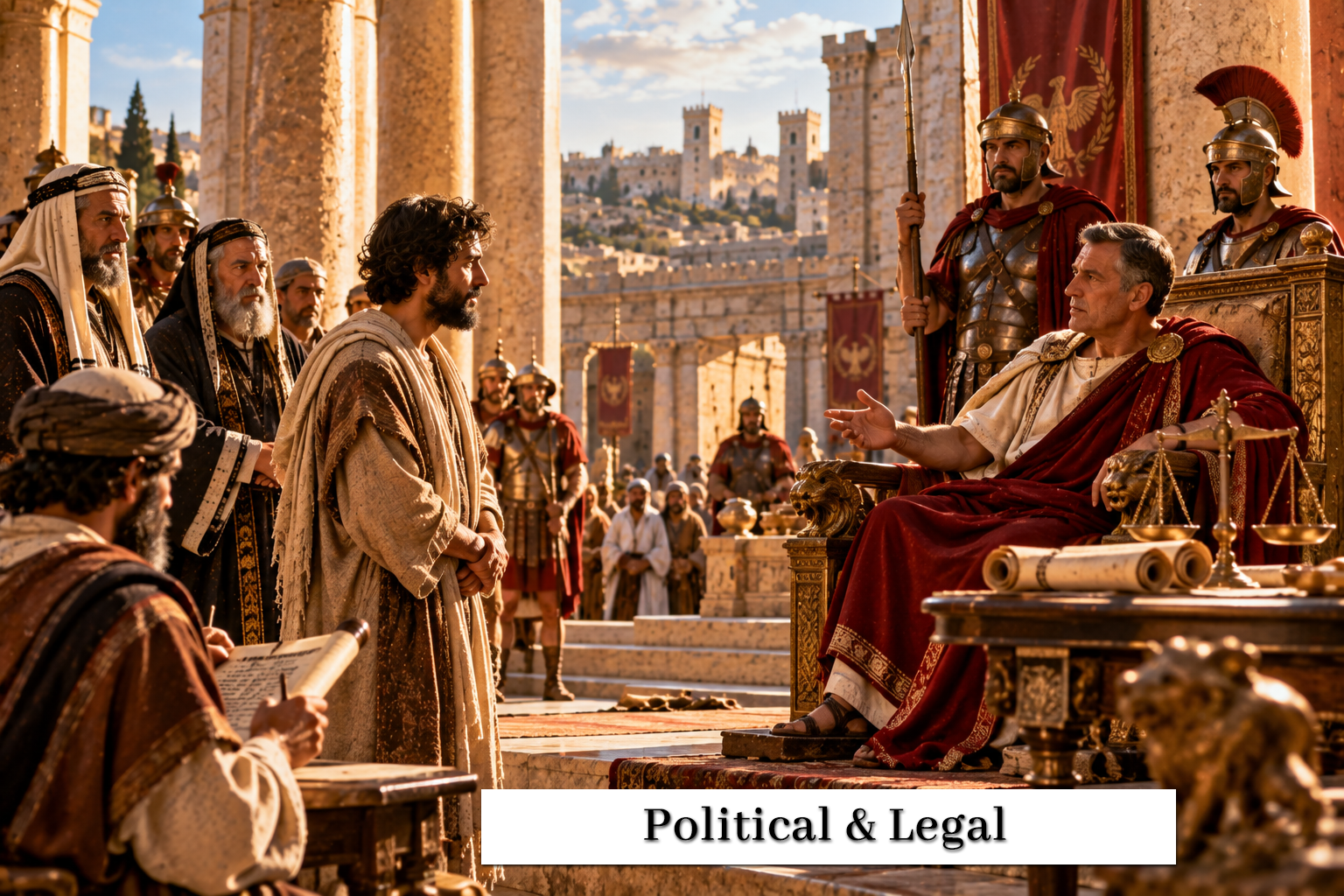
The chief priests' declaration 'We have no king but Caesar' is a politically effective rejection of Jesus' kingship, sharpened by Israel's own scriptural confession of God as king.

Scripture: John 19:15

Political/Legal Context

Golgotha and Public Roman Crucifixion

Political/Legal Context

Jesus carries the cross toward Golgotha, the 'Place of a Skull,' where Roman crucifixion near Jerusalem exposes him publicly between two other condemned men.

Scripture: John 19:17; John 19:18; John 19:20

Language and Idiom

The Inscription Over the Cross in Three Languages

Language and Idiom

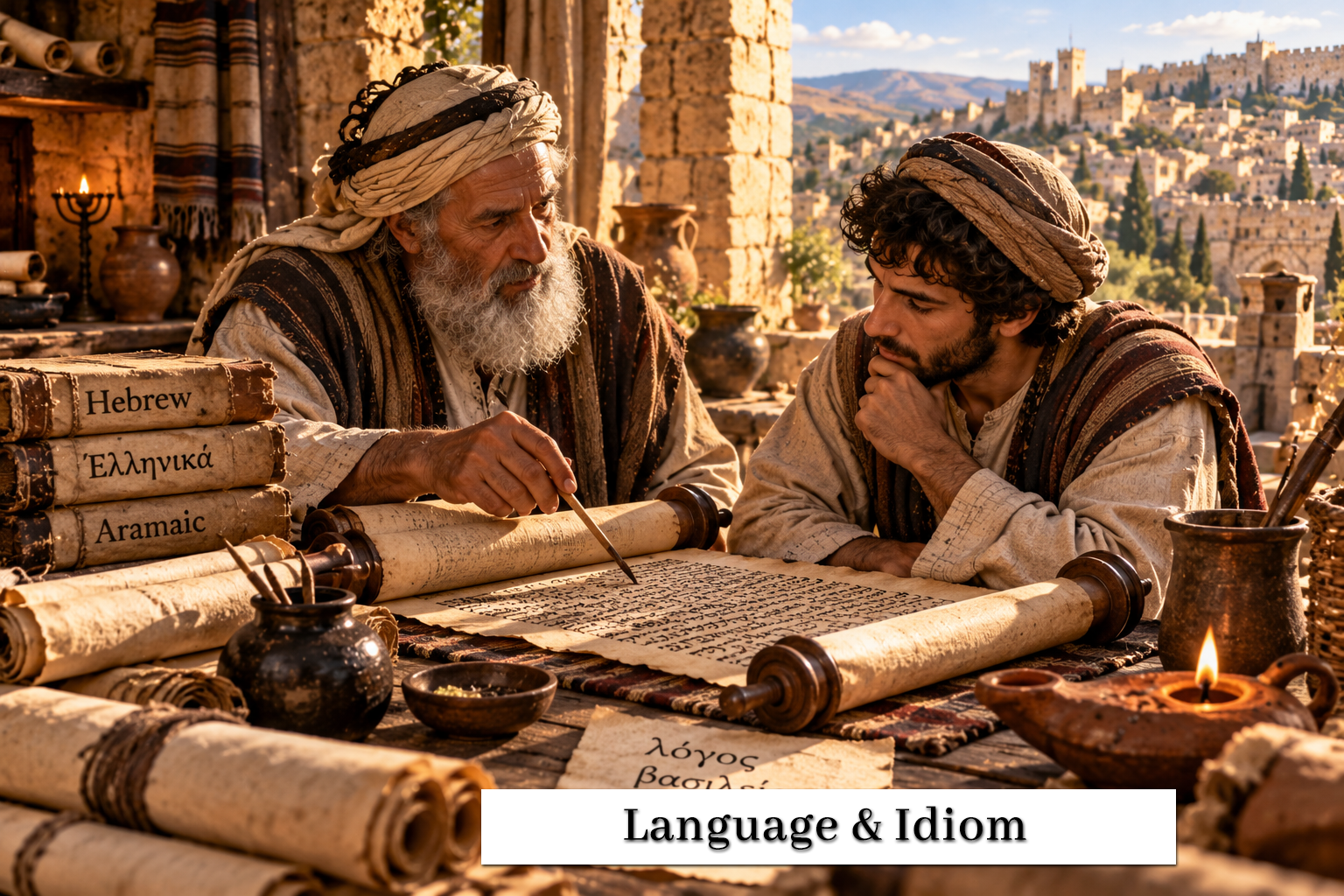
Pilate's titulus publicly states 'Jesus of Nazareth, the King of the Jews' in Hebrew, Greek, and Latin, turning the Roman statement of the charge into an involuntary proclamation read by many.

Scripture: John 19:19; John 19:20

Clothing

The Soldiers Divide Jesus' Garments and Cast Lots

Clothing

The soldiers' division of Jesus' clothing reflects a practical privilege of executioners and, for John, precisely fulfills Psalm 22:18 when they cast lots for the seamless tunic.

Scripture: John 19:23; John 19:24

Marriage and Family

Woman, Behold Your Son: A New Household at the Cross

Marriage and Family

From the cross Jesus entrusts his mother and the beloved disciple to one another, creating a practical household relationship in the midst of execution.

Scripture: John 19:25; John 19:26; John 19:27

Food and Dining

Sour Wine, Hyssop, and 'It Is Finished'

Food and Dining

Jesus' thirst, the sour wine offered on a sponge, John's hyssop detail, and the declaration tetelestai combine physical reality, scriptural fulfillment, Passover resonance, and the completion of Jesus' work.

Scripture: John 19:29; John 19:30

Burial and Mourning

The High Sabbath and the Breaking of Legs

Burial and Mourning

The approaching festival Sabbath creates urgency to remove the bodies, leading to a request for Roman authorization to break the victims' legs and hasten the end of the executions.

Scripture: John 19:31

Political/Legal Context

The Spear, Blood and Water, and Eyewitness Testimony

Political/Legal Context

A soldier pierces Jesus' side after finding him dead, and John strongly emphasizes eyewitness testimony to the resulting blood and water rather than offering a medical theory for the phenomenon.

Festivals and Holy Days

Unbroken Bones and the Pierced One

Festivals and Holy Days

John interprets Jesus' unbroken bones through Passover and righteous-sufferer Scripture and applies Zechariah's words about looking on the pierced one to the crucified Jesus.

Burial and Mourning

Joseph, Nicodemus, and an Honorable Burial

Burial and Mourning

Joseph of Arimathea obtains Roman permission for Jesus' body, and Nicodemus brings an extraordinary quantity of aromatics, turning formerly cautious discipleship into conspicuous burial action.

Scripture: John 19:38; John 19:39

Burial and Mourning

Linen Cloths, Spices, and Jewish Burial Practice

Burial and Mourning

John explicitly identifies the wrapping of Jesus' body in linen cloths with spices as Jewish burial practice, giving unusually direct cultural explanation within the Gospel itself.

Scripture: John 19:40

Page 26 of 40