Joseph of Arimathea, whom John calls a secret disciple because of fear, asks Pilate for Jesus' body and receives permission. Nicodemus, earlier remembered as the man who came to Jesus by night, joins him with myrrh and aloes.
Jesus in Context
Joseph, Nicodemus, and an Honorable Burial

Joseph of Arimathea obtains Roman permission for Jesus' body, and Nicodemus brings an extraordinary quantity of aromatics, turning formerly cautious discipleship into conspicuous burial action.
Introduction
Historical and Cultural Context
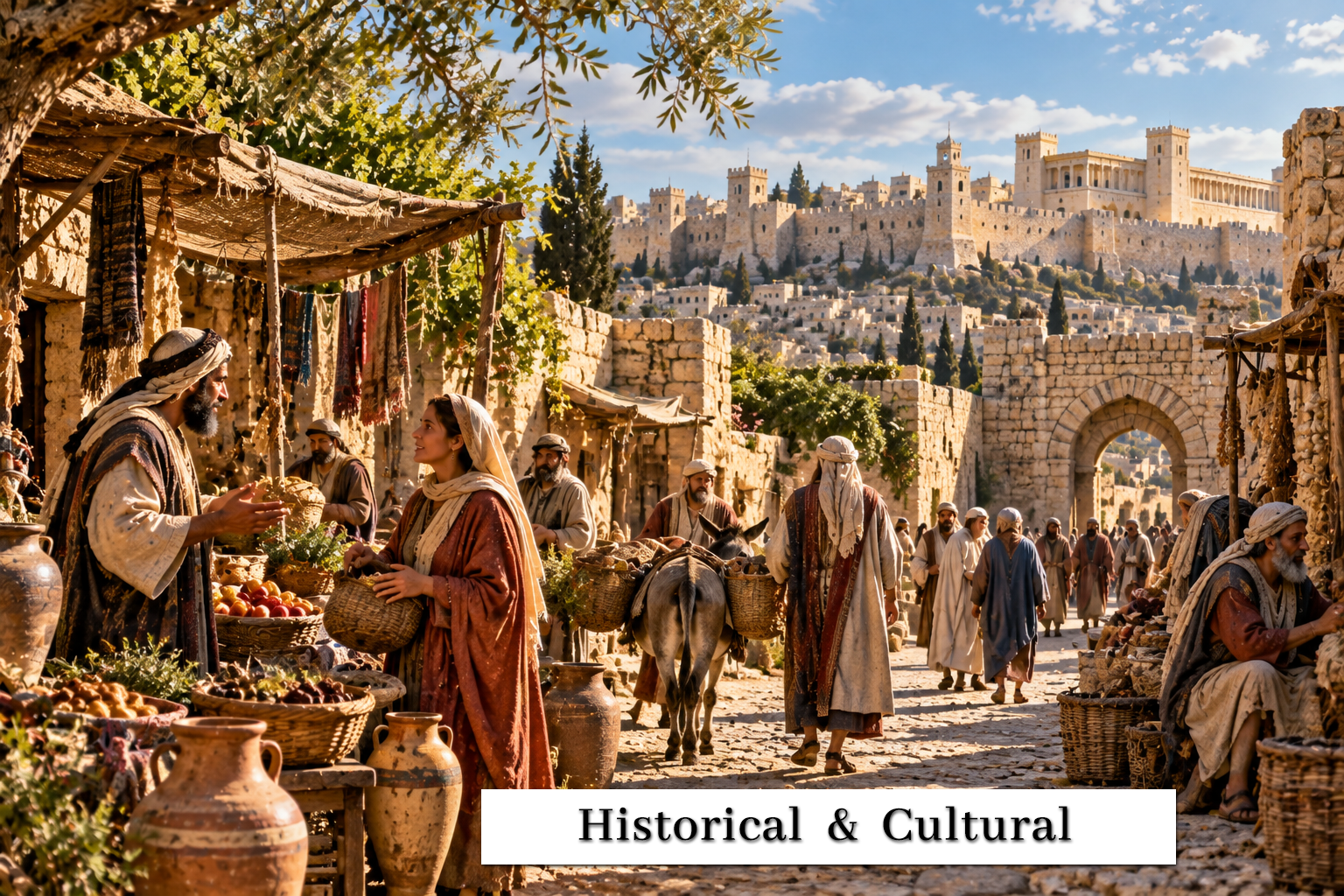
Roman authority controlled the body of a person executed by Rome, so Joseph's request to Pilate is a necessary and potentially conspicuous act. Handling a corpse also carried ritual-impurity consequences within Jewish practice. Nicodemus brings about one hundred Roman litrai of aromatics—roughly thirty-two to thirty-three kilograms, or around seventy to seventy-five pounds—an exceptionally large amount suggestive of lavish honor. Myrrh was aromatic resin; the 'aloes' here refers to fragrant material, not the modern medicinal succulent gel.
Why It Matters
The burial scene reverses the earlier secrecy attached to both men. Joseph approaches the Roman governor, and Nicodemus arrives with a conspicuously costly quantity of burial material.
Jesus has died under public shame, yet these disciples now treat his body with extraordinary honor.