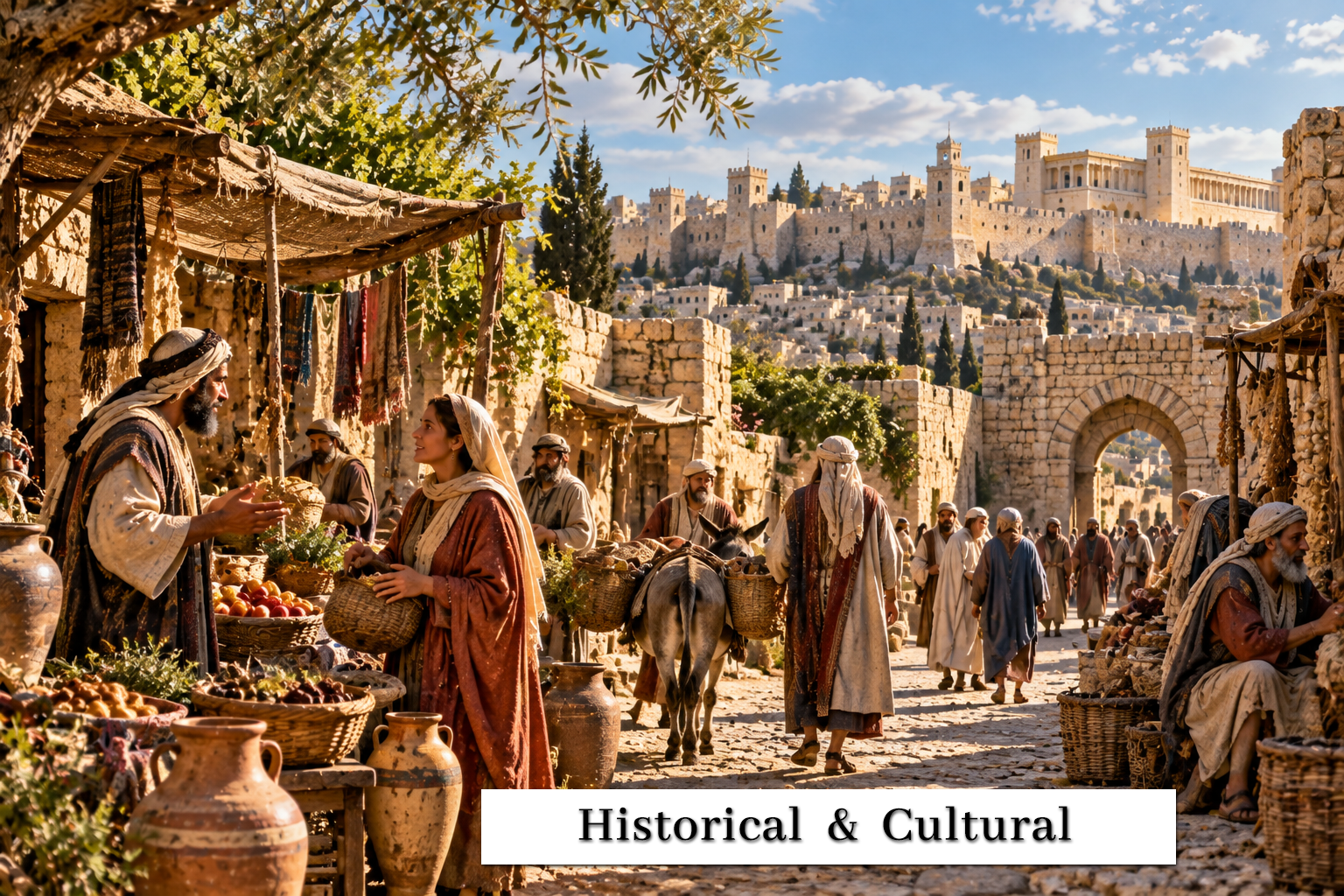
Flesh and Bones: The Bodily Resurrection
Historical/Cultural Context
Jesus' invitation to see and touch his 'flesh and bones' directly distinguishes the risen Jesus from a disembodied spirit in Luke's account.

Flesh and Bones: The Bodily Resurrection
Historical/Cultural Context
Jesus' invitation to see and touch his 'flesh and bones' directly distinguishes the risen Jesus from a disembodied spirit in Luke's account.
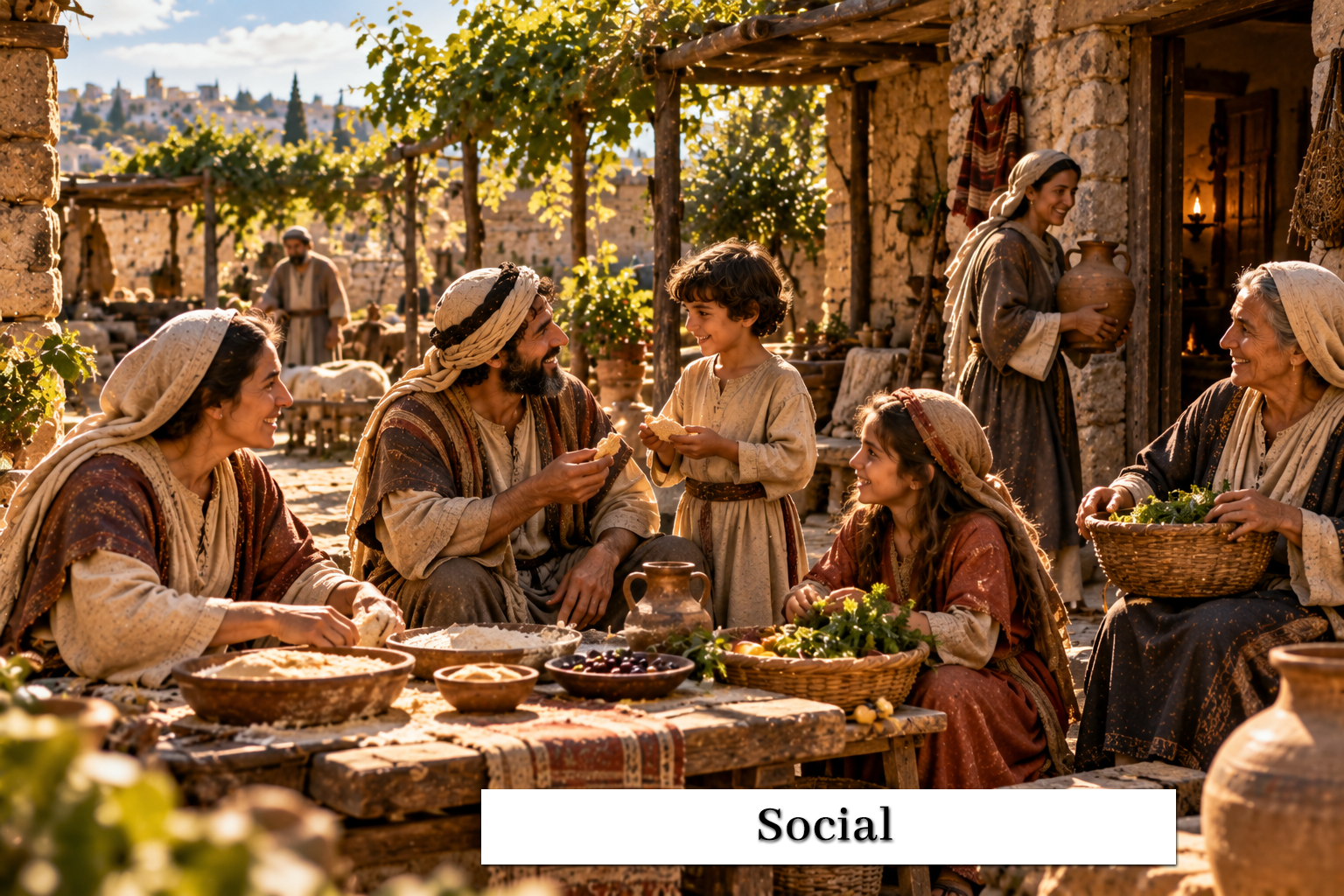
Peace Be to You
Social Context
Jesus' resurrection greeting 'Peace be to you' reflects the deeply rooted Jewish language of shalom, a greeting that invokes well-being rather than merely the absence of conflict.
Jesus Eats Broiled Fish
Food and Dining
Luke's report that the risen Jesus eats fish before the disciples uses an ordinary Galilean food to underscore the bodily reality of the resurrection.
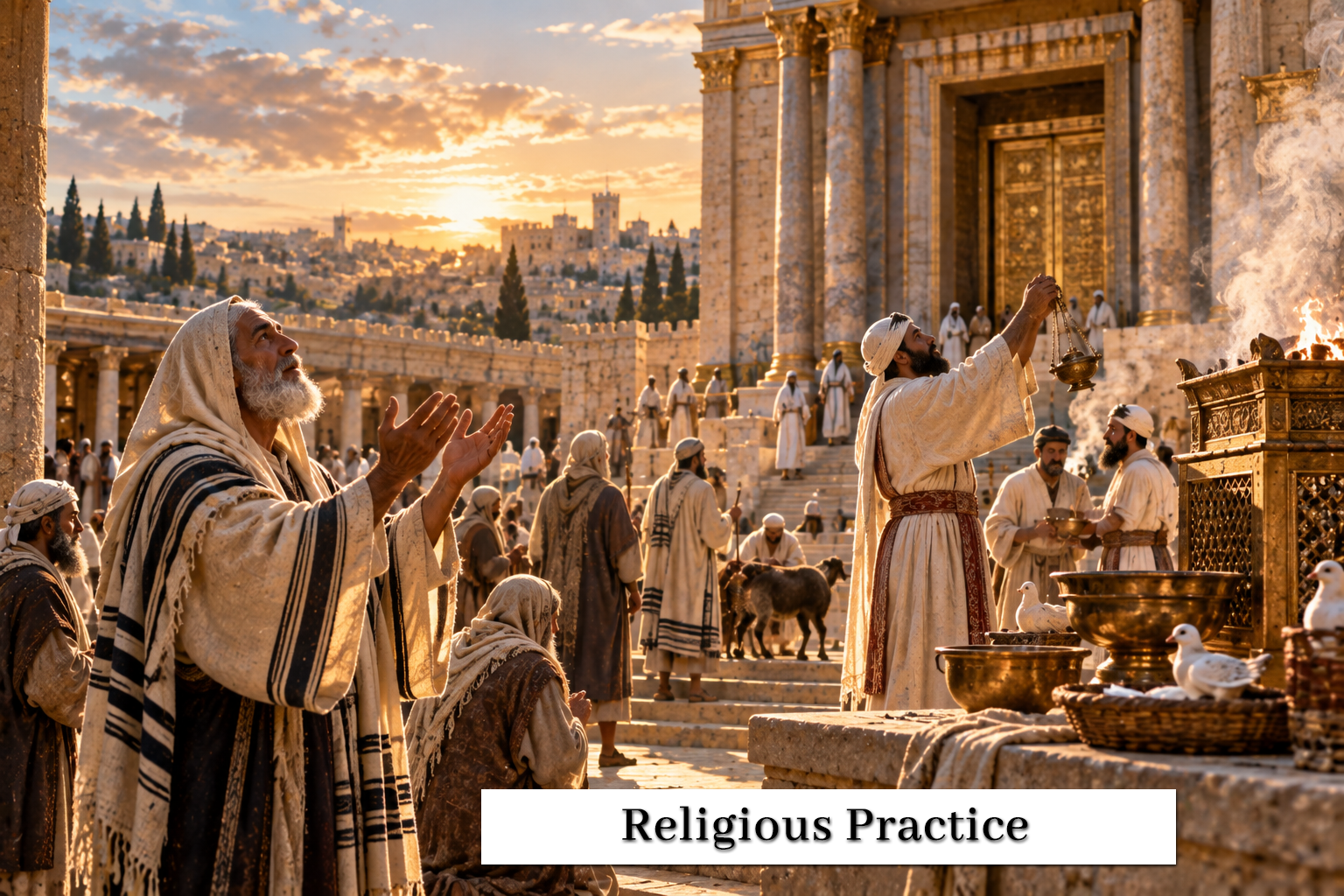
The Law, the Prophets, and the Psalms
Religious Practice
Jesus' reference to the Law of Moses, the Prophets, and the Psalms describes Israel's Scriptures in broad traditional divisions and frames his mission as their fulfillment.
Beginning at Jerusalem: Witnesses to All Nations
Historical/Cultural Context
Jesus commissions repentance and forgiveness to be proclaimed to all nations beginning at Jerusalem, turning the city of his death and resurrection into the starting point of a worldwide witness.
Lifting the Hands to Bless
Religious Practice
Jesus lifts his hands to bless the disciples before his departure, using a recognizable biblical posture for pronouncing blessing.
Bethany and Jesus' Departure
Geography
Luke places Jesus' final departure in the vicinity of Bethany, east of Jerusalem, linking the end of the Gospel with the Mount of Olives landscape of Jesus' final week.
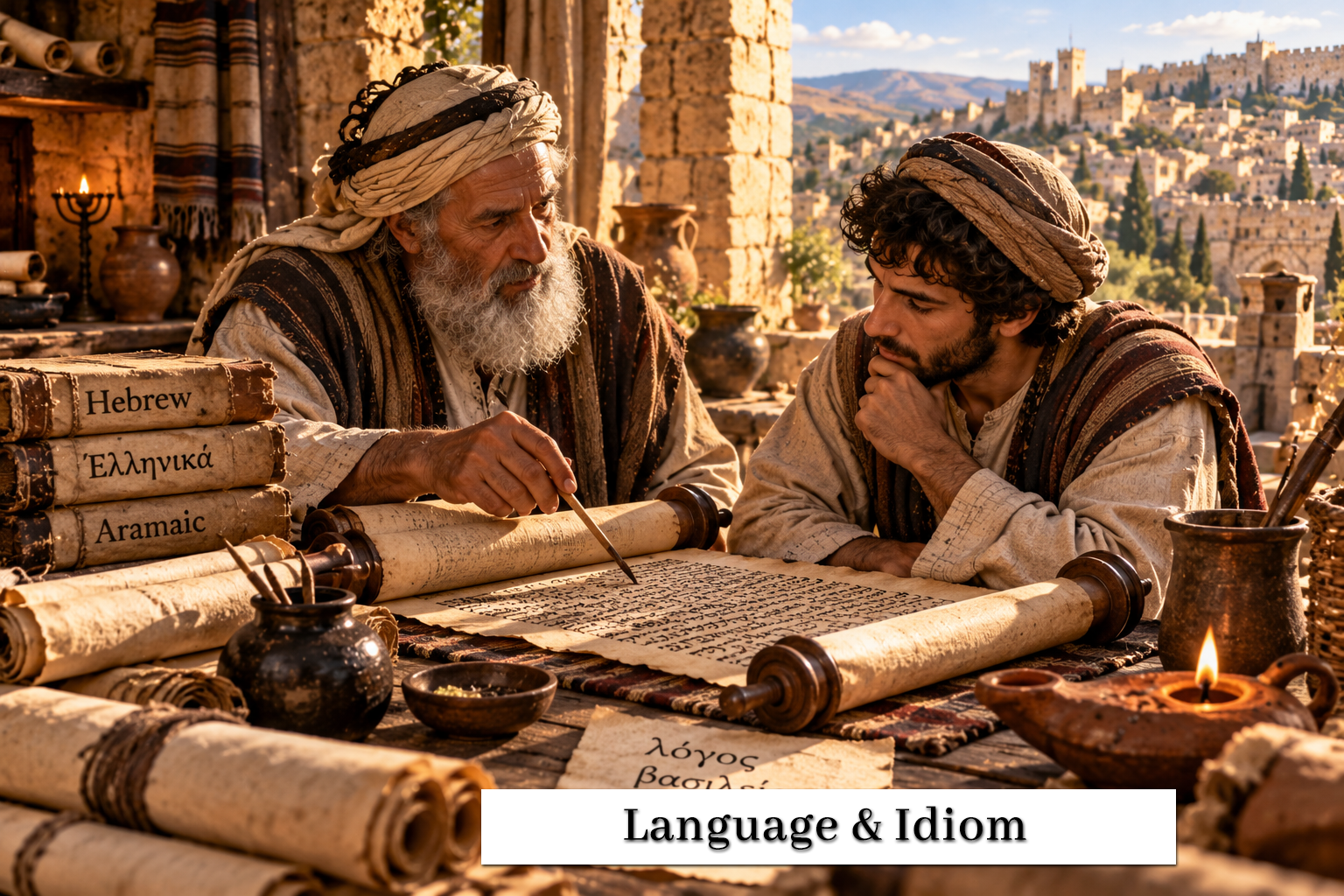
The Word: Logos in John's Prologue
Language and Idiom
John calls Jesus the Logos, the Word who was with God and was God, using language that recalls God's creative speech while making an explicit claim about Christ's divine identity.
Grace and Truth and the Language of Exodus
Language and Idiom
John's description of Jesus as 'full of grace and truth' echoes the Old Testament language of God's covenant character and places the incarnate Word within the revelation associated with Moses.
Priests and Levites Question John the Baptist
Religious Practice
A Jerusalem delegation of priests and Levites questions John the Baptist about his identity, reflecting Temple-centered religious authority and contemporary expectations concerning Elijah and the promised prophet.
Bethany Beyond the Jordan
Geography
John locates the Baptist at 'Bethany beyond the Jordan,' a place distinct from the better-known Bethany near Jerusalem whose exact ancient location remains debated.
Rabbi: A Jewish Title for Teacher
Language and Idiom
John preserves the Semitic title 'Rabbi' and immediately translates it as teacher, showing how Jesus' first followers addressed him within a recognizable Jewish teacher-disciple setting.
© 2026 AVisitWithJesus
"For God so loved the world, that he gave his only begotten Son,
that whosoever believeth in him should not perish, but have everlasting life."