a visit with jesus

 Jesus in Context

Language and Idiom

The Messiah From Bethlehem and the Line of David

Language and Idiom

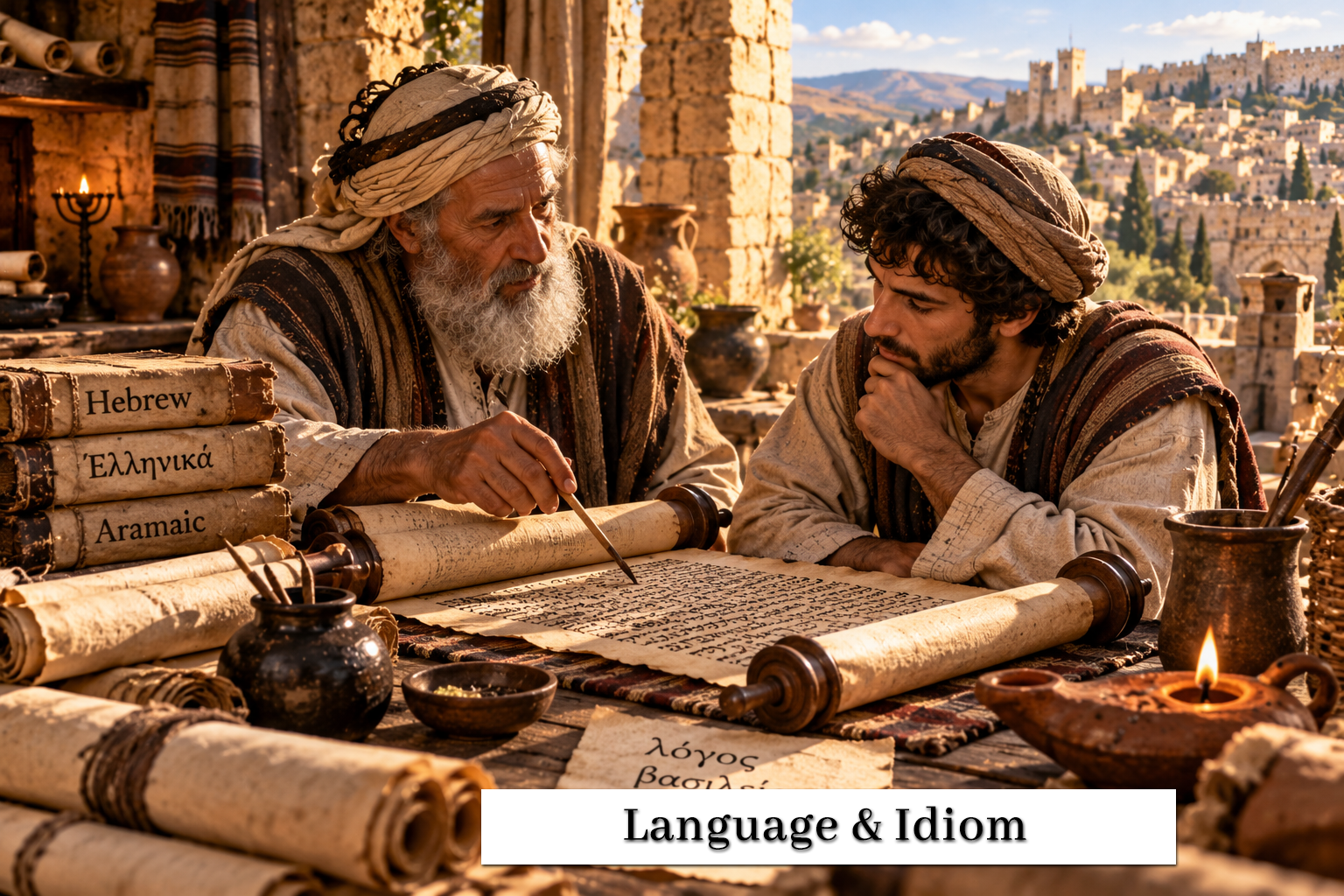
Debate at Tabernacles joins expectations of the Prophet, the Messiah, Davidic descent, and Bethlehem, showing both the scriptural basis and the diversity of first-century attempts to identify Jesus.
Scripture: John 7:41-42

Political/Legal Context

Temple Officers Sent to Arrest Jesus

Political/Legal Context

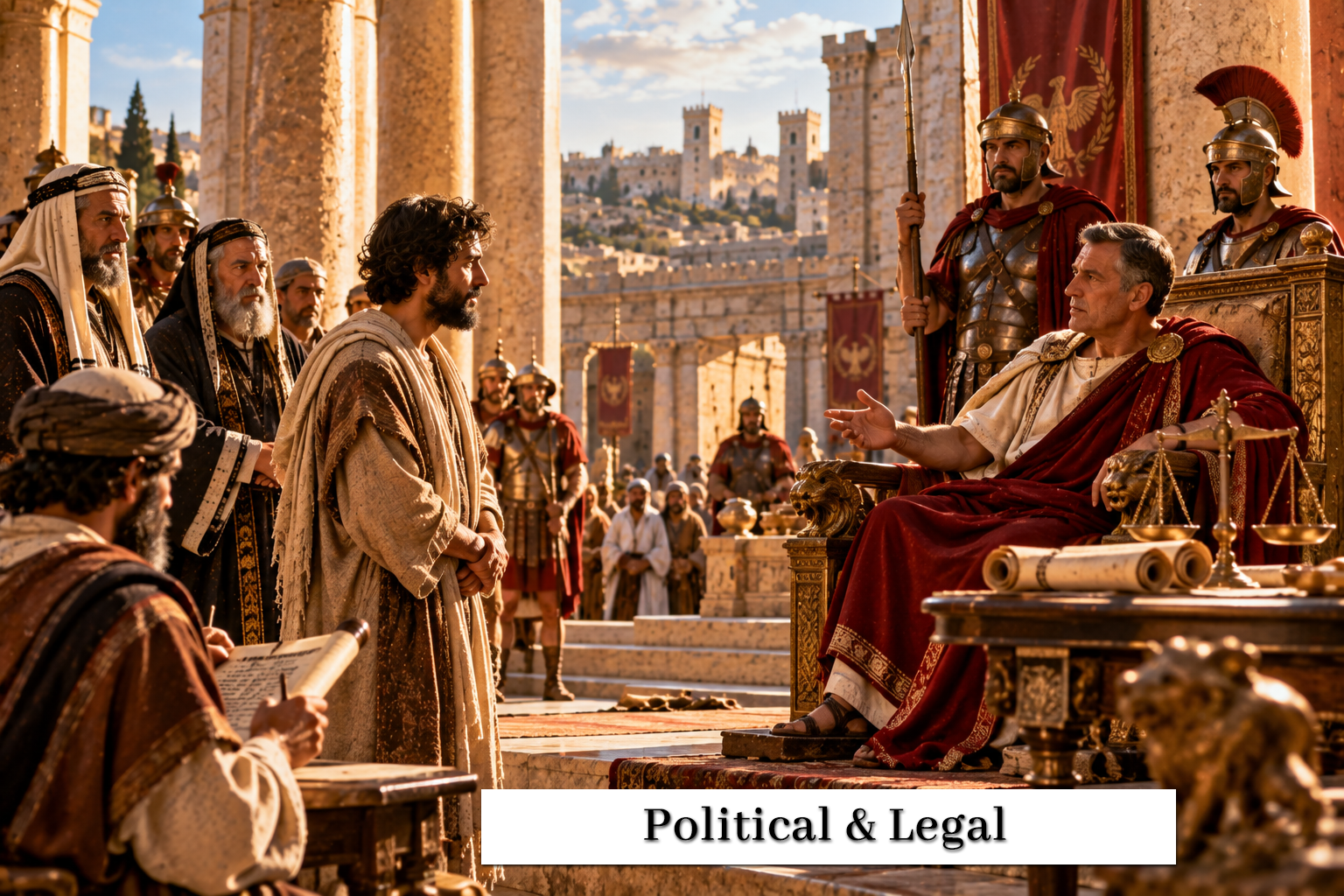
Temple officers return without arresting Jesus, and the leaders' response exposes the interaction of institutional authority, public opinion, and social contempt in the Jerusalem conflict.

Scripture: John 7:49

Law and Justice

Nicodemus Appeals to Due Process

Law and Justice

Nicodemus challenges his colleagues to hear Jesus before judging him, only to be answered with ridicule about Galilee rather than a direct response to his legal principle.

Scripture: John 7:51; John 7:52

Historical/Cultural Context

The Woman Taken in Adultery: An Ancient Textual Question

Historical/Cultural Context

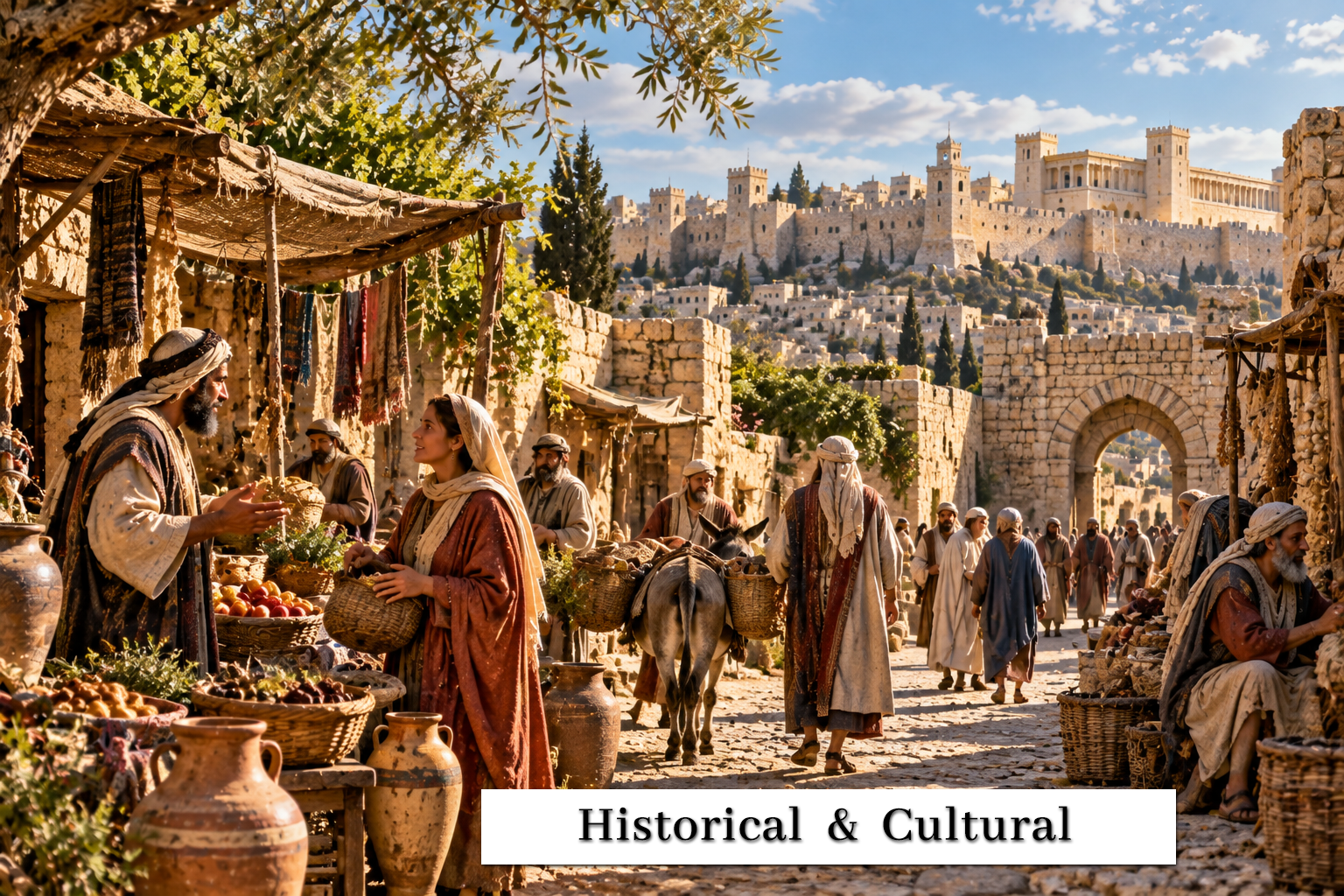
The beloved account of the woman taken in adultery has an unusual manuscript history: it is absent from the earliest surviving copies of John and appears in different locations in later manuscripts.

Law and Justice

Adultery, Witnesses, and the First Stone

Law and Justice

The accusation against the woman invokes Torah laws about adultery, witnesses, and capital judgment, while the conspicuous absence of the man and the stated attempt to trap Jesus make the legal scene irregular.

Scripture: John 8:3-4; John 8:4-5; John 8:3-5; John 8:3-7; John 8:7

Festivals and Holy Days

The Light of the World at Tabernacles

Festivals and Holy Days

Jesus' claim to be the Light of the World stands within biblical light imagery and the festival setting of Tabernacles, where later Jewish tradition remembers spectacular Temple illumination.

Scripture: John 8:12

Temple

Teaching in the Temple Treasury

Temple

John locates Jesus' teaching in the Temple treasury area, a public setting associated with offerings and the Court of the Women rather than a private room for storing money.

Scripture: John 8:13; John 8:17

Law and Justice

The Law of Two Witnesses and the Father-Son Testimony

Law and Justice

Jesus answers the challenge to his self-testimony by invoking the Torah's two-witness principle and identifying himself and the Father who sent him as the two witnesses.

Scripture: John 8:15

Servants and Slavery

The Truth Shall Make You Free

Servants and Slavery

Jesus' promise that truth makes disciples free provokes an appeal to Abrahamic ancestry, while his answer uses the real insecurity of slavery to describe bondage to sin and the Son's power to grant lasting freedom.

Scripture: John 8:33; John 8:35

Honor and Shame

Abraham's Children and the Honor of the Father

Honor and Shame

Jesus challenges an appeal to Abrahamic descent by arguing that genuine children should resemble their father, turning ancient kinship and honor expectations into a test of conduct.

Honor and Shame

A Samaritan and a Demon?

Honor and Shame

Calling Jesus a Samaritan and accusing him of having a demon functions as hostile social and religious insult, combining outsider labeling with an attempt to discredit his teaching.

Scripture: John 8:48

Language and Idiom

Before Abraham Was, I Am

Language and Idiom

Jesus' declaration 'Before Abraham was, I am' contrasts Abraham's coming into existence with Jesus' continuing 'I am,' forming one of John's strongest claims to preexistence and divine identity.

Scripture: John 8:58

Page 16 of 40