Qumran Cave 1
The first discovery
The Great Isaiah Scroll, Community Rule, and other remarkably preserved manuscripts.

In 1947, an extraordinary discovery in the wilderness near the Dead Sea opened a window into the Scriptures and religious life of the centuries surrounding the coming of Jesus. Ancient scrolls, preserved in caves for nearly two thousand years, gave the world manuscripts older than the medieval Hebrew Bible copies previously available to scholars.
Bedouin shepherds found the first scrolls in a cave in the cliffs near Qumran. Archaeologists and local searchers subsequently recovered manuscripts and fragments from eleven caves. The arid environment helped preserve writings on parchment and papyrus that would ordinarily have been lost.
Many manuscripts date from the last centuries before Christ and the first century AD. The nearby settlement of Qumran has often been associated with the Essenes, a Jewish religious movement, although the identity of those who collected and deposited the scrolls remains debated.
The scrolls include copies of books of the Hebrew Bible, writings known from other ancient Jewish literature, biblical commentaries, prayers, hymns, rules for communal life, and works expressing hopes for God's future intervention in history. Most texts are in Hebrew, with others in Aramaic or Greek.
Among the discoveries are biblical manuscripts roughly a thousand years older than many of the complete medieval Hebrew manuscripts long used for comparison. Their substantial agreement with later textual traditions demonstrates remarkable continuity, while their differences reveal that some textual variation already existed in antiquity. Both observations help us understand how faithfully the Scriptures were copied and transmitted.
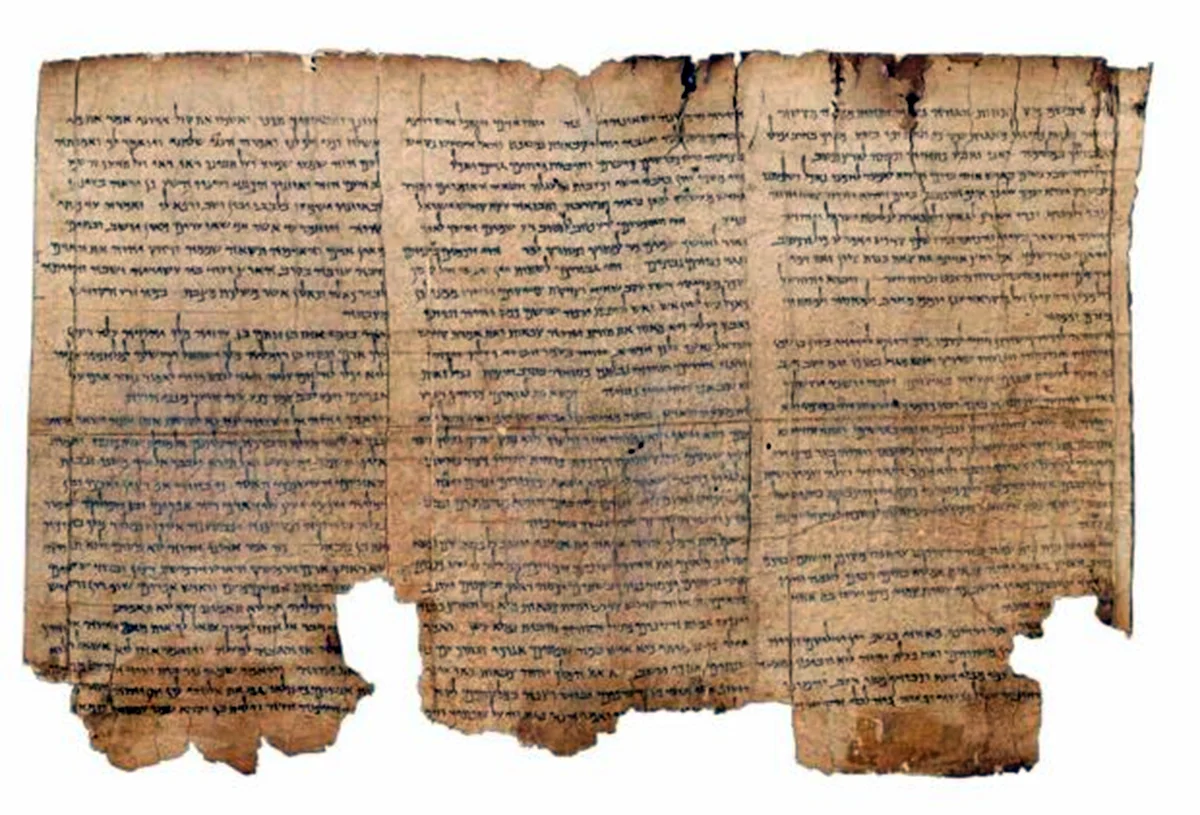
The Great Isaiah Scroll (1QIsaa) preserves nearly the entire book of Isaiah and is among the most celebrated biblical scrolls. The Community Rule describes the discipline and ideals of a particular Jewish community. The War Scroll portrays an anticipated struggle between the forces of light and darkness. The Copper Scroll, found in Cave 3, contains an unusual list of treasure locations. The Temple Scroll, from Cave 11, presents an extensive vision of laws concerning the Temple and worship.
The Dead Sea Scrolls are not Christian writings, and they do not contain accounts of Jesus' life. Their importance to Christian readers lies in the Jewish setting they illuminate: interpretations of Scripture, expectations of a coming deliverer, questions of purity and covenant, and differing visions of faithful life under foreign rule. They help us hear the New Testament against the religious background of its own age.
Each cave offers a different part of the story. Follow the links below to examine the manuscript catalogues already maintained on A Visit With Jesus.
The Great Isaiah Scroll, Community Rule, and other remarkably preserved manuscripts.
Fragments of the Torah and other biblical and Jewish writings.
An extraordinary copper document recording possible treasure locations.
Hundreds of manuscripts and thousands of fragments, including biblical books and commentaries.
Smaller collections of biblical and other ancient writings.
A varied collection including texts preserved on papyrus.
A cave notable for Greek-language fragments.
Biblical fragments and objects associated with manuscript use.
Only a very small manuscript fragment was recovered.
Known for an inscribed potsherd rather than a substantial scroll collection.
The Temple Scroll and important Psalms and Leviticus manuscripts.
Explore the Library of Congress exhibition, Yale's guide to the Qumran caves.
© 2026 AVisitWithJesus
"For God so loved the world, that he
gave his only begotten Son,
that whosoever believeth in him should
not perish, but have everlasting life."