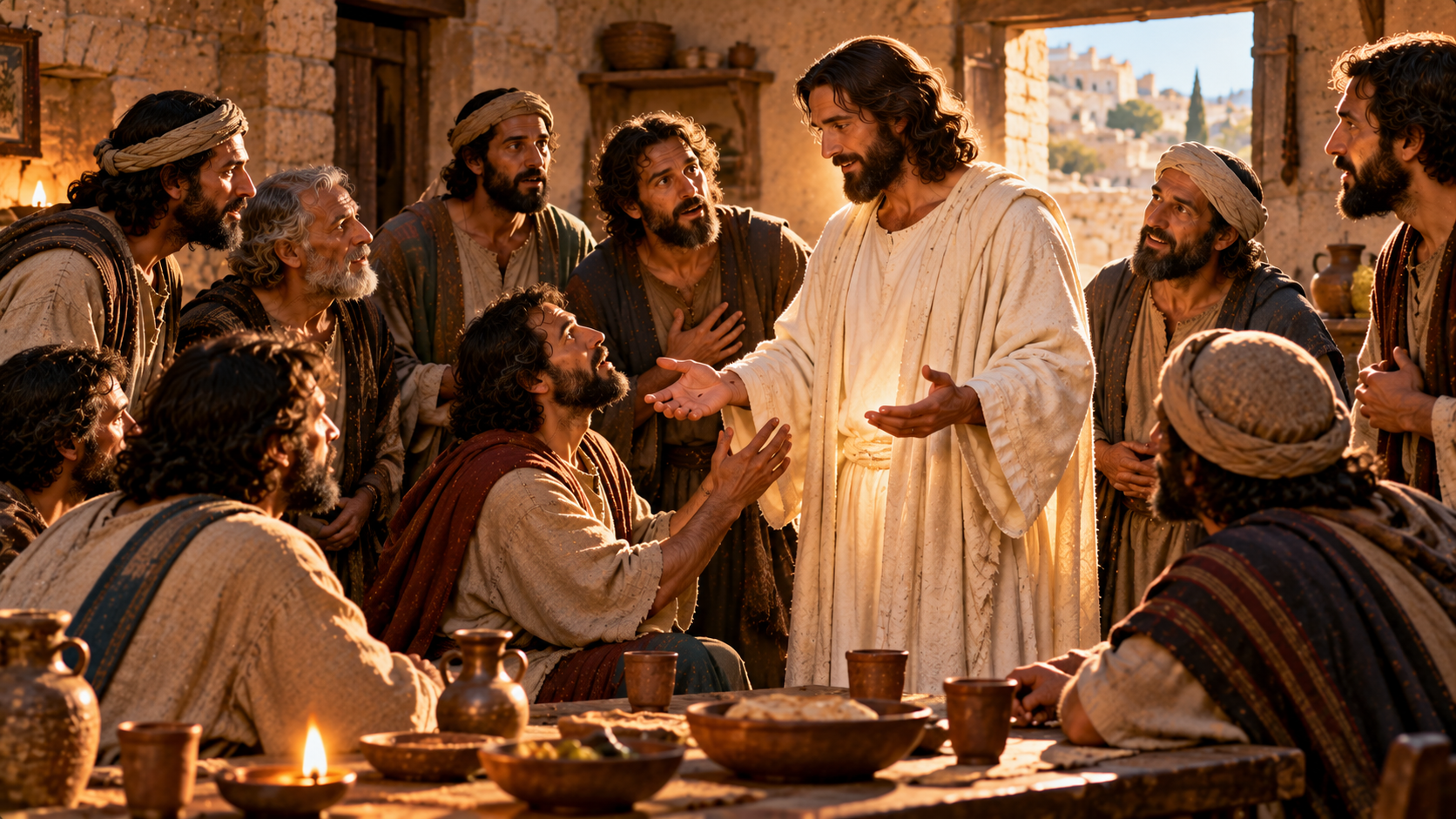
Did People Really See Jesus Alive After His Death?
An empty tomb would raise an important question.
Where was the body?
But the first Christians claimed something more than an empty tomb.
They said that Jesus appeared to them alive.
That claim stands at the center of the earliest Resurrection message. Paul names individuals and groups who were said to have seen Jesus after His death. The Gospels later give fuller accounts of encounters with Mary Magdalene, Peter, the disciples, Thomas, and others.
Christians believe these people encountered the risen Jesus.
But before deciding what caused their experiences, we should ask a more basic historical question.
Is there good reason to believe that people really had experiences which convinced them that Jesus was alive after His death?
The Question
What evidence supports the claim that individuals and groups believed they encountered Jesus alive after His crucifixion?
What We Know
The evidence for appearances comes from several early Christian sources.
Paul preserves an early list of witnesses
In 1 Corinthians 15:3-8, Paul passes on the tradition that Christ died, was buried, was raised, and appeared.
The list names Cephas, or Peter, followed by the Twelve, more than five hundred people at one time, James, all the apostles, and finally Paul himself.
This is important because Paul is not writing centuries after the beginning of Christianity. He is one of our earliest surviving Christian authors, and he tells the Corinthians that he had already received this Resurrection tradition.
The appearance claims therefore belong very near the beginning of the Christian movement.
Peter stands close to the earliest tradition
Peter appears first in Paul's named list.
Luke also preserves a tradition that the risen Lord appeared to Simon (Luke 24:34).
Paul later tells us that he personally spent fifteen days with Peter in Jerusalem (Galatians 1:18).
We should not claim that Paul gives us a detailed interview with Peter about the appearance. He does not.
But Peter was not a distant legendary character to Paul. Paul knew him personally, and Peter stood near the center of the earliest Resurrection proclamation.
James is especially interesting
The Gospels indicate that Jesus' brothers did not initially believe in Him (John 7:5).
Yet 1 Corinthians 15 specifically names James as a recipient of an appearance.
Paul later identifies James as the Lord's brother and as a major leader in the Jerusalem church (Galatians 1:19; 2:9).
The New Testament does not give us a narrative describing the appearance to James. We therefore cannot reconstruct what happened.
But the early tradition specifically associates an appearance with a man who became one of the most important leaders of the Jerusalem church.
Paul claims an experience of his own
Paul is different from the other names in the list because he speaks for himself.
He had once persecuted the Church. Yet he became convinced that the risen Jesus had appeared to him.
In 1 Corinthians 15:8 he places his own experience at the end of the appearance list: "last of all" Christ appeared to him also.
Acts gives fuller narratives of Paul's encounter on the road to Damascus. Those accounts are later narrative presentations. Paul's own letters remain especially important because they establish directly that Paul himself believed he had encountered the risen Christ.
What about the more than five hundred?
Paul says that Jesus appeared to more than five hundred brothers and sisters at one time and adds that most of them were still living when he wrote.
This is an unusual and striking statement.
But we should use it carefully.
Paul does not name the individuals. He does not tell us where the event occurred or describe what they experienced. We have no surviving accounts written by members of the group that allow us to question them independently.
So we should not turn Paul's statement into "five hundred independently documented eyewitness accounts."
What we can say is that the claim of a large group appearance was already part of the Resurrection testimony Paul presented to the Corinthians.
The Gospels provide fuller appearance stories
Matthew, Luke, and John describe encounters with the risen Jesus in much greater detail.
Mary Magdalene and other women appear prominently. Jesus speaks with disciples. He is seen by groups. Luke and John emphasize physical features such as wounds, touch, and eating.
The accounts are not identical.
They differ about the sequence of events, locations, people present, and which appearances they choose to describe.
As we have seen throughout this investigation, those differences should neither be hidden nor exaggerated.
The accounts agree on the central proclamation: Jesus' followers became convinced that they encountered Him alive after His death.
The New Testament reports that individuals and groups believed they encountered Jesus alive after His death and burial.
Why It Matters
The appearance experiences matter because an empty tomb alone cannot explain the birth of Resurrection faith.
A missing body might produce confusion, fear, or suspicion.
But the earliest Christians did not merely proclaim, "The body is gone."
They proclaimed, "He has been raised," and they connected that proclamation with appearances to people they named.
Peter, James, and Paul are particularly important because they can be placed close to the earliest Christian movement. Paul personally knew Peter and James, and Paul gives us his own testimony that he believed Christ appeared to him.
That does not yet tell us what caused every experience.
But any explanation of the Resurrection message must account not only for a burial or an empty tomb. It must also account for people who became convinced that Jesus had appeared to them alive.
Questions & Challenges
There is an important distinction we should preserve.
Establishing that people believed they experienced appearances of Jesus is not the same as establishing what caused those experiences.
Christians believe that the explanation is straightforward: Jesus truly rose from the dead and appeared to His followers.
Others have proposed visions, grief experiences, religious experiences, memory development, legendary growth, or combinations of natural explanations.
Those alternatives deserve to be considered rather than dismissed before examination.
There are also limits to our evidence.
We do not possess written testimony from Peter describing his appearance in his own words. We do not have an account from James explaining what he saw. We cannot identify and interview the five hundred people mentioned by Paul.
The Gospel narratives were written to proclaim Jesus, not as modern transcripts of separate witness interviews.
Paul's own experience also raises questions. Acts describes it with light, voices, and companions, while Paul's letters provide much less narrative detail. Scholars disagree about how Paul's experience should be compared with the appearances to Jesus' followers immediately after the crucifixion.
These limitations should make us careful.
They do not erase the early evidence that appearance claims existed.
Considering the Evidence
Something happened that led the earliest Christians to proclaim that Jesus had appeared after His death.
Paul preserves an early tradition naming Peter, the Twelve, a group of more than five hundred, James, and the apostles. He then adds his own experience.
Paul personally knew Peter and James. He himself had once opposed the Christian movement and later became one of its most determined missionaries because he believed the risen Christ had appeared to him.
The Gospels preserve fuller traditions of encounters with the risen Jesus. Their details differ, but their central message is the same.
How should these experiences be explained?
For Christians, they are what the witnesses said they were: appearances of Jesus after God raised Him from the dead.
Historical investigation can establish important parts of the setting. It can ask how early the claims are, who is named, how the sources relate to one another, and whether proposed explanations account for the evidence.
But simply establishing that appearance experiences were reported does not finish the investigation.
Other explanations have been offered.
Could the disciples have been mistaken? Could visions, grief, legend, a moved body, or some other cause account for what happened?
That is our next investigation:
Could something else explain the Resurrection evidence?
Continue exploring this question through related material already available on A Visit With Jesus.
Evidence
Resurrection Appearances
Explore New Testament reports that individuals and groups encountered Jesus alive after His death, including Mary Magdalene, Peter, the apostles, James, and Paul.
Compare the Resurrection accounts in Matthew, Mark, Luke, and John, including their differing details and their shared testimony.
People
Jesus' Apostles
Explore the Twelve Apostles, their roles in the Gospel accounts, biblical information about their lives, and traditions concerning their later ministries.
Evidence
Resurrection and the Early Church
Explore the central place of the Resurrection in apostolic preaching and the repeated claim of the apostles that they were witnesses to what God had done in Jesus Christ.
In Summary
Christian belief in the resurrection did not arise from an empty tomb alone. The earliest sources report appearances to individuals and groups, including Peter, James, the apostles, hundreds of followers, and eventually Paul. We examine this testimony and what it requires us to explain.