Did the First Christians Have a Reason to Invent Their Claims?
People sometimes lie because a lie gives them something they want.
Money, power, safety, reputation, or influence can tempt people to say things they know are not true.
So it is reasonable to ask what the first Christians gained by proclaiming Jesus as the risen Lord.
The New Testament does not describe an easy path.
The apostles faced opposition, arrest, beatings, imprisonment, and rejection. Paul describes hunger, danger, sleepless nights, beatings, and repeated threats to his life.
None of this proves that their message was true. People can suffer for beliefs that are mistaken.
But suffering does raise an important question when the proposed explanation is deliberate invention.
Did the first witnesses behave like people who knew that the story they were proclaiming was false?
The Question
Is there evidence that the earliest Christian witnesses knowingly invented their claims, or does their conduct indicate that they sincerely believed what they proclaimed?
What We Know
The earliest Christian writings show that proclaiming Jesus could be costly.
The apostles expected opposition
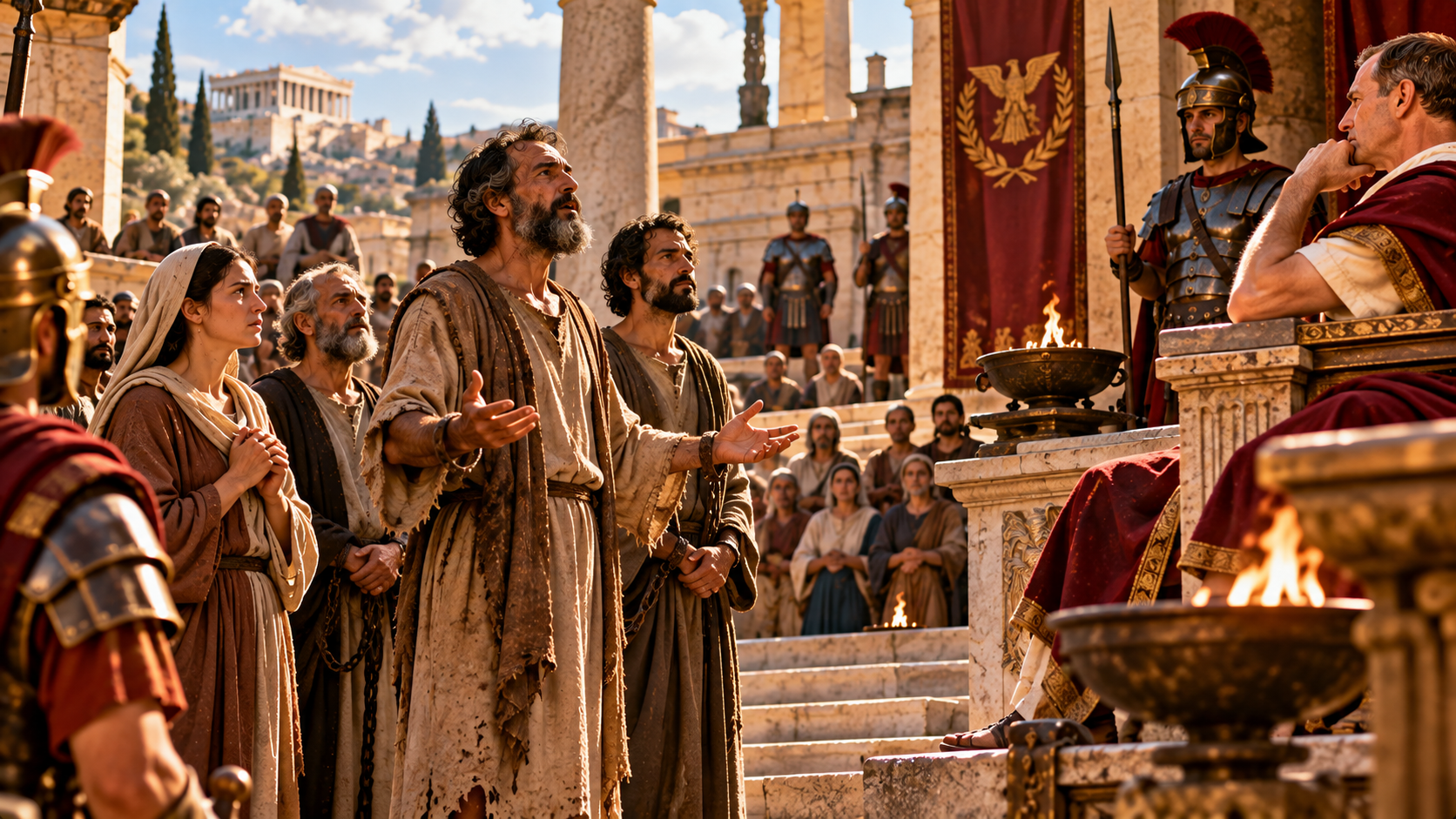
Acts repeatedly describes the apostles facing threats and punishment because of their preaching.
Peter and John are arrested and warned to stop speaking in the name of Jesus (Acts 4:1-22). The apostles are later imprisoned and beaten (Acts 5:17-42). James the son of Zebedee is executed by Herod Agrippa I (Acts 12:1-2).
Whatever questions readers may have about individual details in Acts, persecution is not merely a much later Christian legend. Paul's own letters provide firsthand evidence that Christian ministry brought real hardship.
Paul tells us what it cost him
Paul is especially important because several of his letters are among our earliest Christian writings.
In 2 Corinthians, Paul describes imprisonment, beatings, stoning, shipwreck, hunger, danger, and other hardships connected with his ministry (2 Corinthians 11:23-28).
He also tells the Galatians that he had once persecuted the Church and tried to destroy it, but later proclaimed the faith he had formerly opposed (Galatians 1:13-24).
Paul certainly gained influence within the Christian movement. But his own writings make it difficult to portray his change of allegiance as a simple path toward comfort, wealth, or social security.
James, the brother of Jesus, also changed
The Gospels indicate that Jesus' brothers did not initially understand or believe His claims (Mark 3:20-35; John 7:5).
Yet Paul preserves an early tradition that the risen Jesus appeared to James (1 Corinthians 15:7). Paul later identifies James as an important leader in the Jerusalem church (Galatians 1:19; 2:9).
Josephus, writing outside the Christian Church, records that James, whom he identifies as the brother of Jesus who was called Christ, was executed in Jerusalem.
Josephus does not tell us that James was offered a chance to deny the Resurrection and refused. We should not add that detail to the evidence.
What we can say is that the brother of Jesus became a prominent leader in the movement centered upon Him and eventually died violently in Jerusalem.
Peter and Paul were remembered very early as having suffered and died
A Christian letter known as 1 Clement, written from the church at Rome near the end of the first century, points to Peter and Paul as recent examples of endurance under persecution.
This is important because it comes much earlier than many of the elaborate stories that later grew around the deaths of the apostles.
Early evidence therefore supports severe suffering and death for some of the leading witnesses of the first Christian generation.
We know much less about some of the other apostles
Later Christian tradition contains accounts of the deaths of nearly all the apostles.
But the historical evidence is not equally strong for every person.
Some traditions appear much later than others, and the details sometimes differ from one source to another.
We should therefore avoid saying that history proves that every apostle was tortured and killed after being given an opportunity to deny the Resurrection.
The evidence does not allow us to make that claim with equal confidence for all of them.
Why It Matters
Suffering does not make a belief true.
History contains many people who have suffered or died for beliefs that Christians themselves would reject.
But there is an important difference between being mistaken and knowingly inventing a story.
A person can die for something false if he sincerely believes it is true.
It is much harder to explain why someone would knowingly create a false claim and then willingly accept serious suffering for continuing to proclaim what he knew he had invented.
That is why the conduct of the earliest Christian witnesses matters.
Their willingness to endure opposition cannot prove that Jesus rose from the dead.
But it does count against the simple explanation that they knowingly made up the Resurrection story for personal advantage.
Questions about motive include what the earliest Christian witnesses claimed, what they might have gained, and what their testimony could cost them.
Questions & Challenges
The argument from apostolic suffering is often overstated.
One popular version says that all twelve apostles were tortured and killed because they refused an opportunity to deny the Resurrection.
We do not have historical evidence strong enough to say that about every apostle.
The evidence for Peter, Paul, James the son of Zebedee, and James the brother of Jesus is considerably earlier or stronger than the evidence for the deaths of several other apostles. Later traditions about men such as Bartholomew, Matthias, Simon the Zealot, and James the son of Alphaeus are much harder to establish historically.
There is another problem with an exaggerated argument.
Even if we could prove that every apostle died for his faith, martyrdom by itself would not prove Christianity true.
People of many religions and causes have died for beliefs that they sincerely held.
The more careful question is whether the original Christian witnesses appear to have believed their own proclamation.
Here the evidence is much more useful.
Paul's own letters show that he accepted extraordinary hardship while preaching Christ. Acts records persecution of the earliest apostles. Josephus records the death of James, the brother of Jesus. 1 Clement remembers Peter and Paul as examples of endurance and suffering within the first Christian generation.
This does not establish that every belief they held was correct.
It does make deliberate fraud a less natural explanation of their behavior.
Considering the Evidence
What did the first Christians gain by proclaiming the risen Jesus?
Some eventually gained leadership within growing Christian communities. They gained friendships, purpose, and the conviction that they belonged to the people of God.
But the historical picture also includes rejection, imprisonment, physical punishment, danger, and in some cases death.
We should not romanticize this evidence or exaggerate what we know about every apostle.
We also should not ignore it.
Peter, Paul, James the son of Zebedee, and James the brother of Jesus stand especially close to early evidence of persecution or violent death. Paul's own letters leave little doubt that his Christian mission repeatedly cost him dearly.
None of this proves the Resurrection.
It addresses a narrower explanation:
Did the first Christian witnesses simply invent their message while knowing it was false?
The evidence of their conduct makes that explanation harder to sustain.
But sincerity is not the same as truth.
A sincere person can still be mistaken.
So our investigation must continue.
One of the most important questions is how early the Resurrection message itself can be traced.
Did belief in the risen Jesus develop slowly over generations, or was it present near the beginning of Christianity?
That is our next investigation:
How early was the claim that Jesus rose from the dead?
Continue exploring this question through related material already available on A Visit With Jesus.
Evidence
Resurrection and the Early Church
Explore the central place of the Resurrection in apostolic preaching and the repeated claim of the apostles that they were witnesses to what God had done in Jesus Christ.
Explore the beginnings and spread of Christianity from Jerusalem into the wider Roman world, including the apostles, Paul, early churches, persecution, and the growth of the Christian movement.
People
Jesus' Apostles
Explore the Twelve Apostles, their roles in the Gospel accounts, biblical information about their lives, and traditions concerning their later ministries.
In Summary
The first Christians proclaimed claims that brought opposition rather than obvious wealth or power. We consider whether deception provides a convincing explanation for their testimony and what their actions reveal about the sincerity of their beliefs.