What Do Non-Christian Sources Tell Us About Jesus?
The New Testament is our richest ancient source for the life of Jesus.
But it is reasonable to ask whether anyone outside the Christian Church knew anything about Him or about the movement that followed Him.
The answer is yes.
Jewish and Roman writers mention Jesus, Christ, His followers, or events connected with the rise of Christianity. None of these writers gives us another Gospel. Most say very little.
That is exactly what we should expect.
Jesus lived in a small province on the edge of the Roman Empire. He held no political office, commanded no army, and wrote no surviving book. The movement centered upon Him became much more visible to Roman writers as Christianity spread through the Empire.
These outside sources are valuable not because they prove Christianity for us, but because they provide testimony that did not originate as Christian preaching.
The Question
What did ancient writers who were not Christians report about Jesus, His execution, His followers, and the early Christian movement?
What We Know
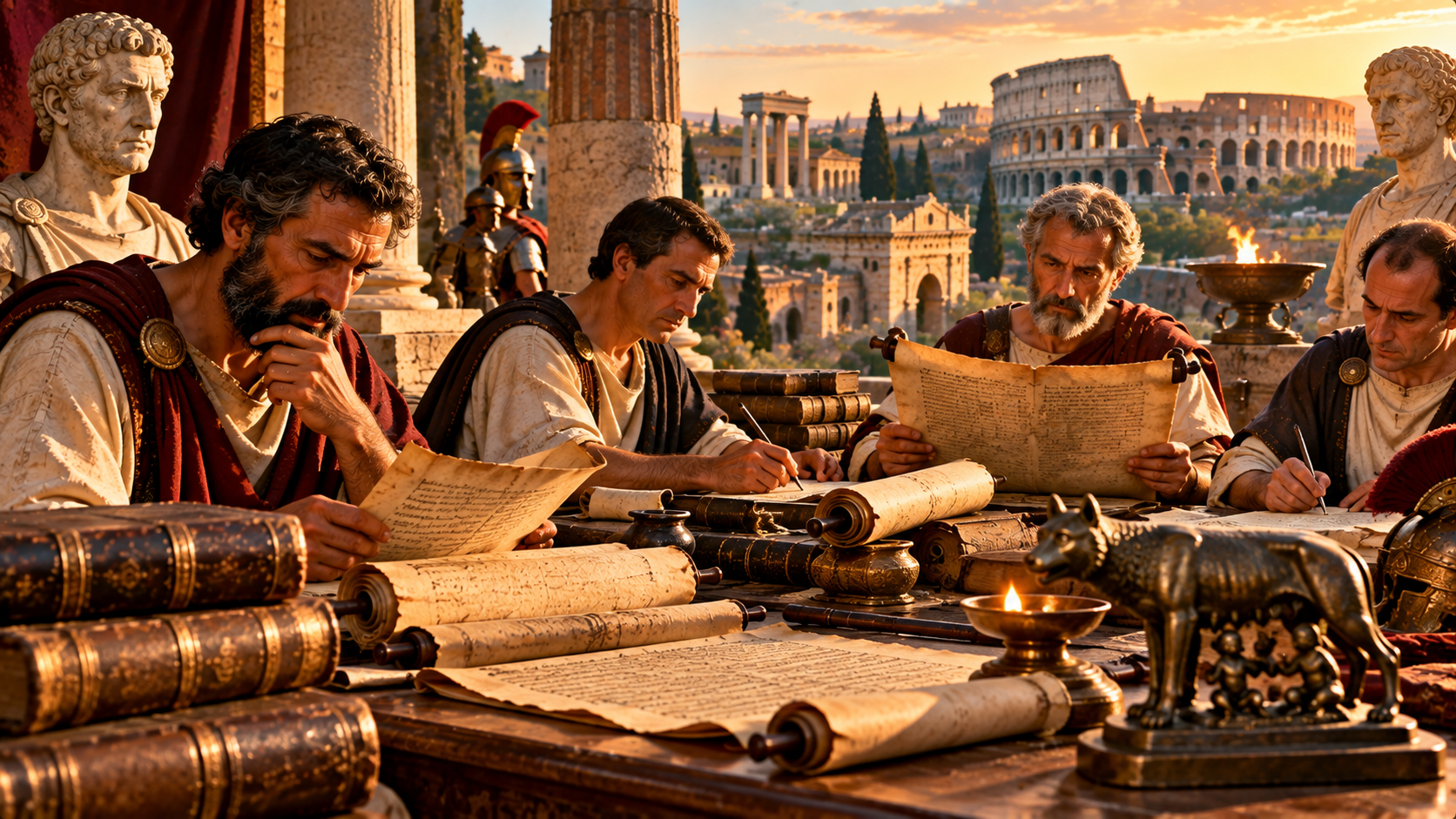
Several ancient writers outside the New Testament provide points of contact with Jesus and the early Christian movement.
Josephus
Flavius Josephus was a first-century Jewish historian. He was born only a few years after the crucifixion of Jesus and later wrote a large history of the Jewish people.
In Antiquities of the Jews, Josephus describes the death of James and identifies him as "the brother of Jesus, who was called Christ."
This brief reference is important because it occurs naturally within Josephus' account of events surrounding the high priest Ananus. The large majority of scholars regard this passage as authentic.
Josephus also contains a longer passage about Jesus in Book 18. That passage is more complicated. The surviving Greek text includes statements that sound unusually Christian for Josephus, and scholars have long debated how much of its present wording came from Josephus himself and how much may have been changed during later Christian transmission.
We therefore do not need to make the longer passage carry more weight than the evidence allows.
The shorter reference to James already gives us an important non-Christian connection to Jesus.
Tacitus
The Roman historian Tacitus wrote about the great fire that devastated Rome during the reign of Nero.
In describing Nero's punishment of Christians, Tacitus explains where their name came from. He says that Christus suffered the extreme penalty during the reign of Tiberius at the hands of Pontius Pilate and that the movement later reached Rome.
Tacitus was not defending Christianity. His description of Christians is openly hostile.
That makes his reference useful for a different reason. A Roman historian writing outside the Church knew Christianity as a movement centered upon a person called Christus whose execution was associated with Pontius Pilate.
Pliny the Younger
Early in the second century, Pliny the Younger was serving as Roman governor of Bithynia-Pontus in Asia Minor.
He encountered Christians and wrote to Emperor Trajan asking how they should be handled.
Pliny reports that Christians met before dawn on a fixed day and sang responsively to Christ "as to a god." He also describes ethical promises they made and a shared meal.
Pliny tells us little about the earthly life of Jesus.
But his letter shows that by the early second century Christian worship had spread far from Judea and that devotion to Christ stood at its center.
Suetonius
The Roman writer Suetonius also mentions Christians.
In his life of Nero, he says that Christians were punished and describes them with contempt.
Elsewhere, while discussing Emperor Claudius, Suetonius says that Claudius expelled Jews from Rome because of disturbances associated with someone he calls "Chrestus."
This may reflect disputes in the Roman Jewish community concerning Christ, and many scholars have understood it that way. But the wording is not clear enough for us to treat that interpretation as certain.
Suetonius is therefore useful, but we should distinguish his explicit reference to Christians under Nero from the more debated "Chrestus" passage.
Writers outside the Christian movement provide an independent body of ancient testimony that can be compared with the New Testament record.
Why It Matters
None of these writers was trying to prove the Gospel.
Josephus was a Jewish historian. Tacitus, Pliny, and Suetonius were Romans. Tacitus and Suetonius were certainly not admirers of Christianity.
Yet their writings show that Jesus and the movement centered upon Him were not known only within Christian literature.
Josephus knew of Jesus who was called Christ and identified James in relation to Him. Tacitus connected Christus with execution under Pontius Pilate. Pliny encountered communities that worshiped Christ. Suetonius knew Christians as a recognizable group in Rome.
These references are limited.
But that limitation is part of their value. They are independent glimpses from writers whose purposes were entirely different from those of the Gospel writers.
Together they help anchor early Christianity within the wider Jewish and Roman world.
Questions & Challenges
Non-Christian references to Jesus must be used carefully.
It is tempting to turn a few sentences into a complete biography of Jesus. The sources cannot support that.
Tacitus does not tell us about the Sermon on the Mount, the miracles of Jesus, or the empty tomb. Pliny tells us about Christian worship rather than Jesus' ministry. Suetonius provides only brief notices. Josephus requires special care because the longer passage about Jesus has a complicated history of transmission.
We should also ask where these writers obtained their information.
An outside writer is not automatically an independent eyewitness. Tacitus, Josephus, Pliny, and Suetonius wrote after the ministry of Jesus. Their information may have come from records, public knowledge, earlier sources, Christians, or some combination of these.
In many cases we simply do not know.
That means we should not claim that each writer independently verified every fact he reports about Christianity.
What we can say is more modest and still important.
By the late first and early second centuries, Jewish and Roman writers knew Christianity as a historical movement connected with Jesus or Christ. Some of their statements intersect with central people and events also found in the New Testament.
Considering the Evidence
The evidence outside Christianity is not another New Testament.
It does not need to be.
Josephus gives us a Jewish reference to James as the brother of Jesus who was called Christ. Tacitus places the execution of Christus under Pontius Pilate during the reign of Tiberius. Pliny shows Christians worshiping Christ in Asia Minor early in the second century. Suetonius confirms that Christians had become a recognizable group in the Roman world.
None of these sources proves the Resurrection.
But together they make it difficult to treat Jesus and early Christianity as a story that existed only inside Christian writings.
The movement had entered the wider historical record.
We have now considered the witnesses behind the Gospels, details within their accounts, archaeology, and writers outside the Church.
But another question remains.
Even if the Gospel writers originally recorded trustworthy information, do the New Testament books we read today still preserve what they wrote?
That brings us to our next investigation:
Do we have an accurate record of what the Gospels originally said?
Continue exploring this question through related material already available on A Visit With Jesus.
Evidence
Jesus Outside the Bible
Explore ancient references to Jesus and early Christianity found outside the New Testament, including Jewish and Roman writers and other extra-biblical sources.
Explore the life and writings of the first-century Jewish historian Flavius Josephus and his importance for understanding Judea, the Jewish revolt, Jesus, James, John the Baptist, and early Christianity.
Evidence
Publius Cornelius Tacitus
Explore the Roman historian Tacitus, his major works, and his account of Christus, Pontius Pilate, Nero, and Christians in first-century Rome.
Evidence
Pliny the Younger
Explore Pliny the Younger and his correspondence with Emperor Trajan concerning Christians in early second-century Asia Minor.
Evidence
Suetonius
Explore the Roman biographer Suetonius and his references to disturbances associated with Chrestus and the punishment of Christians under Nero.
In Summary
Christian writers were not the only ancient authors to mention Jesus and His followers. Roman, Jewish, and other non-Christian sources provide an outside perspective on Jesus' existence, execution, the spread of Christianity, and what early Christians believed.