Ahmose I
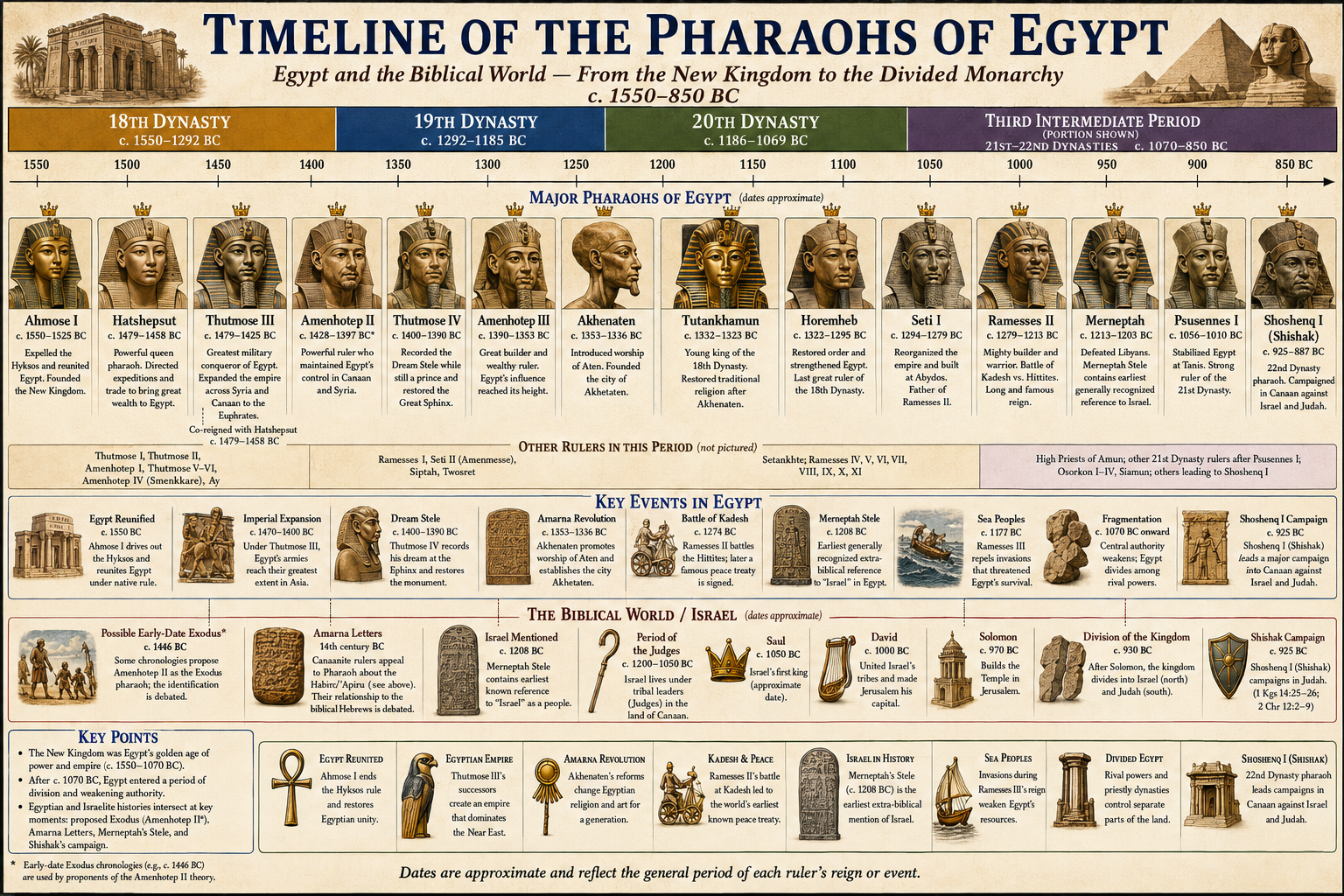
Founder of Egypt's 18th Dynasty and the New Kingdom, Ahmose I completed the expulsion of the Hyksos and reunited Egypt, beginning a period of imperial expansion and prosperity.
Amenhotep I consolidated the reunified kingdom established by his father, Ahmose I, and continued Egyptian activity in Nubia. His prosperous reign helped establish the political, religious, and artistic foundations of the early 18th Dynasty.
Thutmose I greatly expanded Egyptian power, campaigning deep into Nubia and into the Near East. He was also an important builder at Karnak and helped establish the imperial ambitions that characterized much of the 18th Dynasty.
Thutmose II was an early 18th-Dynasty pharaoh and the husband of Hatshepsut, who later ruled as pharaoh herself. His relatively short reign included military activity in Nubia and preceded the remarkable joint rule of Hatshepsut and Thutmose III.
One of ancient Egypt's most successful female pharaohs, Hatshepsut ruled during the 18th Dynasty and is especially remembered for trade, monumental building, and her mortuary temple at Deir el-Bahri.
A major warrior pharaoh of the 18th Dynasty, Thutmose III greatly expanded Egyptian power in the Levant and Nubia and made Egypt the dominant imperial power of its age.
An 18th-Dynasty pharaoh and son of Thutmose III, Amenhotep II inherited a powerful empire and campaigned in the Levant. He is sometimes proposed in discussions of Exodus chronology, but no identification is established.
Thutmose IV was an 18th-Dynasty pharaoh best known for the Dream Stele erected between the paws of the Great Sphinx at Giza. His comparatively short reign continued Egypt's diplomatic and military involvement with neighboring powers.
Amenhotep III ruled Egypt during one of the wealthiest and most culturally brilliant periods of the New Kingdom. His long reign emphasized diplomacy, monumental building, and royal magnificence rather than the extensive campaigning of some earlier 18th-Dynasty rulers.
Akhenaten radically redirected Egyptian royal religion toward the Aten and founded a new capital at Akhetaten. His religious revolution was largely reversed after his death.
Smenkhkare was a short-lived and poorly understood ruler of the late Amarna Period. His precise identity, relationship to Akhenaten, and role in the royal succession remain subjects of considerable scholarly debate.
Neferneferuaten was an enigmatic ruler of the late Amarna Period whose identity remains uncertain. The pharaoh may have been a female member of Akhenaten's royal family, with Nefertiti among the principal candidates proposed by scholars.