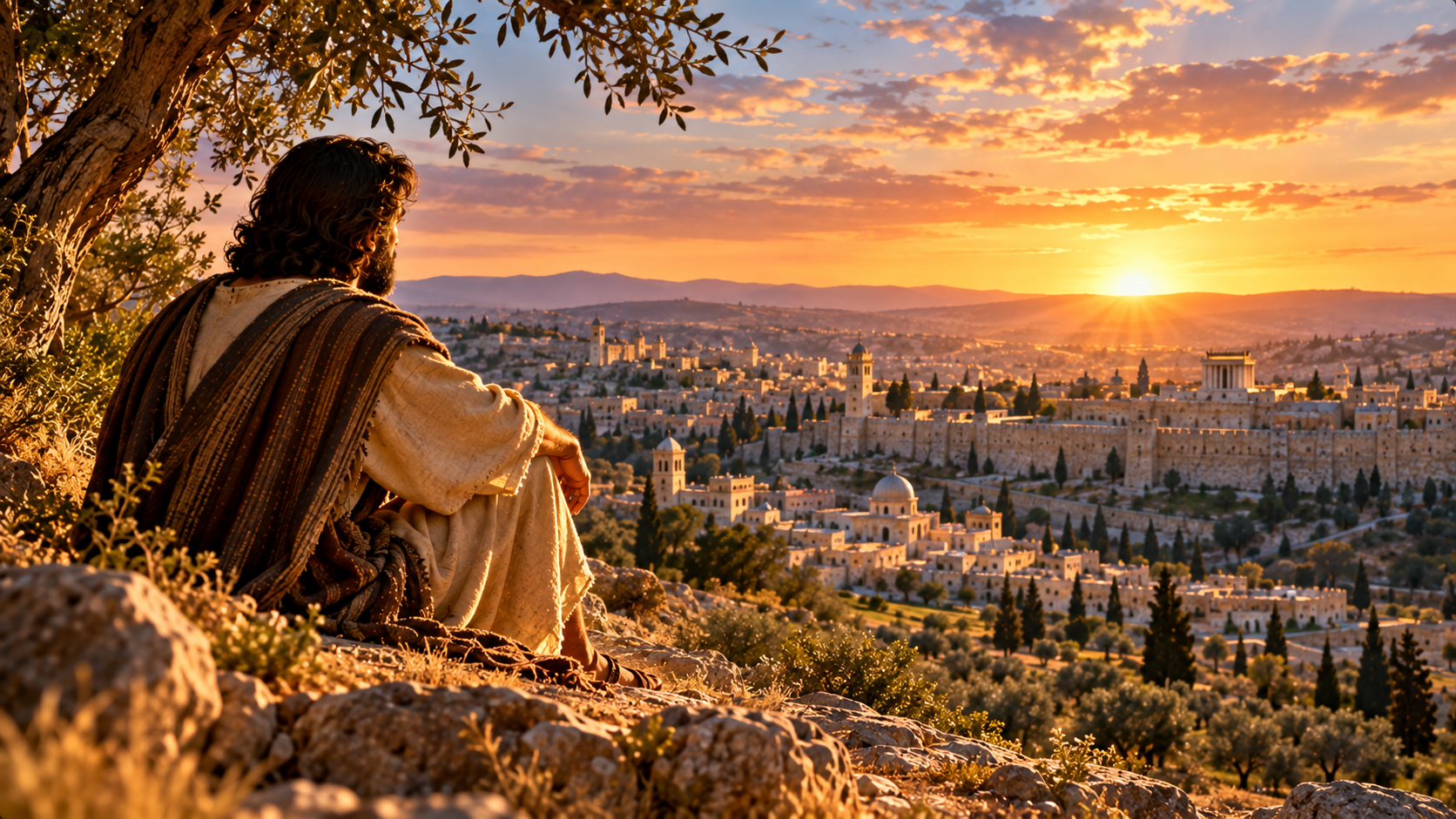
We began this investigation with a simple question.
Can the claims of Christianity be examined?
We have looked at historical evidence, eyewitness testimony, the Gospel writers, archaeology, sources outside Christianity, the transmission of the New Testament, the conduct of the first Christians, the early Resurrection message, the empty tomb, the reported appearances of Jesus, and alternative explanations.
No single discovery has carried the whole case.
Instead, many pieces of evidence have gradually come together.
We have now reached the question toward which the investigation has been moving:
What explanation best accounts for the evidence when it is considered together?
Christians believe that Jesus truly died and that God raised Him from the dead.
That is an extraordinary claim.
It deserves neither automatic acceptance nor automatic rejection.
It deserves to be considered in light of the evidence.
The Question
After considering the historical evidence and the principal alternative explanations, does the resurrection of Jesus provide the most compelling explanation of the evidence?
What We Know
Before considering the conclusion, it is worth remembering what we have found along the way.
Jesus belongs to history
The Gospels place Jesus within a recognizable first-century Jewish and Roman world.
They name rulers, towns, religious groups, customs, buildings, festivals, and places. Archaeology has illuminated many parts of that world. Jewish and Roman writers outside the New Testament also provide points of contact with Jesus and the early Christian movement.
This does not prove every claim made about Jesus.
It does mean that Christianity begins with claims about a real person living in a real historical setting.
The Gospel accounts can be investigated
The four Gospels are not identical.
They select different events, arrange some material differently, and sometimes describe the same event with different details.
Those differences should not be hidden.
But neither should they prevent us from recognizing the large amount of material the accounts share and the historical world they consistently describe.
The writers and the traditions behind them stand within the first generations of the Christian movement rather than centuries removed from Jesus.
The New Testament text remains open to examination
The original handwritten copies of the New Testament books no longer survive.
Later manuscripts contain copying differences.
Yet those differences can be identified precisely because manuscripts survive for comparison. Scholars can compare Greek copies, ancient translations, and quotations preserved in early Christian writings.
Christian confidence does not require pretending that every scribe copied every word perfectly.
The manuscript evidence can be examined openly.
Resurrection belief appeared very early
Paul's first letter to the Corinthians preserves material he says he had already received and passed on.
Christ died, was buried, was raised, and appeared.
This tradition belongs close to the beginning of Christianity, not to a distant century in which the first followers of Jesus had disappeared.
Paul personally knew Peter and James. Both appear within the earliest Resurrection traditions.
Whatever explanation we choose must therefore account for an early Resurrection proclamation.
The earliest Christians proclaimed more than an inspiring memory
They did not merely say that the teachings of Jesus lived on.
They proclaimed that the Jesus who had died had been raised.
Paul's language belongs to the Jewish and early Christian world of bodily resurrection. The Gospel traditions likewise connect Resurrection with the body that had been buried.
This is important because it tells us what sort of claim requires explanation.
The burial and empty-tomb tradition belongs to the evidence
The Gospels agree that Jesus was buried and that His followers later encountered a tomb without His body.
There are differences among the accounts, and historians disagree about how confidently every detail can be established.
An empty tomb by itself would not prove a Resurrection.
But neither can it simply be ignored when considering how the Resurrection message arose.
People became convinced that Jesus had appeared to them
The earliest appearance tradition names Peter, the Twelve, more than five hundred, James, the apostles, and Paul.
Our ability to investigate each person in that list is not equal. We cannot identify the five hundred individually, and we do not possess written accounts from most of the people named.
But Paul speaks for himself. He had opposed the Church and became convinced that the risen Christ had appeared to him.
Peter and James also stand close to the earliest Christian proclamation, and Paul knew them personally.
The first proclaimers acted as though they believed their message
Suffering does not prove a belief true.
But Paul's own letters describe the cost of his Christian mission. Early evidence also associates leading witnesses with persecution and, in some cases, violent death.
This makes a simple explanation based upon conscious fraud more difficult.
A person can suffer for something mistaken. That is different from knowingly suffering for something he invented.
Why It Matters
The Christian claim is not merely that something unusual happened after Jesus died.
It is that God acted.
If God raised Jesus from the dead, then the Resurrection confirms something extraordinary about Jesus Himself.
His claims about God, His authority to forgive sins, His teaching about the Kingdom, His death for sinners, and His promise of eternal life cannot then be treated simply as the words of another teacher from antiquity.
This is why the Resurrection has always stood near the center of Christian faith.
Paul said it plainly: if Christ has not been raised, Christian faith is empty.
Christianity therefore places an enormous amount of weight upon an event it says happened in history.
That makes the historical investigation important.
But it also means that the investigation eventually reaches beyond history.
If Jesus rose, the question is not only what happened to Him.
The question becomes who He is and what His Resurrection means for us.
Questions & Challenges
Historical evidence has limits.
We cannot place the Resurrection in a laboratory and repeat it. We cannot interview Peter, James, Mary Magdalene, or the women who went to the tomb. We cannot recover every event that occurred during those days in Jerusalem.
There are uncertainties in the evidence.
The Gospel accounts differ in detail. Some aspects of the empty-tomb tradition remain debated. Paul gives little description of his own appearance experience. The five hundred cannot now be individually examined. Later Christian traditions are not all equally reliable.
Alternative explanations can also account for parts of the evidence.
A moved body could explain an empty tomb. A vision or grief experience might explain why an individual believed he had seen Jesus. Legendary development could explain some later details. Several natural explanations could be combined.
Those possibilities should be considered fairly.
But they should be asked to explain the same evidence as the Christian claim.
Do they account for the early Resurrection proclamation? The bodily character of that proclamation? The burial and empty-tomb tradition? The appearance claims involving different individuals and groups? Paul's change from persecutor to preacher? James' emergence as a leader in the Jerusalem church? The willingness of early proclaimers to endure suffering?
No historical explanation should be accepted merely because it is possible.
The Resurrection claim should not receive a special exemption from examination either.
The reader must consider which explanation makes the best sense of the evidence as a whole.
Considering the Evidence
Christians believe that the evidence comes together in a remarkable way.
Jesus was crucified and died.
He was buried.
Very early, His followers proclaimed that God had raised Him.
That proclamation included claims that He appeared to individuals and groups.
Peter stood at the center of the earliest Christian preaching. James, who had not initially believed in Jesus, became a leader of the Jerusalem church. Paul changed from persecuting Christians to proclaiming Christ throughout the Roman world because he believed Jesus had appeared to him.
The Gospel traditions also preserve the discovery of the empty tomb.
Different natural explanations can address individual parts of this picture.
The Christian explanation addresses them together:
Jesus truly died, and God raised Him from the dead.
AVWJ does not need to assign every piece of evidence a score or tell the reader that historical study has removed every possible doubt.
That is not how most important historical decisions are made.
We gather the evidence. We examine the sources. We recognize what is uncertain. We compare explanations. Then we decide what most reasonably accounts for what we have found.
For Christians, the Resurrection is not simply the final item in an argument.
It is the declaration that Jesus Christ is alive.
Historical investigation can take us a long way. It can examine documents, manuscripts, archaeology, witnesses, competing explanations, and the beginnings of the Christian proclamation.
But eventually the question becomes personal.
If Jesus truly rose from the dead, then Christianity is not merely an interesting explanation of ancient evidence.
Jesus is alive.
And if He is alive, the question is no longer only:
"What happened?"
It is also:
"What will I do with Him?"
After the individual lines of evidence have been considered, the investigation returns to the central question: what explanation best accounts for them together?
Continue exploring this question through related material already available on A Visit With Jesus.
Further Study
The Resurrection of Jesus
Explore the Resurrection of Jesus through the Gospel accounts, chronology, appearances, historical evidence, objections, significance, early Church, Scripture, and art.
Examine historical evidence surrounding the Resurrection claim, including Jesus' death, the empty tomb, early Resurrection proclamation, reported appearances, and the beginnings of the Christian movement.
Evidence
Resurrection Appearances
Explore New Testament reports that individuals and groups encountered Jesus alive after His death, including Mary Magdalene, Peter, the apostles, James, and Paul.
Further Study
Objections & Alternative Explanations
Examine proposed alternatives to the Resurrection, including theft, relocation of the body, survival of crucifixion, the wrong tomb, visions, legendary development, Gospel differences, and non-bodily interpretations.
History
Resurrection and the Early Church
Explore the central place of the Resurrection in apostolic preaching and the repeated claim of the apostles that they were witnesses to what God had done in Jesus Christ.
In Summary
The investigation finally brings all the evidence together. Having considered the witnesses, documents, historical setting, empty tomb, appearances, early proclamation, and alternative explanations, we ask whether the first Christians' own explanation remains the most compelling: Jesus Christ truly rose from the dead.