
Jesus in Context

Gethsemane and the Oil Press

Geography •  Matthew Mark
A Visit With Jesus
The name Gethsemane is commonly understood as 'oil press,' fitting an olive-growing landscape on or near the Mount of Olives.
Geography

Introduction

Jesus goes with his disciples to a place called Gethsemane after the Last Supper. The familiar name itself preserves something of the agricultural landscape around Jerusalem.

Gethsemane is commonly connected with a Semitic expression meaning an oil press, appropriate to the Mount of Olives.

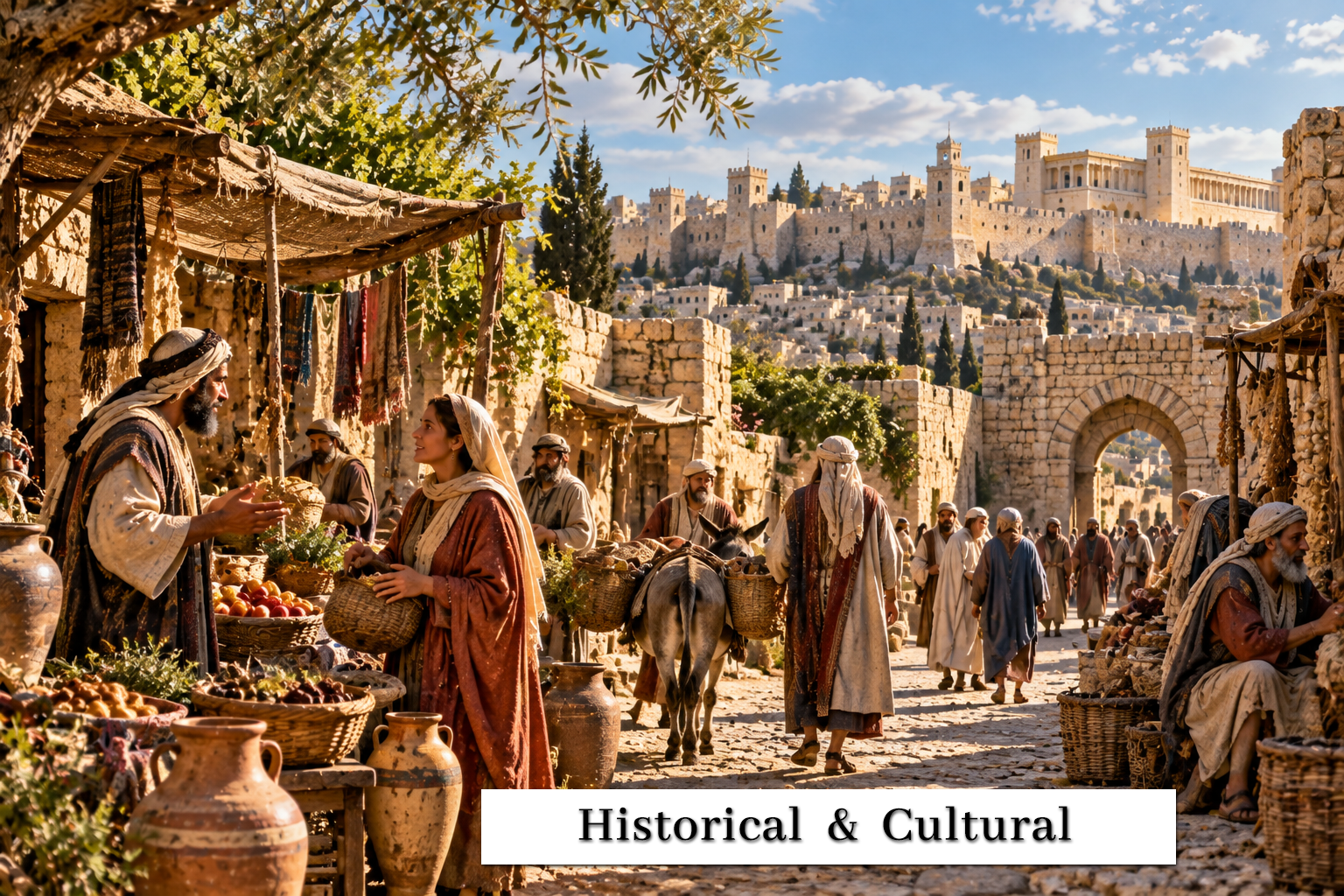
Historical and Cultural Context

Olive cultivation was a major feature of the Mediterranean economy, and harvested olives were crushed and pressed to extract oil used for food, lighting, anointing, and other purposes. A place named for an oil press would be unsurprising in an olive-growing area.

The Gospels locate Gethsemane in connection with the Mount of Olives, while John speaks of a garden across the Kidron without using the name Gethsemane. The traditions are compatible geographically without requiring every Gospel to supply the same place-name.

Why It Matters

The name anchors the arrest narrative in a real agricultural landscape rather than an abstract devotional setting. Jesus' prayer and arrest occur outside the city amid the olive-growing terrain east of Jerusalem.

The meaning 'oil press' can be appreciated as historical geography without turning it into an elaborate allegory that the Gospel writers themselves do not state.

Scripture References

Related Places

Related Customs