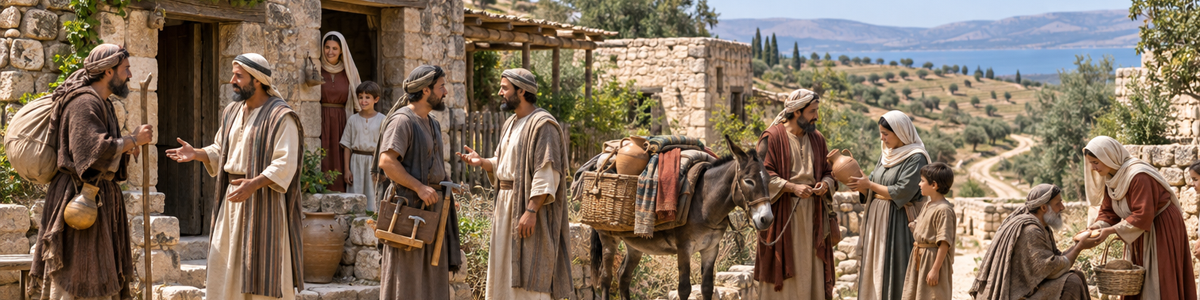
Most people in first-century Jewish Palestine lived in villages or small towns rather than great cities. Daily life unfolded among relatives, neighbors, fields, workshops, wells, streets, courtyards, and gathering places where people worked, talked, traded, worshiped, and helped one another.
Village life could feel intensely personal because families often lived near people they had known for years. Towns and cities offered a different scale of life, with larger crowds, specialized trades, markets, public buildings, and greater differences between rich and poor. Jesus and His followers moved through both worlds.
Overview
Jewish communities varied greatly in size and character. A small Galilean village might consist of clusters of houses surrounded by agricultural land, while Jerusalem was a major religious and urban center drawing pilgrims from across the Jewish world. Between these extremes were towns that connected surrounding villages with markets, administration, specialized crafts, and regional trade.
Community depended heavily upon households and extended families, but neighbors also shared work, exchanged news, cared about reputation, responded to disputes, and offered assistance in times of need. Privacy in the modern sense was limited. Much of life happened where other people could see, hear, and participate.
What We Know
Archaeological surveys and excavations reveal villages, houses, courtyards, streets, water installations, workshops, public buildings, synagogues, markets, and urban neighborhoods. Literary sources add evidence about families, neighbors, hospitality, disputes, local leadership, commerce, poverty, and public life.
The evidence also warns against imagining every village or town as identical. Settlement size, wealth, architecture, economic activity, and connections with nearby cities differed from place to place.
Biblical Context
The Bible frequently assumes close community life. Neighbors borrow from one another, families care about reputation, elders exercise authority, strangers seek hospitality, disputes require reconciliation, and communities gather for worship and public affairs. Jesus taught in villages, towns, synagogues, houses, streets, marketplaces, and Jerusalem itself.
Why It Matters
Understanding community life helps modern readers appreciate how public many Gospel events were. A healing, dispute, meal, unusual visitor, or controversial teaching could quickly become known. Jesus ministered among people whose lives were woven into networks of family, neighbors, villages, towns, and cities.
The Village Setting
Life in a First-Century Jewish Village
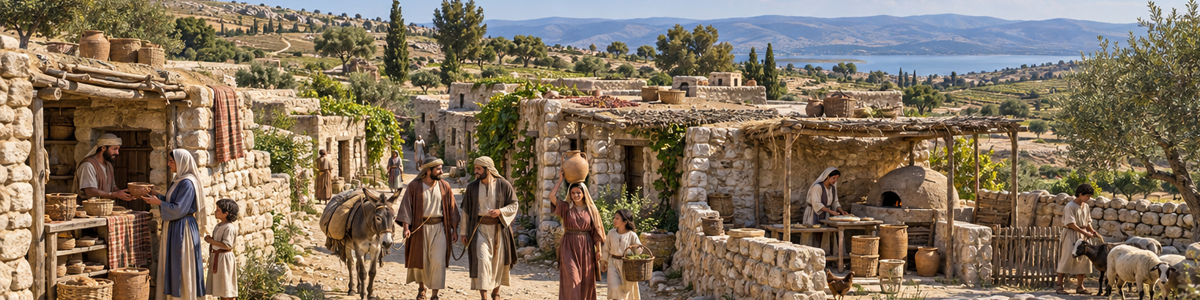
Village life centered on households, farming, crafts, family relationships, shared spaces, religious practice, and frequent contact with neighbors.
The Size and Layout of Villages
First-century villages varied from small clusters of households to larger settlements with streets, workshops, communal facilities, and connections to surrounding farmland.
Streets, Paths and Public Spaces
Village streets and paths connected houses with fields, water sources, roads, workshops, gathering places, and neighboring settlements.
The Village Well and Water Sources
Reliable water was essential to settlement life, obtained from wells, springs, cisterns, aqueducts, or other local sources depending upon geography.
Living Close Together
Houses, Courtyards and Close Neighbors
Closely spaced houses and shared or adjoining courtyards placed households in frequent contact with relatives and neighbors.
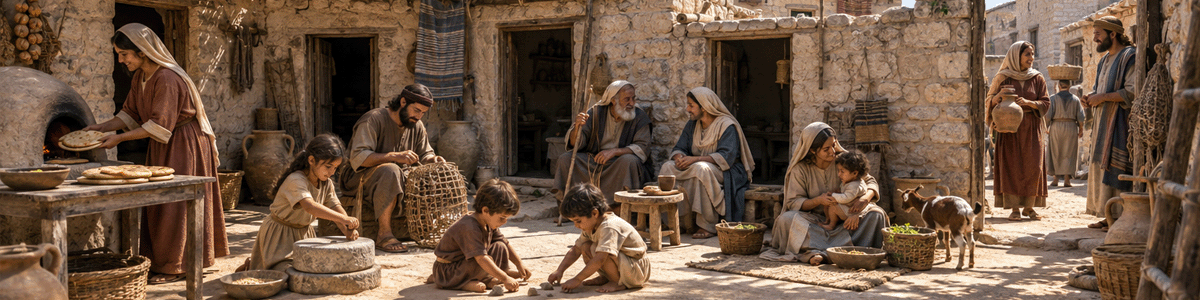
The Household Courtyard
A courtyard could be one of the busiest parts of a home. It provided open space for work that was difficult to do inside a small room. Family members could prepare food or carry out household chores there. The courtyard also connected different parts of the house.
Knowing Your Neighbors
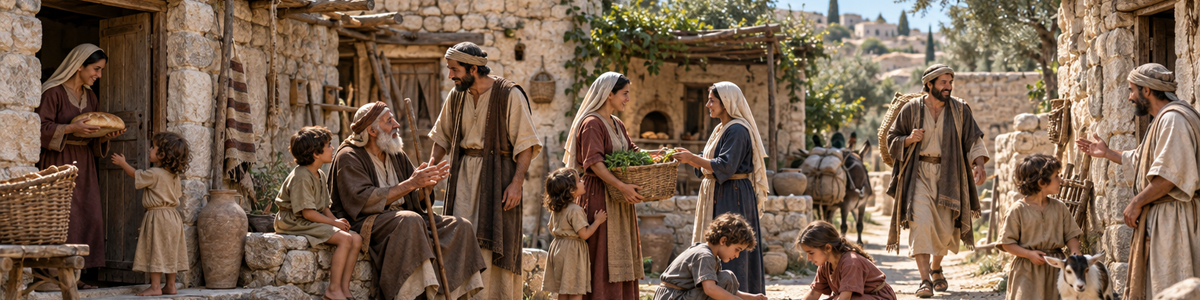
Repeated daily contact meant that village neighbors often knew one another's families, occupations, circumstances, and reputations.
Extended Family in the Village
Extended family networks could connect several households within the same village and provide labor, identity, support, and social obligations.
Privacy in Village Life
Compact houses, shared work spaces, close neighbors, and strong family networks meant that village life offered less physical and social privacy than many people expect today.
Family and Community
Helping One Another
Families and neighbors relied upon one another for practical help during work, illness, poverty, celebrations, emergencies, and other needs.
Shared Work and Community Cooperation
Agriculture, construction, transport, food processing, and other demanding tasks could require cooperation among relatives, neighbors, hired workers, and other members of the community.
Men and Village Community Life
Men lived within communities where neighbors knew one another and family reputation mattered. Work, worship, trade, disputes, and shared concerns brought men into regular contact with people beyond their own households.
Children in Village Life
Children grew up within households and communities where learning, play, work, religion, and relationships with relatives and neighbors overlapped.
Children and the Wider Village
A child's world extended beyond the walls of the family home. In a village, children encountered relatives and neighbors as part of everyday life. They grew up within a community where many people knew one another.
Reputation and Community Order
News, Reputation and Public Opinion
In close communities, information traveled through conversation, family networks, markets, gatherings, travelers, and repeated daily contact.
Family Honor and Reputation
A person's reputation affected more than that individual. Behavior could also reflect upon the family. People lived in communities where neighbors knew one another and news traveled quickly. A good family reputation therefore had real social value.
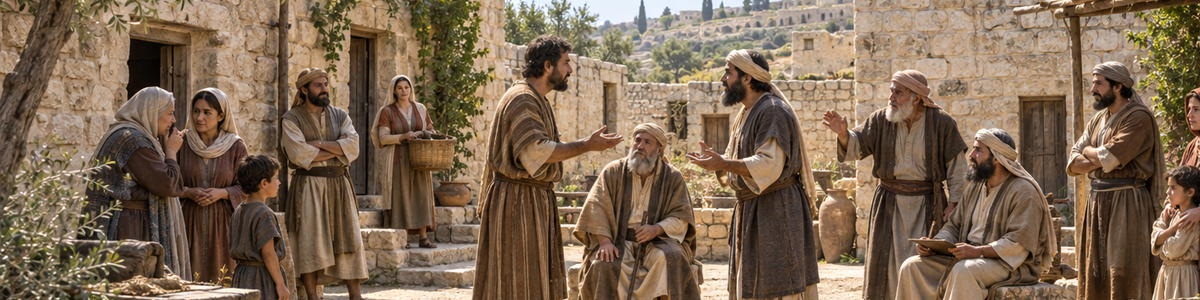
Disputes and Reconciliation
Disagreements over property, debt, family matters, reputation, work, and personal injury could disrupt communities in which people continued to live near one another.
Elders and Local Authority
Older and respected men could exercise influence within local communities, while formal authority also operated through synagogues, councils, courts, landowners, and political officials.
People Beyond the Household
Strangers and Visitors
Travelers, pilgrims, merchants, teachers, messengers, laborers, officials, and other visitors regularly brought people from outside the household or community into local life.
Towns and Urban Life
Towns and Cities in First-Century Jewish Life
Towns and cities connected surrounding countryside with markets, specialized crafts, administration, religious institutions, transport, and wider regional networks.
Jerusalem as a City
Jerusalem was both a substantial ancient city and the religious center of Jewish life, transformed during pilgrimage festivals by enormous numbers of visitors.
Streets, Crowds and Public Spaces
Urban streets and public spaces carried residents, merchants, pilgrims, workers, officials, animals, and goods through a much denser environment than the typical village.
Shops, Workshops and Commerce in Towns
Towns concentrated shops, workshops, markets, craftspeople, merchants, and customers, linking local production with surrounding villages and regional trade.
Rich and Poor in the Urban Landscape
Cities placed wealth and poverty in close proximity, from elite residences and prosperous merchants to laborers, servants, beggars, widows, and other economically vulnerable people.