Mark unusually gives the blind beggar outside Jericho a name: Bartimaeus. He then explains him as the son of Timaeus.
The explanation reflects the Semitic construction already embedded in the name itself.

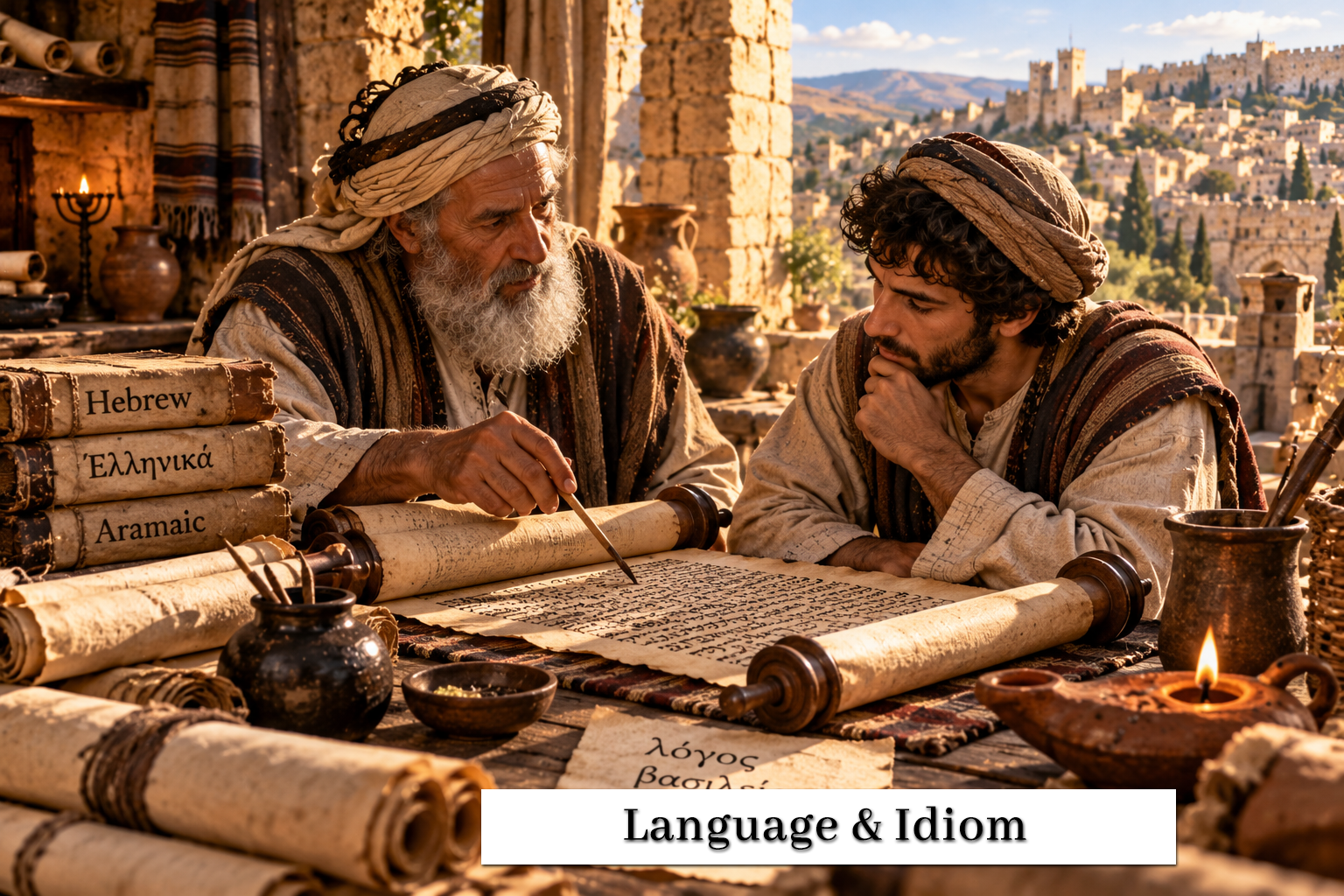
Mark unusually gives the blind beggar outside Jericho a name: Bartimaeus. He then explains him as the son of Timaeus.
The explanation reflects the Semitic construction already embedded in the name itself.
The Aramaic element bar means 'son,' functioning much like Hebrew ben. Thus Bartimaeus can be heard as 'son of Timaeus.' Mark's explanatory wording suggests sensitivity to readers who might not recognize the Semitic element automatically.
Patronymics—identifying someone through his father—were common ways of distinguishing individuals in societies without modern surnames.
The detail provides a small glimpse of the multilingual world of the Gospels, where Semitic names and expressions are preserved within Greek narratives.
It also makes Bartimaeus unusually personal among Gospel healing recipients: the roadside beggar is remembered not merely by his disability but by name and family identification.