Jesus says that 'this generation' will not pass away until the things He has described take place. The statement appears in Matthew, Mark, and Luke and has played an important role in interpretations of the discourse.
Jesus in Context
This Generation Shall Not Pass

The meaning of Jesus' statement that "this generation" will not pass away is closely tied to the range of the Greek word genea and to differing interpretations of the Olivet Discourse.
Introduction
Historical and Cultural Context
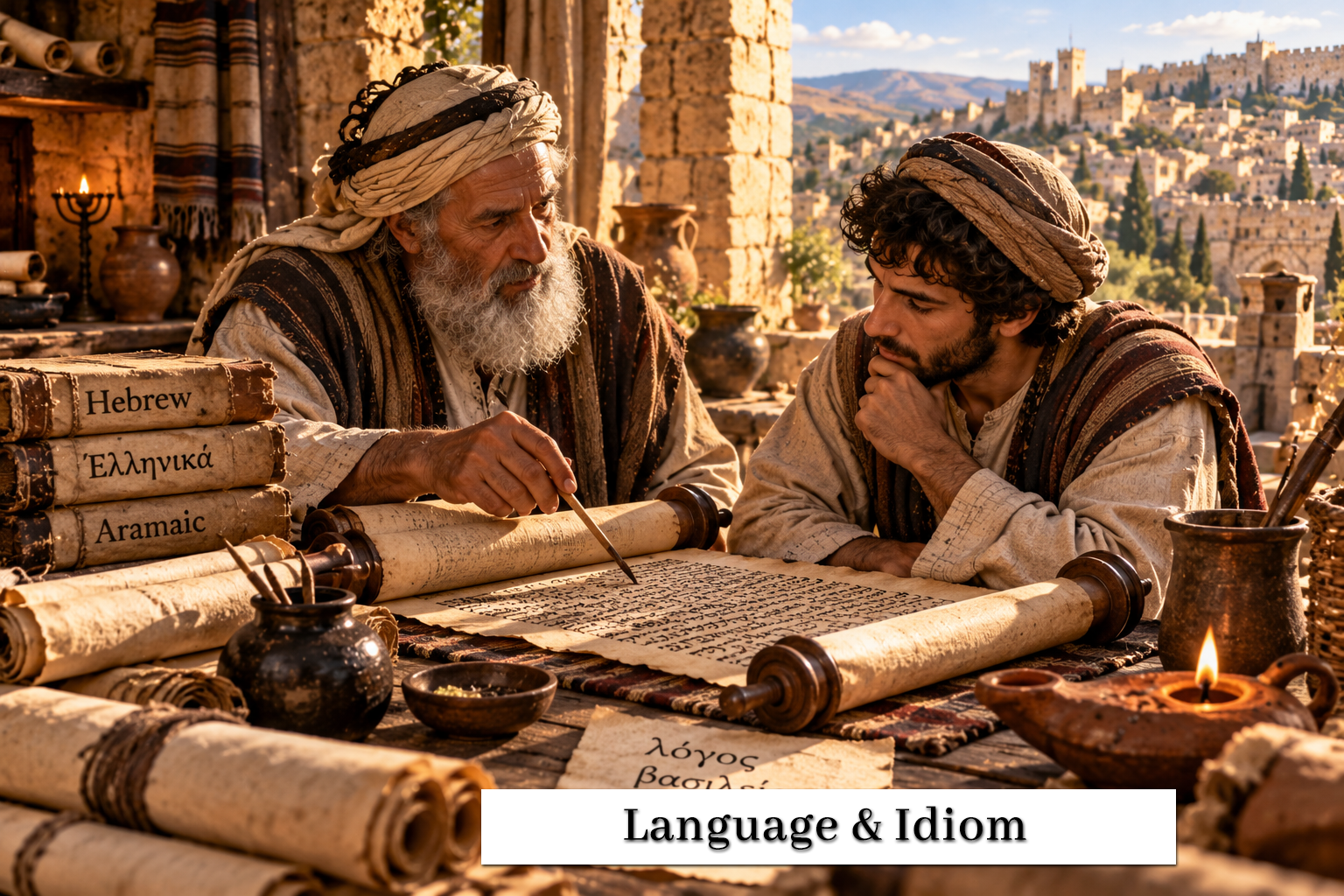
The Greek word genea commonly refers to a generation of people living during a particular period, though words describing generations and peoples can carry broader nuances depending upon context. Elsewhere in the Gospels Jesus repeatedly uses 'this generation' when addressing His contemporaries.
Interpretations of Matthew 24 and its parallels differ substantially. Some readers relate much of the preceding discourse to events surrounding Jerusalem's destruction in AD 70; others understand portions as referring to events still future to the first-century disciples; still others see both near and more distant horizons in the discourse.
Why It Matters
The expression should not be detached from its first-century language or from the structure of the discourse. Recognizing the normal meaning of genea, while also acknowledging the major interpretive approaches to the passage, helps readers understand why this verse is central to discussions of the Olivet Discourse.