Matthew and Mark locate Jesus on the Mount of Olives when His disciples question Him about the events He has just foretold. The location provides the physical setting for the extended discourse that follows.
Jesus in Context
The Mount of Olives and the Olivet Discourse

Jesus delivers His major discourse about coming upheaval and watchfulness from the Mount of Olives opposite Jerusalem.
Introduction
Historical and Cultural Context
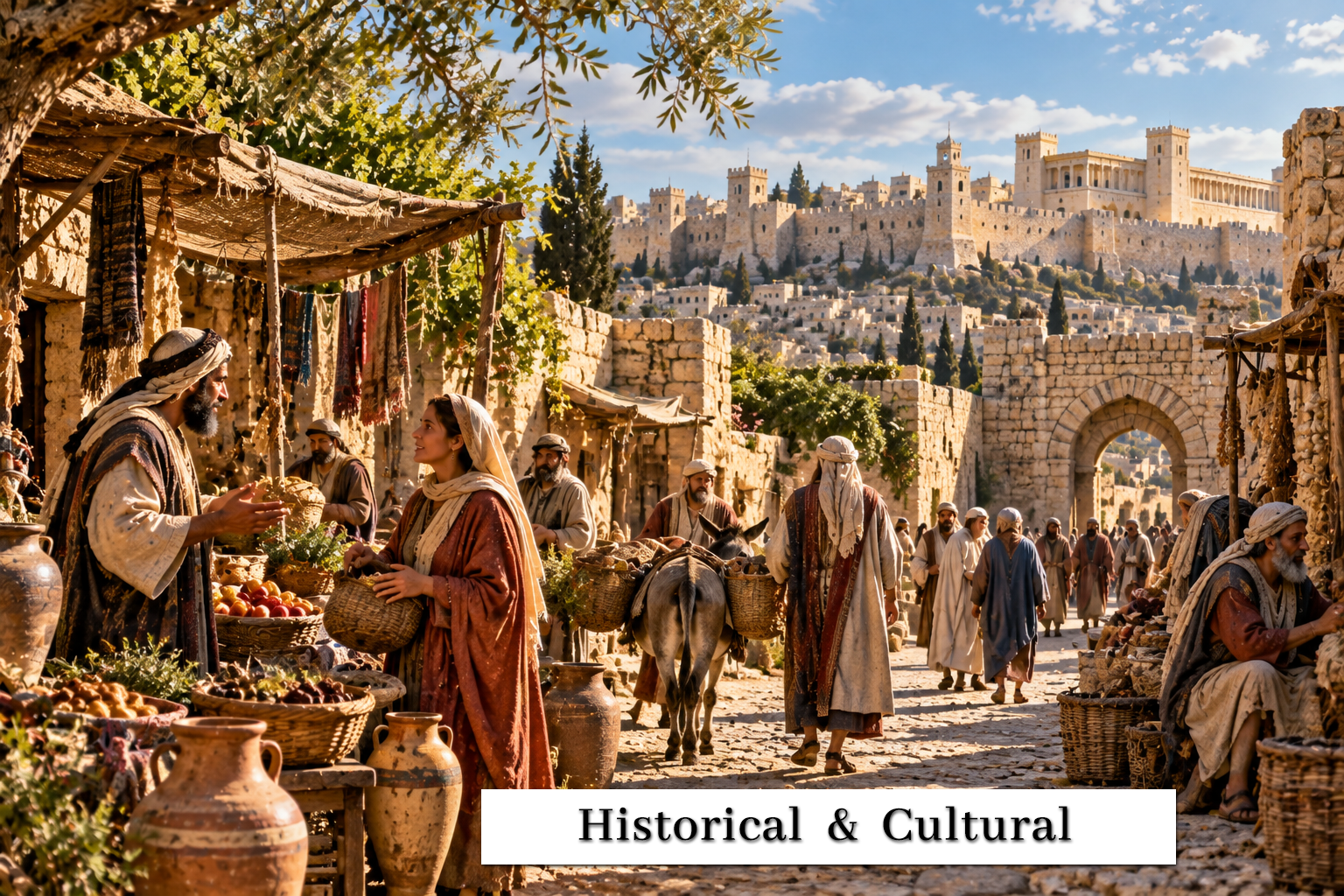
The Mount of Olives is a north-south ridge immediately east of Jerusalem across the Kidron Valley. From its western slopes a person could look directly toward the Temple complex and the city. That geography gives special force to a discourse prompted by Jesus' prediction concerning the Temple.
The mount also carried important biblical associations. Zechariah 14 places the Mount of Olives within prophetic imagery concerning the day of the Lord, while the Gospels repeatedly associate the area with Jesus' final days in Jerusalem.
Why It Matters
The setting is part of the meaning of the scene. Jesus speaks about Jerusalem, the Temple, upheaval, judgment, and His coming while sitting at a location from which the city and Temple could be seen. Recognizing the geography makes the discourse less abstract and restores its Jerusalem setting.