Andrew finds a boy carrying five barley loaves and two small fish, then immediately asks what such a small supply can accomplish among so many people.
The foods belong naturally to the agricultural and fishing economy around Galilee.

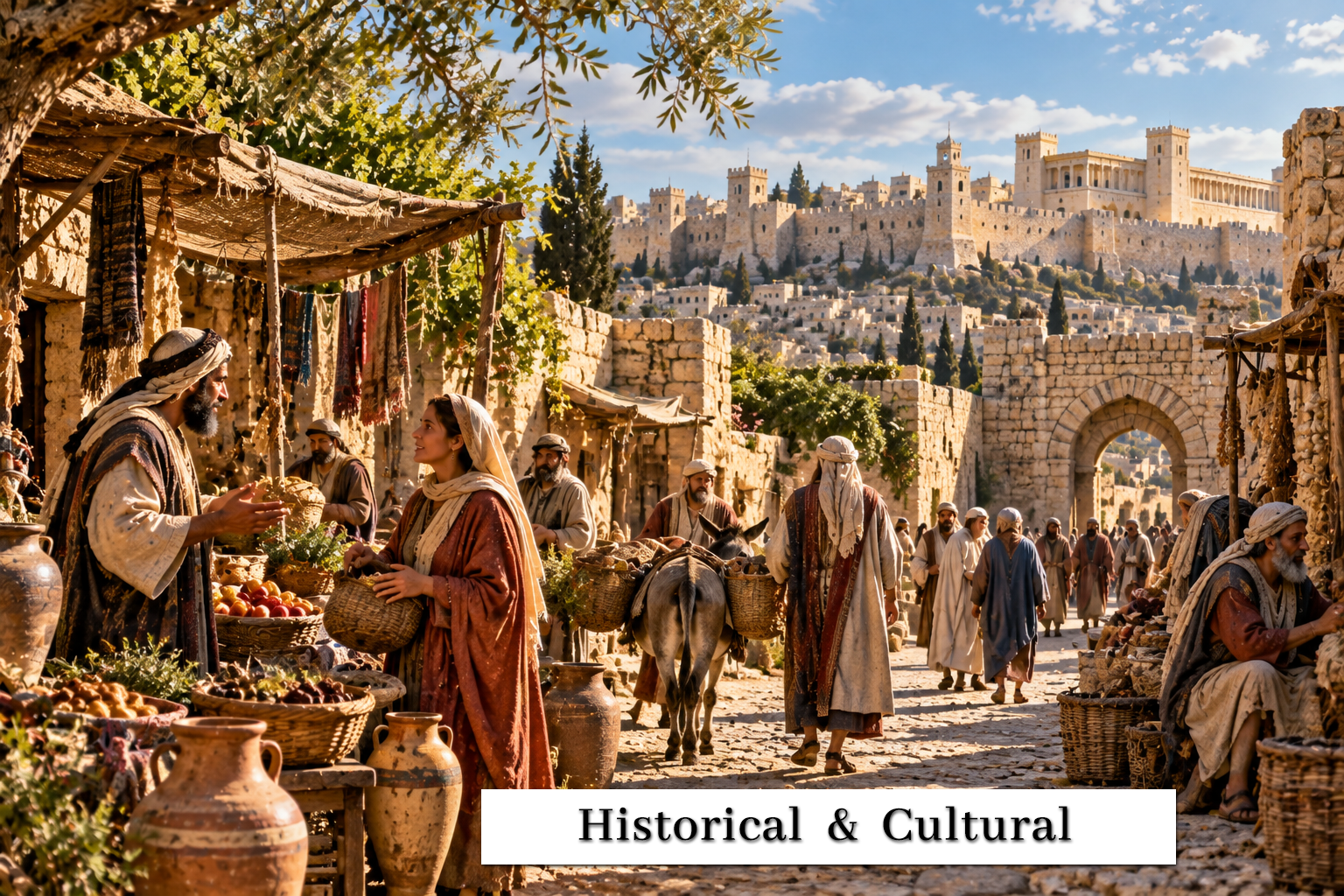
Andrew finds a boy carrying five barley loaves and two small fish, then immediately asks what such a small supply can accomplish among so many people.
The foods belong naturally to the agricultural and fishing economy around Galilee.
Barley was an important grain in ancient Palestine and generally less prestigious than wheat. Small barley loaves could form ordinary food for people of modest means, while fish from the Galilean lake economy could be eaten fresh or preserved. John's explicit mention of barley also recalls 2 Kings 4:42-44, where Elisha feeds a hundred men from twenty barley loaves and food remains.
John does not state that the crowd consciously recognizes that particular scriptural parallel.
The humble provisions heighten the contrast between available resources and the abundance that follows. Jesus does not begin with luxury food or an impressive storehouse.
The Elisha background also places the sign within Israel's prophetic story while John's version surpasses it dramatically in the number fed and the leftovers gathered.