
Jesus in Context

The Pool of Bethesda and Its Five Porticoes

Geography •  John
A Visit With Jesus
John's description of Bethesda near Jerusalem's Sheep Gate, with five covered porticoes, corresponds strikingly with archaeological remains of a substantial pool complex.
Geography

Introduction

John locates a healing at a Jerusalem pool called Bethesda, near the Sheep Gate, and describes it as having five porticoes. For centuries the unusual arrangement could sound difficult to visualize.

Archaeological work in Jerusalem has shown how a pool complex with this general configuration could exist.

Historical and Cultural Context

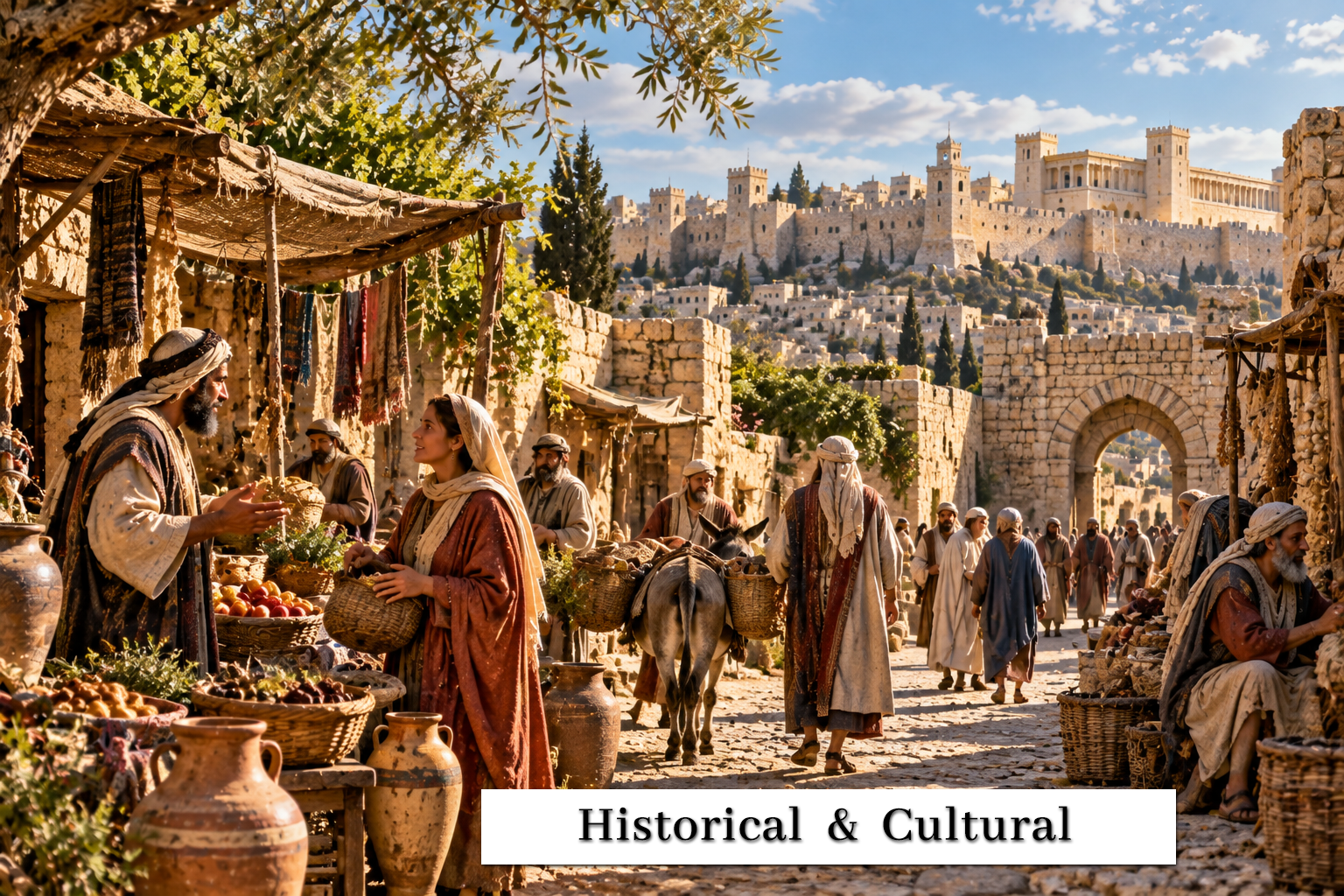
The Bethesda site north of the Temple area is commonly identified with remains of twin pools separated by a central partition. Colonnaded or covered walkways around the outer sides and along the dividing structure provide a plausible explanation for John's five stoai, or porticoes. The precise history of the complex developed over time, so not every visible ruin belongs to Jesus' period.

John says many sick and disabled people gathered beneath these sheltered areas.

Why It Matters

The setting gives architectural reality to the narrative. The five porticoes are not an arbitrary symbolic number that must be explained allegorically; they fit a distinctive Jerusalem location.

The crowded pool also clarifies the disabled man's predicament: he is one among many vulnerable people gathered around a place associated with hoped-for healing.

Scripture References

Related Places