
Jesus in Context

Stay With Us: Hospitality at Emmaus

Household Life •  Luke
A Visit With Jesus
The Emmaus disciples urge the unknown traveler to stay as evening approaches and then share bread with him, reflecting the practical and social importance of hospitality to travelers.
Household Life

Introduction

When the travelers reach their destination, Jesus appears ready to continue, but the two disciples strongly urge him to stay because evening is near. Their invitation belongs to a world in which travel after dark could be difficult and hospitality carried substantial social importance.

The guest then becomes the one who takes, blesses, breaks, and gives the bread.

Historical and Cultural Context

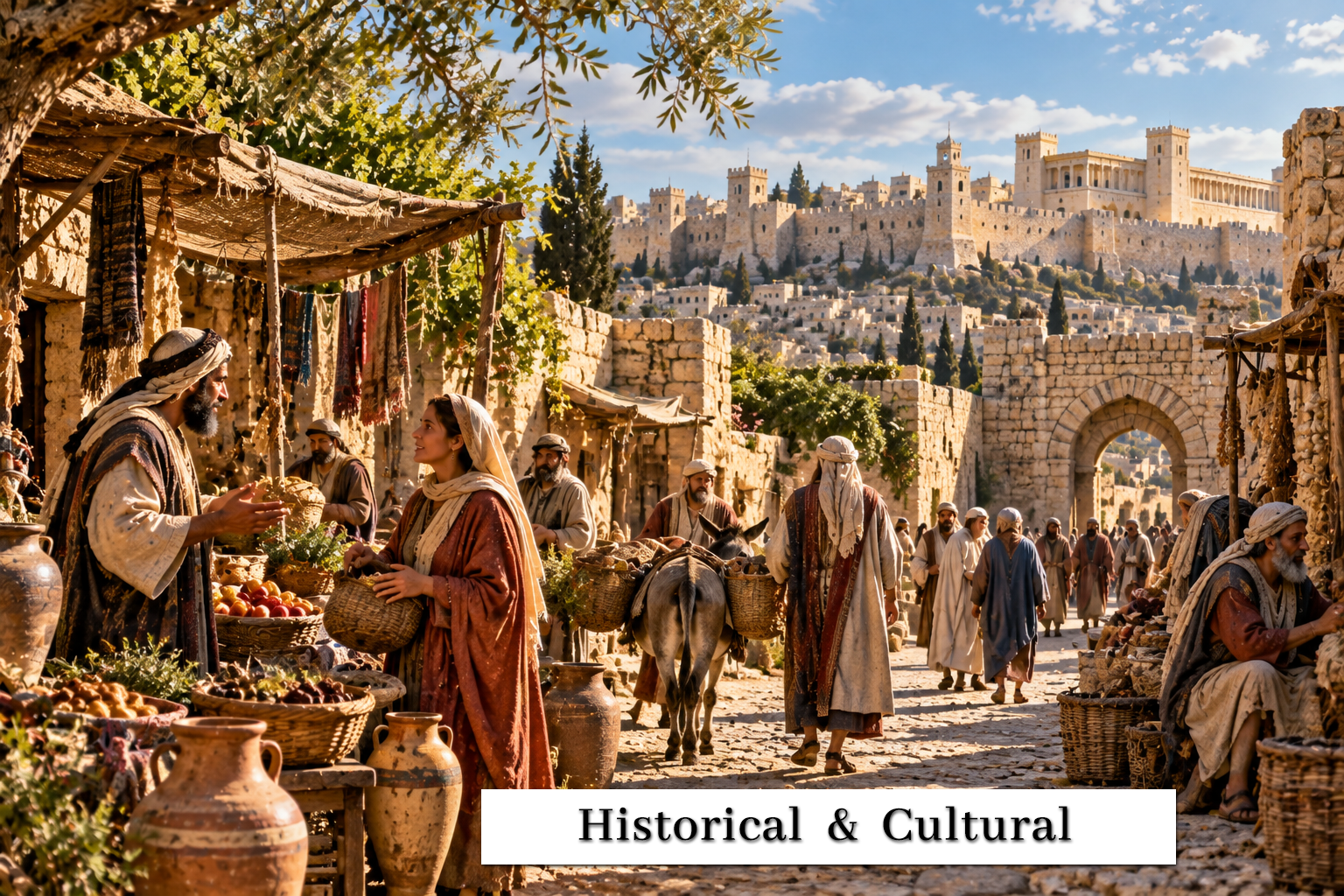
Ancient travelers could not rely on a modern network of hotels, lighting, and safe transportation. Hospitality from households, friends, acquaintances, or hosts was therefore both practical and culturally valued. Sharing a meal also created fellowship and social recognition.

Taking bread, blessing God, breaking it, and distributing it were ordinary Jewish meal actions, though Luke's wording also recalls earlier meals in Jesus' ministry.

Why It Matters

The cultural setting gives the scene a natural progression: concern for a traveler at evening leads to shared table fellowship. Recognition occurs not in an artificial ritual setting but during hospitality.

Luke then transforms the ordinary act. The stranger who was invited to receive hospitality assumes the host-like role at the bread, and the disciples recognize the risen Jesus.

Scripture References

Related Places

Related Customs