
Jesus in Context

Joseph of Arimathea: Council Member and Disciple

Political/Legal Context •  Luke
A Visit With Jesus
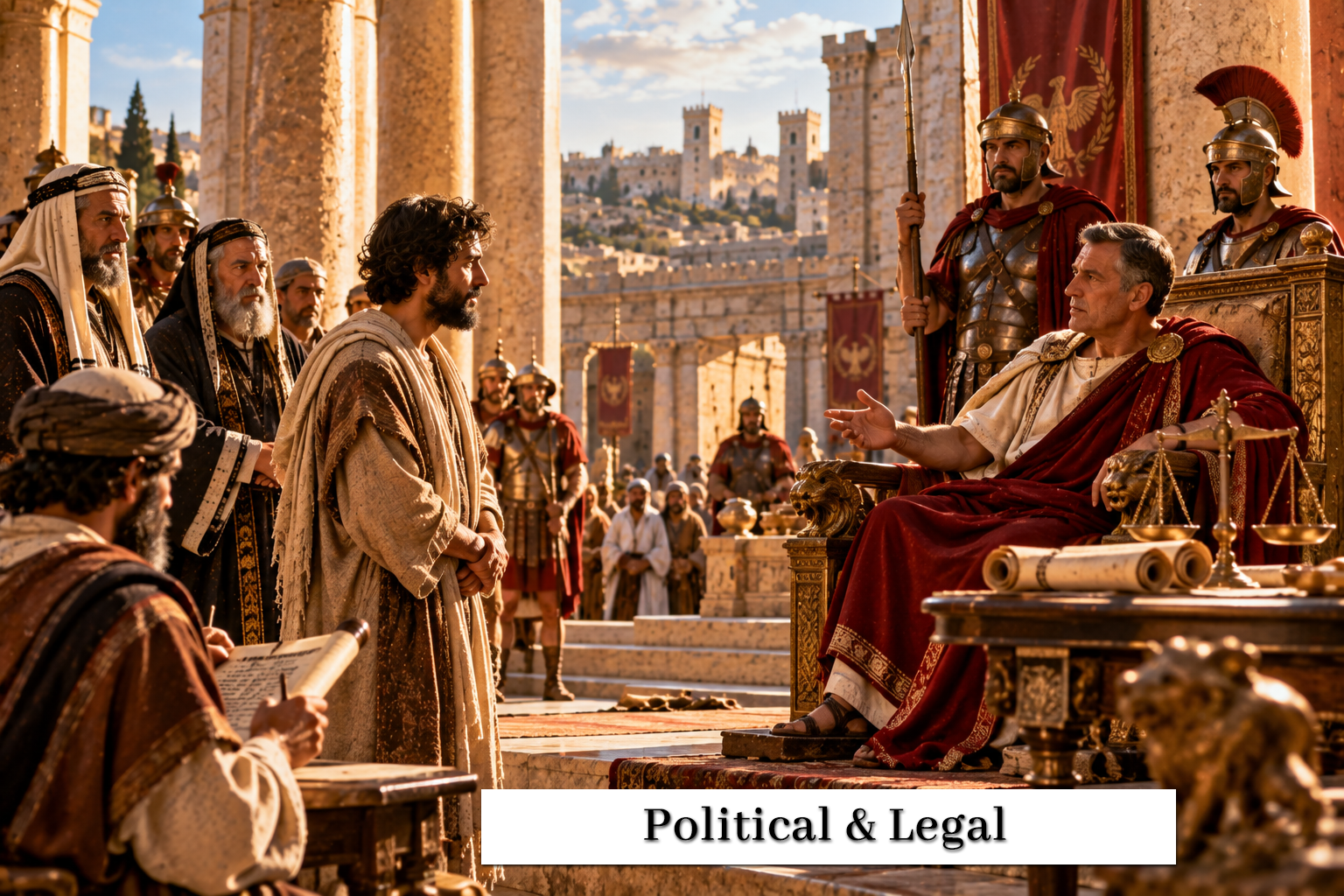
Joseph of Arimathea combines social standing within the Jerusalem council with sympathy for Jesus and enough access to request the body directly from Pilate.
Political/Legal Context

Introduction

Luke introduces Joseph of Arimathea as a good and righteous council member who had not consented to the council's decision and action. He is also waiting for the kingdom of God.

His status helps explain how he can approach the Roman governor and ask for Jesus' body.

Historical and Cultural Context

Council membership placed Joseph within Jerusalem's governing elite, although the precise composition and procedures of first-century councils should not be reconstructed solely from later rabbinic sources. A person executed by Roman authority remained under Roman control, so obtaining the body required permission.

Joseph's request to Pilate therefore crosses the institutional worlds already present in the passion narrative: Jewish leadership, Roman jurisdiction, and the circle of those favorably disposed toward Jesus.

Why It Matters

Joseph's background makes his action costly and public. He does not merely provide a tomb anonymously; he steps forward after the crucifixion and deals with the authority responsible for the execution.

Luke's description also prevents the Jerusalem council from being treated as a monolithic body in which every member held exactly the same position toward Jesus.

Scripture References

Related People

Related Places

Related Customs