
Jesus in Context

Barabbas: Insurrection and Murder

Political/Legal Context •  Luke
A Visit With Jesus
Luke identifies Barabbas not as a generic thief but as a prisoner connected with insurrection and murder, crimes directly threatening Roman public order.
Political/Legal Context

Introduction

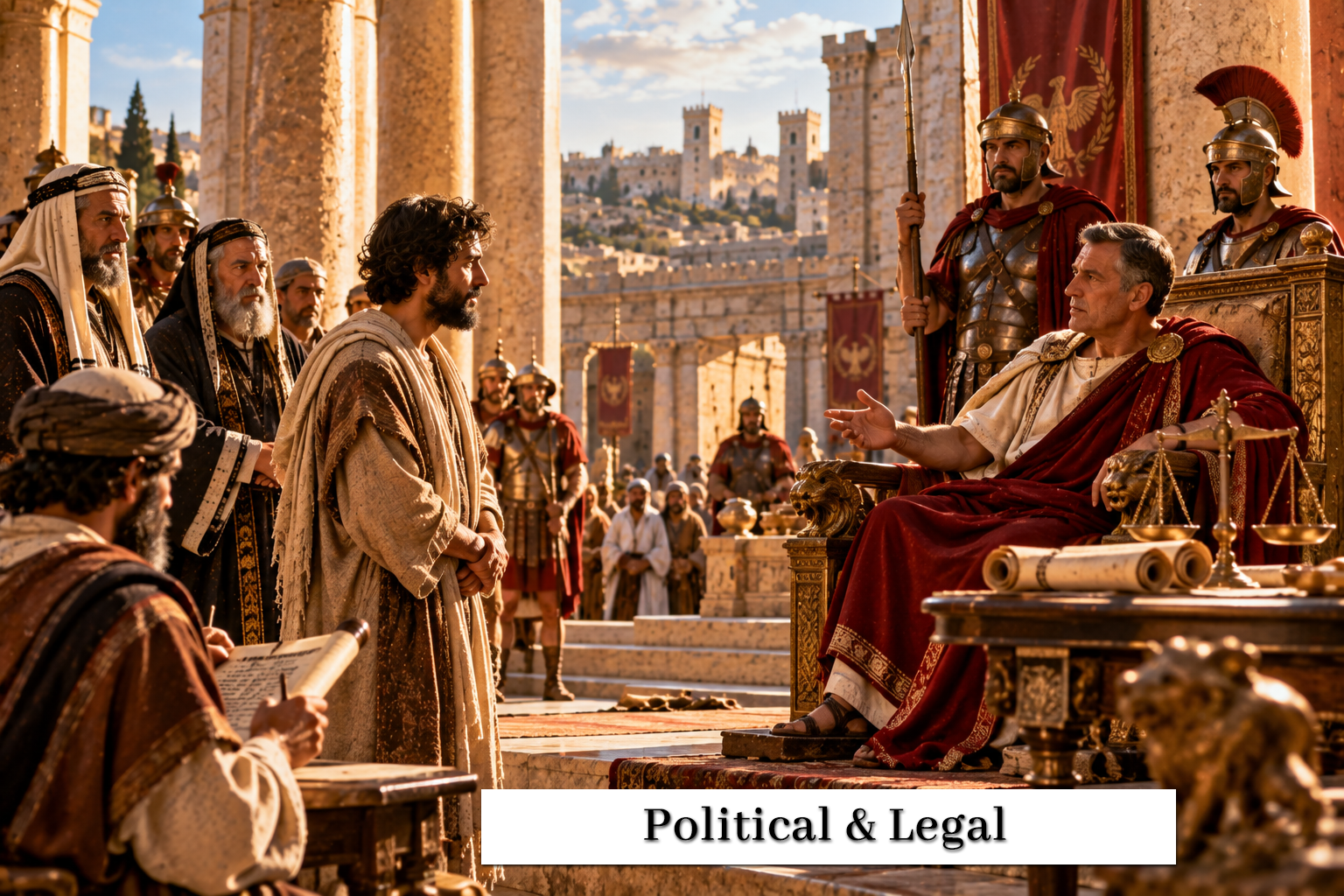
The crowd asks for Barabbas to be released instead of Jesus. Luke makes the contrast politically sharp by explaining why Barabbas was imprisoned: insurrection in the city and murder.

These were precisely the kinds of offenses a Roman governor was charged with suppressing.

Historical and Cultural Context

Roman rule depended upon maintaining order, collecting revenue, and preventing rebellion. Judea experienced recurring unrest, and armed resistance or sedition could bring severe punishment. Luke's terminology places Barabbas within that world of political violence.

The Gospel does not provide enough information to reconstruct the particular uprising or Barabbas' exact role beyond the description it gives. He should therefore not be turned into a member of a later formally defined movement without evidence.

Why It Matters

The historical setting heightens the narrative exchange. The prisoner actually associated with insurrection is released, while Jesus—whom Pilate repeatedly says he does not find guilty of a capital offense—is handed over for crucifixion.

Luke thereby makes the reversal both theological and politically concrete.

Scripture References

Related People

Related Places