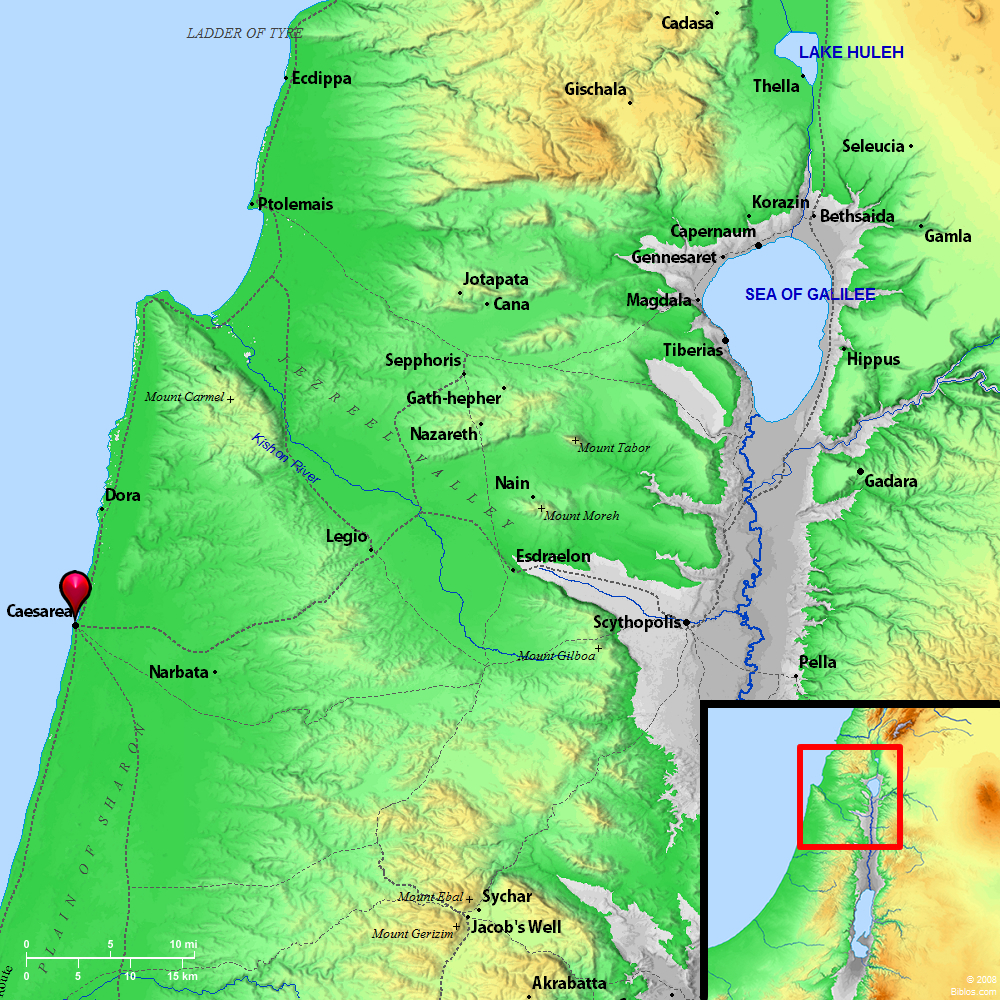
Soon after the appointment of Festus as governor, Nero decided the dispute in Caesarea between the Syrians and the Jews, making the Syrians the masters of the city. This created considerable unrest among the Jewish population. Also, the pending case of the apostle Paul was one of the new governor's first concerns.
The Jewish leadership met Festus in Jerusalem and asked that he bring Paul from Caesarea, (planning to kill Paul along the way). Festus invited the accusers to go with him to Caesarea to try the case. While he likely saw the charges against Paul as specious, Festus wished to foster a good relationship with his new subjects. He therefore asked Paul to go to Jerusalem and stand trial. Paul politely told Festus that, as Caesar’s representative, Festus needed to either make a decision or let Paul make his case before Caesar. After conferring with his advisers, Festus agreed to send Paul to Caesar (Acts 25:1—12).
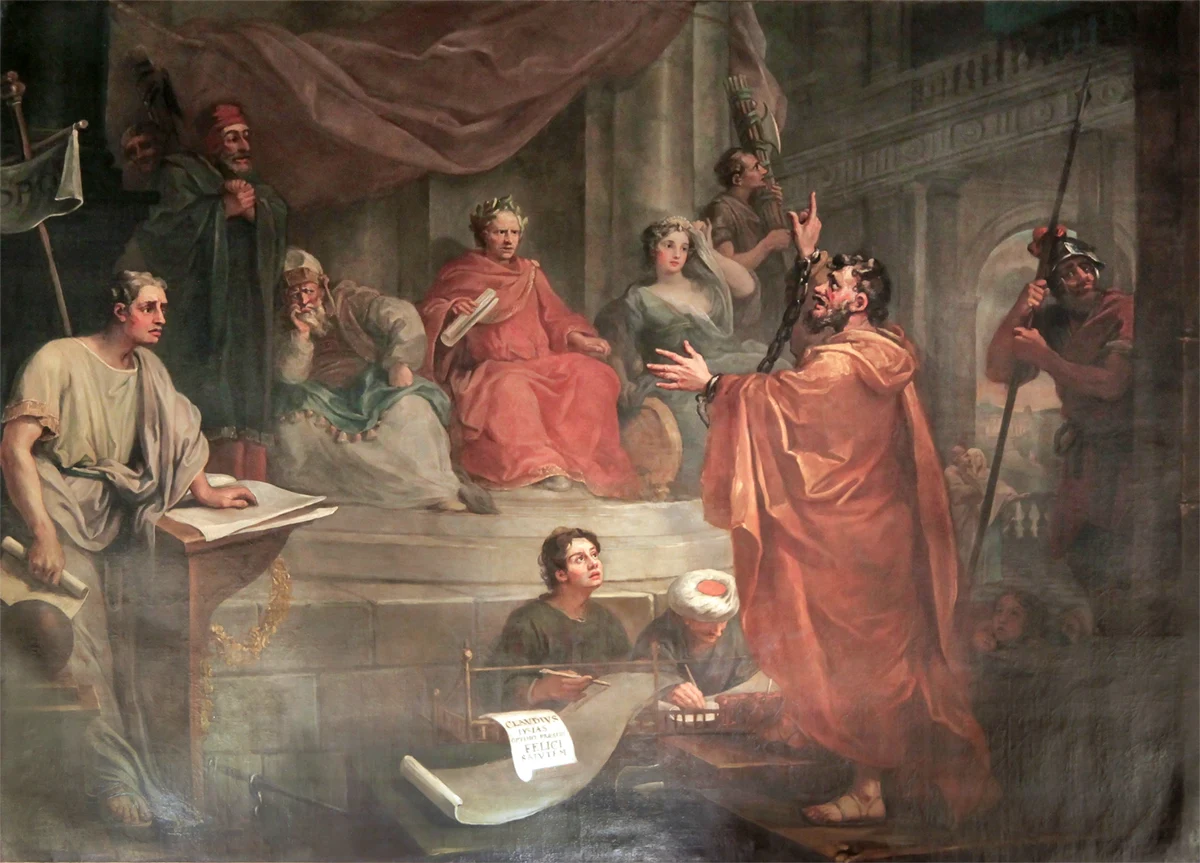
Before Paul could leave for Rome, King Herod Agrippa II and his sister Bernice arrived to visit Festus. Since Festus was not as knowledgeable about the Jewish religion as Felix, whose wife was Jewish, he wanted to understand why the Jews were trying to kill Paul. He also thought it absurd to send a man to trial in Rome with no official charges. Hence, he asked Agrippa for advice on the case (Acts 25:13–27). Paul gav his testimony to King Agrippa, and the latter immediately judged that Paul was innocent of any official wrongdoing. He told Festus, “This man could have been set free if he had not appealed to Caesar” (Acts 26:32).
Despite Paul’s innocence and Festus’ lack of any real charge, Paul had appealed to Caesar, and Festus had to send him to Rome.
Josephus recorded that at the time Festus took his position, Sicarii bandits were roaming the countryside and robbing and burning villages. They were known to blend into crowds of worshipers and kill people with short, curved swords. Festus learned an imposter had gone to the Sicarii, promising them deliverance from their hardships. When this person led the bandits to the wilderness, Festus’ soldiers killed both the imposter and his followers.
Another issue that developed during the procurator-ship of Festus was a dispute between the Temple priests and nominal "king," Agrippa II. Agrippa had added an upper story to the old Hasmonean palace in order to be able to overlook the Temple court. In response, the priests erected a wall screening the Temple from the palace. For military reasons Festus wished to destroy this wall, but he allowed the priests to send a delegation to Rome to appeal his decision. Nero was persuaded by his wife, Poppaea Sabina, to decide in the priests' favor, and the wall was allowed to stand.
Festus died suddenly in Ereẓ Israel in 62 A.D. and was later succeeded by Albinus.