Felix was the younger brother of the Greek freedman Marcus Antonius Pallas. Pallas served as a secretary of the treasury during the reign of the Emperor Claudius. Felix was a Greek who became a freedman under the reign of Emperor Claudius. According to Tacitus, it was due to the influence of Pallas that Felix first received a military command and was later made procurator (governor) of Samaria, the northern part of the province of Judaea. At the same time, Claudius gave new territories to king Julius Marcus Agrippa, reorganizing the entire area.
More changes came when Felix quarreled with his colleague in the southern part, Ventidius Cumanus, and was rewarded by the emperor with the latter's procuratorship as well. According to Flavius Josephus, Felix suppressed bands of bandits and the messianic movement of the Egyptian prophet. Josephus also accuses Felix of ordering the assassination of the high priest Jonathan by religious fanatics, but many think that this is probably untrue. Yet, it comes as no surprise that the Roman historian Tacitus calls Felix' behavior "tyrannical". Both Tacitus and Josephus report that Felix’s cruelty and licentiousness, coupled with his accessibility to bribes, led to a great increase of crime in Judea. The period of his rule was marked by internal feuds and disturbances, which he put down with severity.

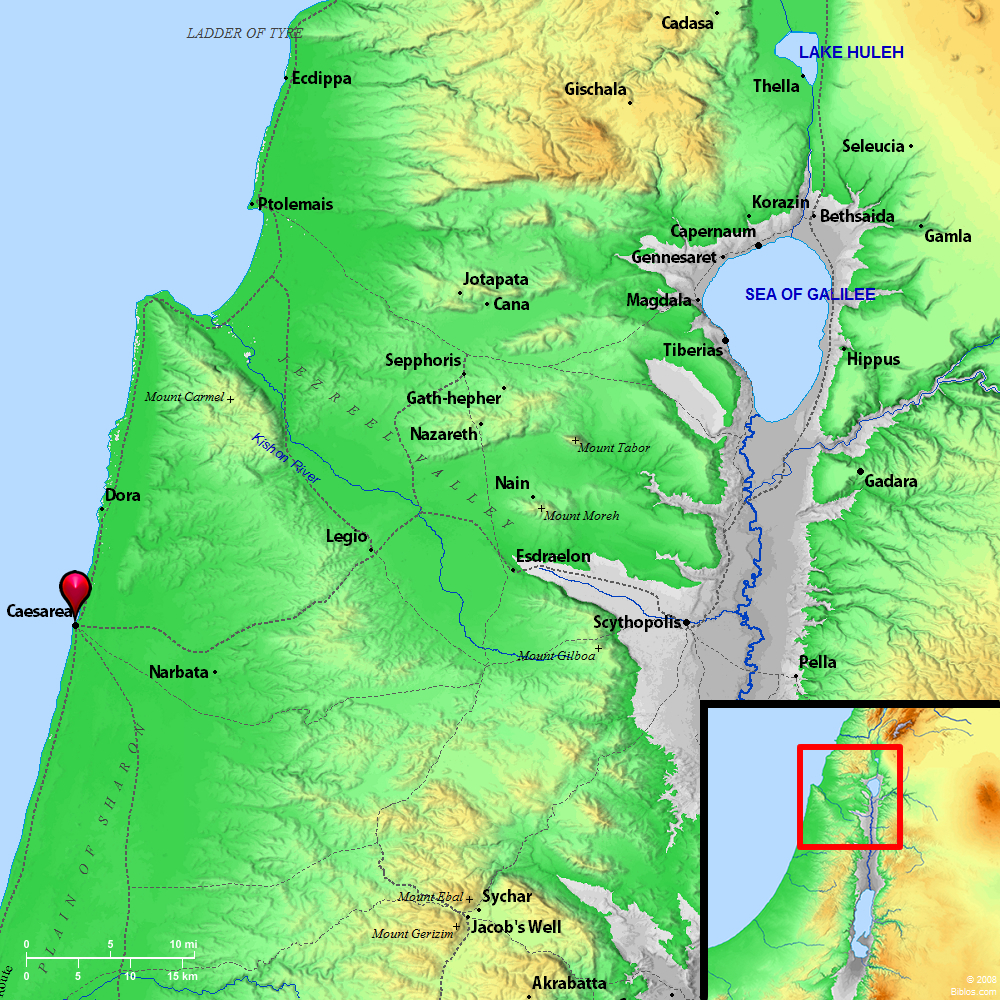
The Apostle Luke reports that Governor Felix was a key figure in Judea and in Chapters 23-24 of Acts, was identified as the governor in Caesarea. Felix held the Apostle Paul prisoner in Caesarea for two years from the festival of Pentecost in A.D. 57 until late A.D. 58. He did this because he was hoping that Paul’s supporters would raise money to bride him to release Paul (Acts 24:26). In AD 58, the inhabitants of Caesarea appealed to the emperor Nero about Felix's crimes and Felix was recalled. His brother Pallas made sure that Felix was not convicted.
Felix was succeeded by the new governor Porcius Festus who continued to hold Paul prisoner for another year because “he wanted to do the Jews a favor” (Acts 24:27).
Suetonius recorded that Felix was married to three princesses, two of whom were named Drusilla. Tacitus suggested that the first Drusilla was a granddaughter of Mark Antony and Cleopatra VII Philopator, but it is thought that he might have been confusing her with the other Drusilla, who was the wife of king Aziz of Emesa and daughter of Herod Agrippa. In AD 54, that Drusilla gave birth to a son named Agrippa, but he was killed during the eruption of the Mount Vesuvius in AD 79.