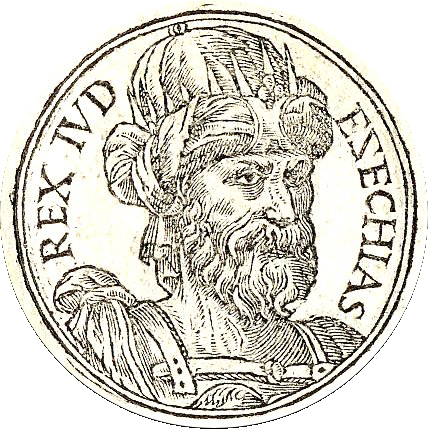
Wiki Details

Hezekiah (; Biblical Hebrew: חִזְקִיָּהוּ, romanized: Ḥizqiyyāhū), or Ezekias (born c. 741 BCE, sole ruler c. 716/15–687/86 BCE), was the son of Ahaz and the thirteenth king of Judah. He is described as "the best-attested figure in biblical history," due to the extensive documentation of his reign in biblical texts and external sources (notably Assyrian inscriptions). His reign was marked by his significant religious reforms and his revolt against the Assyrian Empire. He witnessed the destruction of the northern Kingdom of Israel by the Assyrians under Sargon II in c. 722 BCE and later faced the Assyrian siege of Jerusalem by King Sennacherib in 701 BCE.
Hezekiah's changes to the official worship,especially his centralization of worship in Jerusalem and his efforts to rid Judah of the worship of false gods and goddesses, are a major focus of biblical accounts. He is considered a very righteous king in both the Second Book of Kings and the Second Book of Chronicles. His efforts to consolidate worship around the God of Israel and his destruction of other cult objects, such as the bronze serpent made by Moses, are seen as his way of consolidating power and temple resources during a turbulent time. His reign was marked by prophetic activity, with prophets such as Isaiah and Micah delivering their messages during his time.
While Hezekiah's reign is well-documented, the historical accuracy of the events is debated by scholars. He is also one of the more prominent kings of Judah mentioned in the Bible and is one of the kings mentioned in the genealogy of Jesus in the Gospel of Matthew. He lived another fifteen years after the war and brought material prosperity to his kingdom before he died, and his son Manasseh succeeded him. The Bible praises Hezekiah's reliance on God during the Assyrian siege, claiming divine intervention in Jerusalem's survival; according to 2 Kings 18:5, "No king of Judah, among either his predecessors or his successors, could [...] be compared to him".
General info from Wikipedia.org