Wiki Details

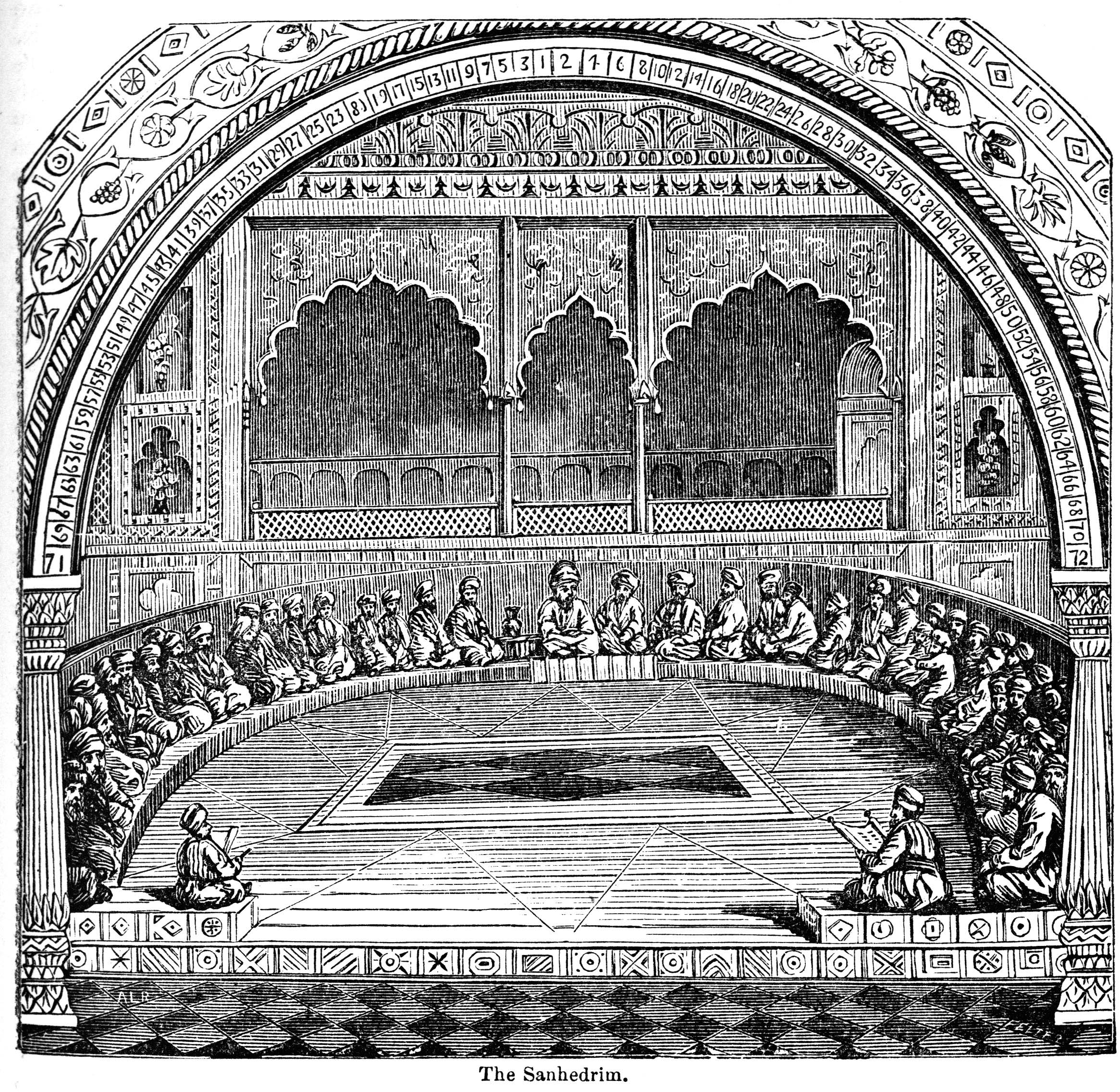
The Sanhedrin (Hebrew and Middle Aramaic סַנְהֶדְרִין, a loanword from Koine Greek: Συνέδριον, romanized: synedrion, 'assembly,' 'sitting together,' hence 'assembly' or 'council') was a Jewish legislative and judicial assembly in the ancient land of Israel.
There were two classes of Rabbinite courts called sanhedrins: Greater and Lesser. A lesser Sanhedrin of 23 judges was appointed to sit as a tribunal in each city. In general usage, the Sanhedrin without qualifier usually refers to the Great Sanhedrin. There was only one Great Sanhedrin of 71 judges, which, among other roles, acted as a supreme court, taking appeals from cases that lesser courts decided. The Great Sanhedrin was presided over by the Nasi (lit. "prince," often translated as "president" in modern English), assisted by the Av Beit Din ("chief of the court").
In the Second Temple period, the Great Sanhedrin met in the Temple in Jerusalem, in a building called the Hall of Hewn Stones. The Great Sanhedrin convened every day except festivals and the sabbath day (Shabbat).
After the destruction of the Second Temple and the failure of the Bar Kokhba revolt, the Great Sanhedrin moved to Galilee, which became part of the Roman province of Syria Palaestina. In this period, the Sanhedrin was sometimes called the Galilean Patriarchate or Patriarchate of Palaestina, the governing legal body of Galilean Jewry. In the late 200s CE, to avoid persecution, the name Sanhedrin was dropped and its decisions were issued under the name of Beit HaMidrash (house of learning). The last universally binding decision of the Great Sanhedrin appeared in 358 when the Hebrew calendar was established. The Great Sanhedrin was finally disbanded in 425.
Over the centuries, attempts have been made to revive the institution, such as the Grand Sanhedrin convened by Napoleon Bonaparte and modern attempts in Israel.
General info from Wikipedia.org