Back

Wiki Details
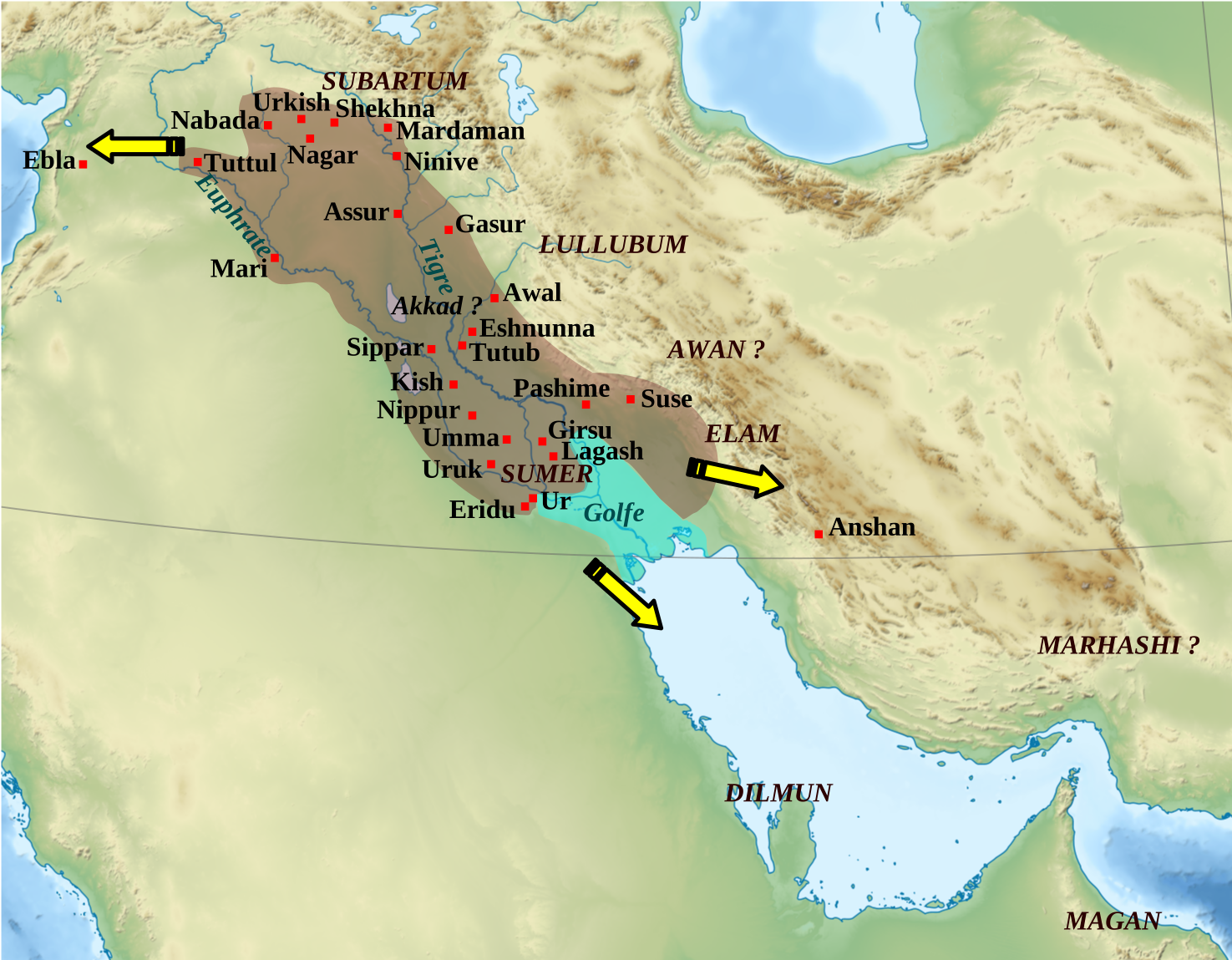
 The Akkadian Empire () or the Kingdom of Akkad/Agade was an ancient kingdom established around 2334 BCE, and the first empire in world history, succeeding the long-lived city-states of Sumer. Centered on the city of Akkad ( or ) and its surrounding region in modern-day Iraq, the empire united the Semitic Akkadian and Sumerian speakers under one rule and exercised significant influence across Mesopotamia, the Levant, modern-day Iran and Anatolia, sending military expeditions as far south as Dilmun and Magan in the Arabian Peninsula.
Established by Sargon of Akkad after defeating the Sumerian king Lugal-zage-si, it replaced the system of independent Sumero-Akkadian city-states and unified a vast region, stretching from the Mediterranean to Iran and from Anatolia to the Persian Gulf, under a centralized government. Sargon and his successors, especially his grandson Naram-Sin, expanded the empire through military conquest, administrative reforms, and cultural integration. Naram-Sin took the unprecedented step of declaring himself a living god and adopted the title "King of the Four Quarters." The Semitic Akkadian language became the empire’s lingua franca, although Sumerian (a language isolate) remained important in religion and literature. The empire was documented through inscriptions, administrative tablets, and seals, including notable sources like the Bassetki Statue. Enheduanna, Sargon’s daughter, served as high priestess and is recognized as the first known named author in history.
The Akkadian Empire reached its political peak between the 24th and 22nd centuries BC, following the conquests by its founder Sargon. Under Sargon and his successors, the Akkadian language was briefly imposed on neighbouring conquered states such as Elam, Lullubi, Hatti and Gutium. Akkad is sometimes regarded as the first empire in history, though the meaning of this term is not precise, and there are earlier Sumerian claimants.
The Akkadian state was characterized by a planned economy supported by agriculture, taxation, and conquest. It also saw developments in art, technology, and long-distance trade, including connections with the Indus Valley. Despite its strength, the empire faced internal revolts, dynastic instability, and external threats. Sargon’s sons, Rimush and Manishtushu, struggled to maintain control; both died violently. Naram-Sin’s successors were weaker, leading to fragmentation and vulnerability. The empire eventually collapsed due to a combination of internal unrest and severe environmental and economic stress caused by a major drought associated with the 4.2-kiloyear climate event, which led to crop failures, famine, urban decline, and population displacement, followed by an invasion by the Gutians.
Back
General info from Wikipedia.org