
The major sects of Judaism and early Christianity had their own characteristic relationships with the Temple institution and its practices. The Sadducees were the aristocratic priestly families who controlled and administrated many aspects of the temple. When the temple was destroyed, the Sadducees lost the foundation of their livelihood and their base of power among the people. While priestly traditions survived for a time in the synagogue traditions, eventually the Sadducees without a temple were eclipsed by the Pharisees.
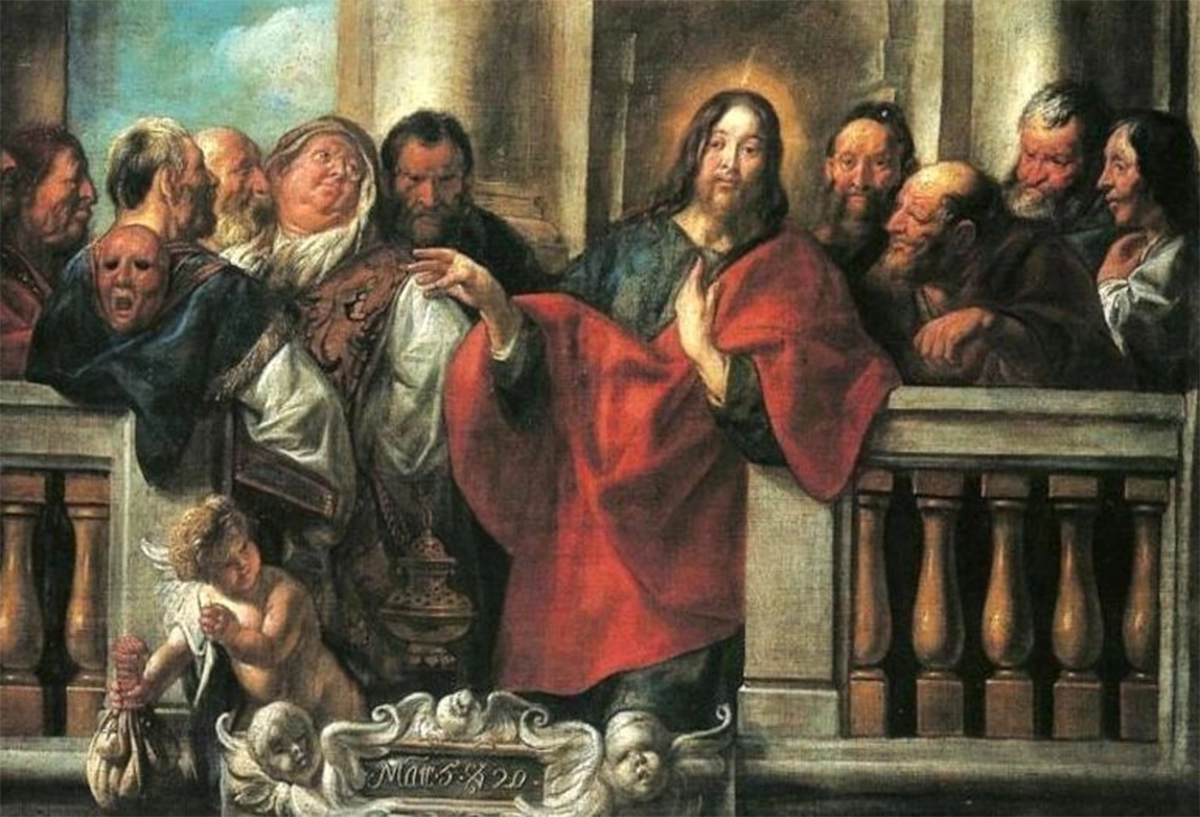
The Pharisees did not oppose participation in the temple in spite of their opposition to the control of the Sadducees. Because the Pharisees. owed allegiance to oral law, they found their relationship with the temple more flexible. The oral law made them able to forge religious practices that could survive without the temple. Eventually the Pharisees transitioned into rabbinic Judaism, which became mainstream Judaism to the present day. Pharisaic Judaism became able to promote institutions that continued worship in the absence of the sacrificial system. With time, rabbis noted that prayer, study, and acts of loving-kindness are pleasing to the Lord like sacrifice.
The Samaritans claimed to be remnants of the northern ten tribes. They preserved an ancient tradition in their version of the Torah called the Samaritan Pentateuch that commanded the temple be built on Mount Gerizim. According to Josephus, the Samaritans built their temple there sometime in the period of Alexander the Great, and it remained a center of their religious community and a competing temple to the Jerusalem temple. It was destroyed by the Hasmonean king John Hyrcanus in 129 BC (Antiquities 13.254–56). This was another one of the defining incidents leading to the division and continued animosity between the Jews and Samaritans as reflected in the New Testament. The dispute over ttemples provided the background for the conversation between Jesus and the Samaritan woman at the well.
Christians initially continued worshipping at the Jerusalem temple and living the law of Moses, but eventually it became clear that one did not have to become a Jew to become a Christian (Acts 15; Galatians 2). Following the destruction of the temple in AD 70, Christianity generally adopted the point of view that the church was a temple. Based on passages of scripture in the writings of Paul like “Know ye not that ye are the temple of God, and that the Spirit of God dwelleth in you” (1 Corinthians 3:16), and “For we know that if our earthly house of this tabernacle were dissolved, we have a building of God, an house not made with hands, eternal in the heavens” (2 Corinthians 5:1). Christians came to view the individual believer and the church as a community of believers functioning as the new temple of God.
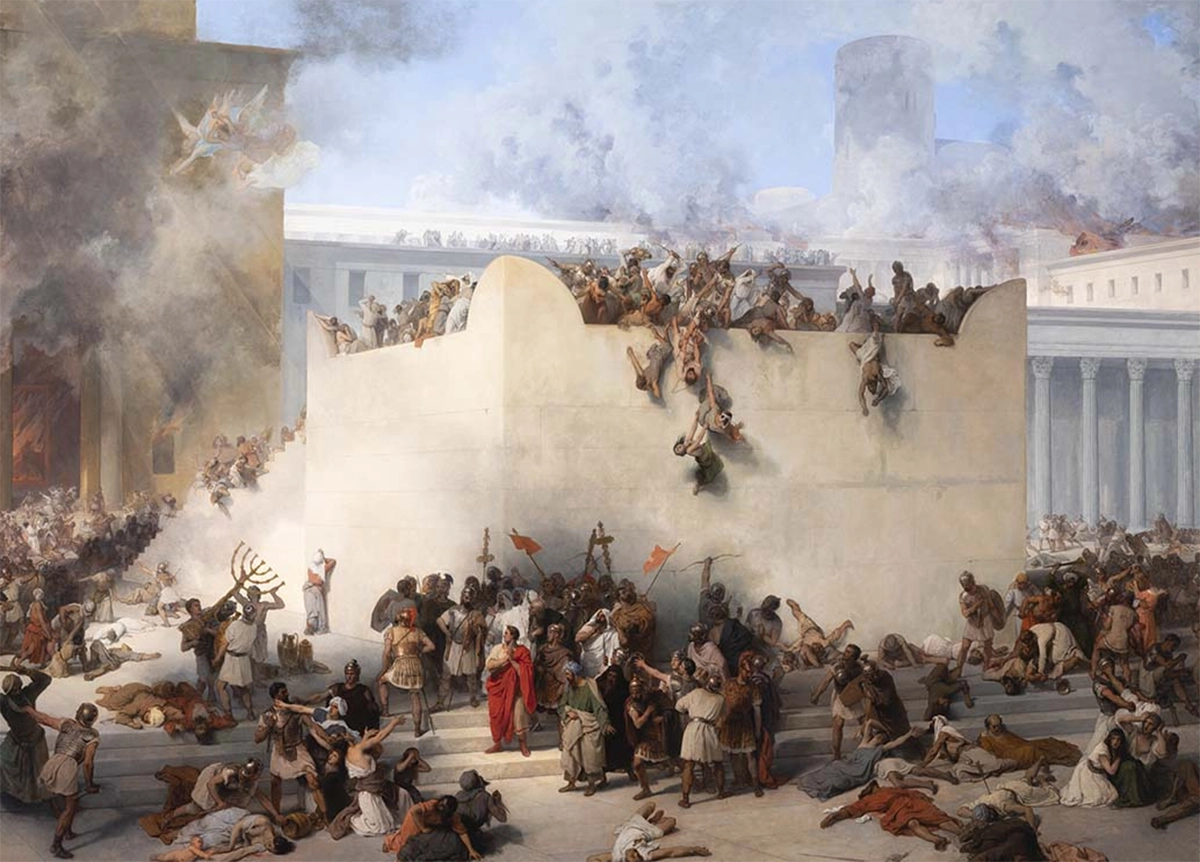
Destruction of the Temple
In April 70 AD, about the time of Passover, the Roman general Titus besieged Jerusalem. Since that action coincided with Passover, the Romans allowed pilgrims to enter the city but refused to let them leave—thus strategically depleting food and water supplies within Jerusalem. Within the walls, the Zealots, a militant anti-Roman party, struggled with other Jewish factions that had emerged, which weakened the resistance even more. Josephus, a Jew who had commanded rebel forces but then defected to the Roman cause, attempted to negotiate a settlement, but, because he was not trusted by the Romans and was despised by the rebels, the talks went nowhere. The Romans encircled the city with a wall to cut off supplies to the city completely and thereby drive the Jews to starvation.
By August 70 AD the Romans had breached the final defenses and massacred much of the remaining population. They also destroyed the Second Temple. Rome celebrated the fall of Jerusalem by erecting the triumphal Arch of Titus.
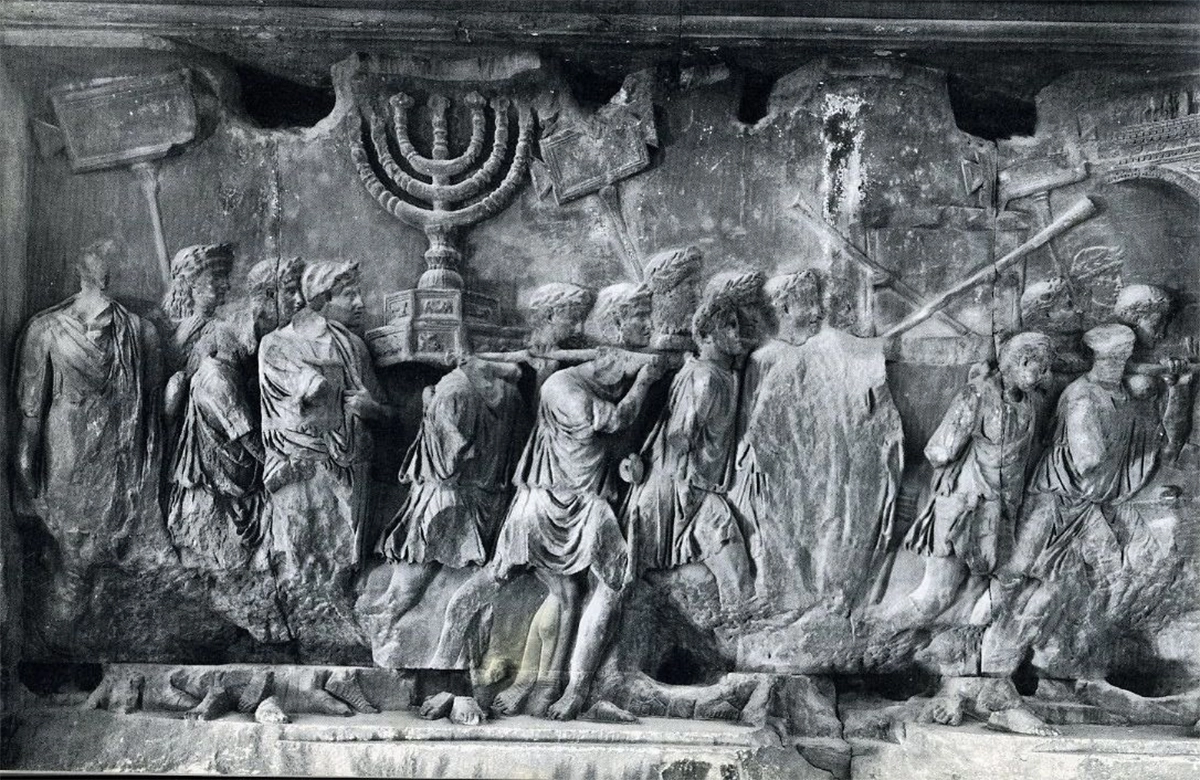
With the final Roman conquest of Jerusalen in AD 70, many of the furnishings of the temple were destroyed. Several of the implements—the trumpets, the table of the bread of the presence, and the lampstand—were preserved and taken to Rome, where their images were captured in the relief on the Arch of Titus in Rome. Various implements from the temple, including the menorah and the shewbread table, were preserved for many years in Rome in Vespasian’s Temple of Peace.
The destruction of the temple was pivotal for Jews and Christians alike. For the Jews the temple of Herod was a tangible symbol of their religion that made it possible to fulfill the laws of sacrifice in the law of Moses. With its destruction came the loss of the center of their religion, and Judaism would have to develop ways to replace sacrifice and the celebration of the festivals that could formerly be done only at the temple. Christians would have to decide what their proper relationship was to the temple—whether they needed an actual earthly building or if Jesus had in some way done away with the need for a physical temple. However, both Jews and Christians would continue to read and study the canonical books of their religions, including the prophecies in the Old Testament about the future restoration and rebuilding of the temple.
Amos prophesied, “In that day I will raise up the tabernacle of David that is fallen, . . . and I will build it as in the days of old” (Amos 9:11). Ezekiel has a vision of the future temple complete with the plans in Ezekiel 40–48. And Isaiah prophesied, “And it shall come to pass in the last days, that the mountain of the Lord’s house shall be established in the top of the mountains, . . . and many people shall go and say, Come ye, and let us go up to the mountain of the Lord, to the house of the God of Jacob” (Isaiah 2:2–3).