
Jesus in Context

The Council of Elders, Chief Priests, and Scribes

Political/Legal Context •  Luke
A Visit With Jesus
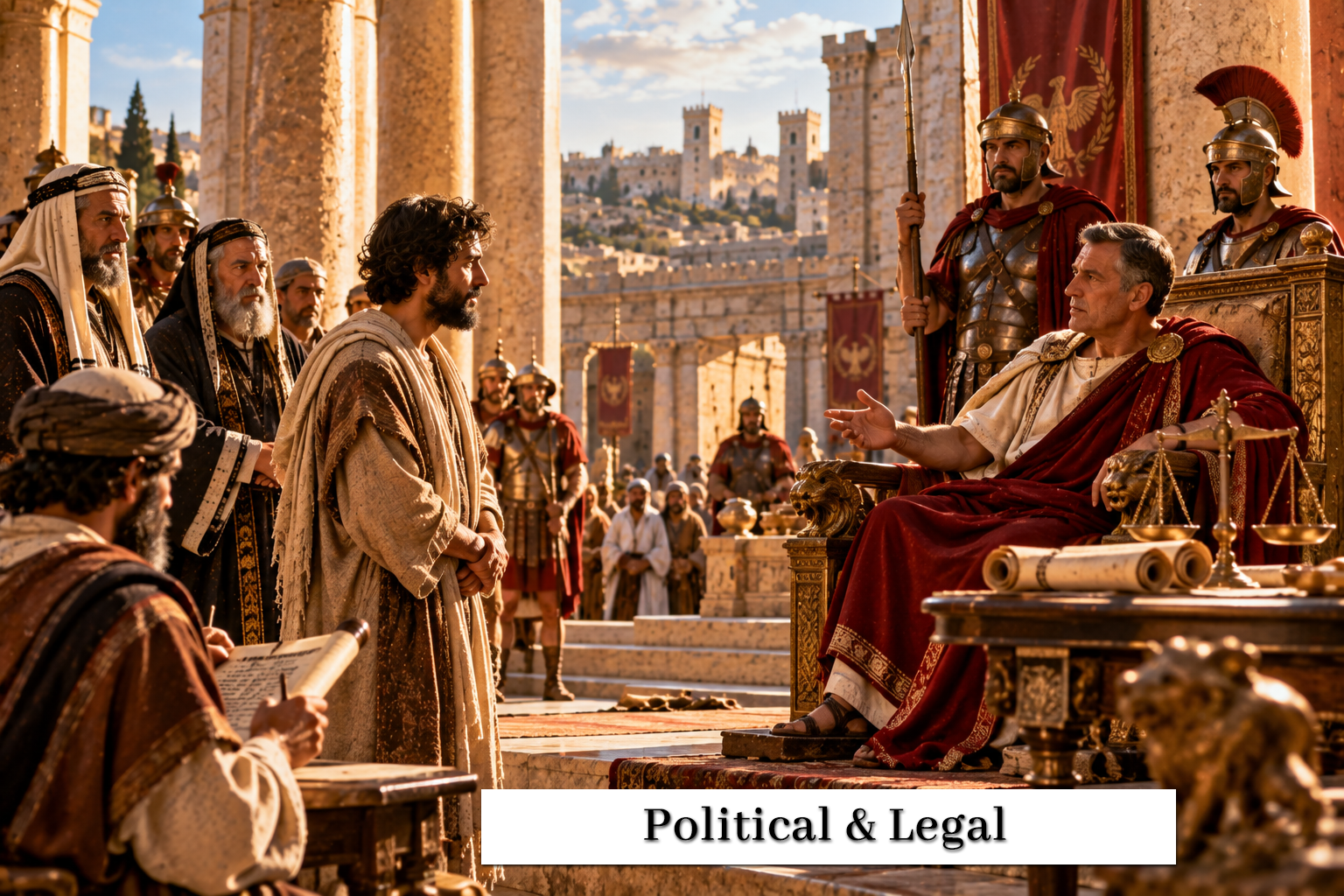
Luke's council scene brings together elders, chief priests, and scribes within Jerusalem's governing religious leadership as Jesus is questioned before being taken to Pilate.
Political/Legal Context

Introduction

Luke says that at daybreak the elders of the people, chief priests, and scribes assemble and bring Jesus into their council. These groups represent overlapping forms of authority in Jerusalem.

The council is commonly identified with the Sanhedrin, though the Gospel description should guide reconstruction rather than later procedural rules alone.

Historical and Cultural Context

Jerusalem's leadership included aristocratic priestly families, lay elders, and experts in the law. Ancient sources use council terminology for governing bodies connected with Jewish communal affairs. Under Roman rule such leaders retained substantial authority, but Rome controlled crucial political and capital matters.

Later rabbinic texts preserve valuable Jewish legal traditions but cannot simply be treated as a verbatim procedural manual for every detail of an earlier first-century hearing.

Why It Matters

The institutional setting explains the transition in Luke's passion narrative. Jesus is first examined within Jewish leadership and then brought before the Roman prefect, where the accusations are framed in politically actionable terms.

The movement from council to governor reflects the layered realities of authority in Roman Judea.

Scripture References

Related People

Related Customs