The vineyard owner leases his property to tenant farmers, leaves for an extended period, and later sends servants to receive the owner's share of its produce.
Jesus in Context
Tenant Farmers and Absentee Vineyard Owners

Jesus places the parable of the wicked tenants within the recognizable economic arrangement of an owner leasing agricultural property and sending agents to collect what is due.
Introduction
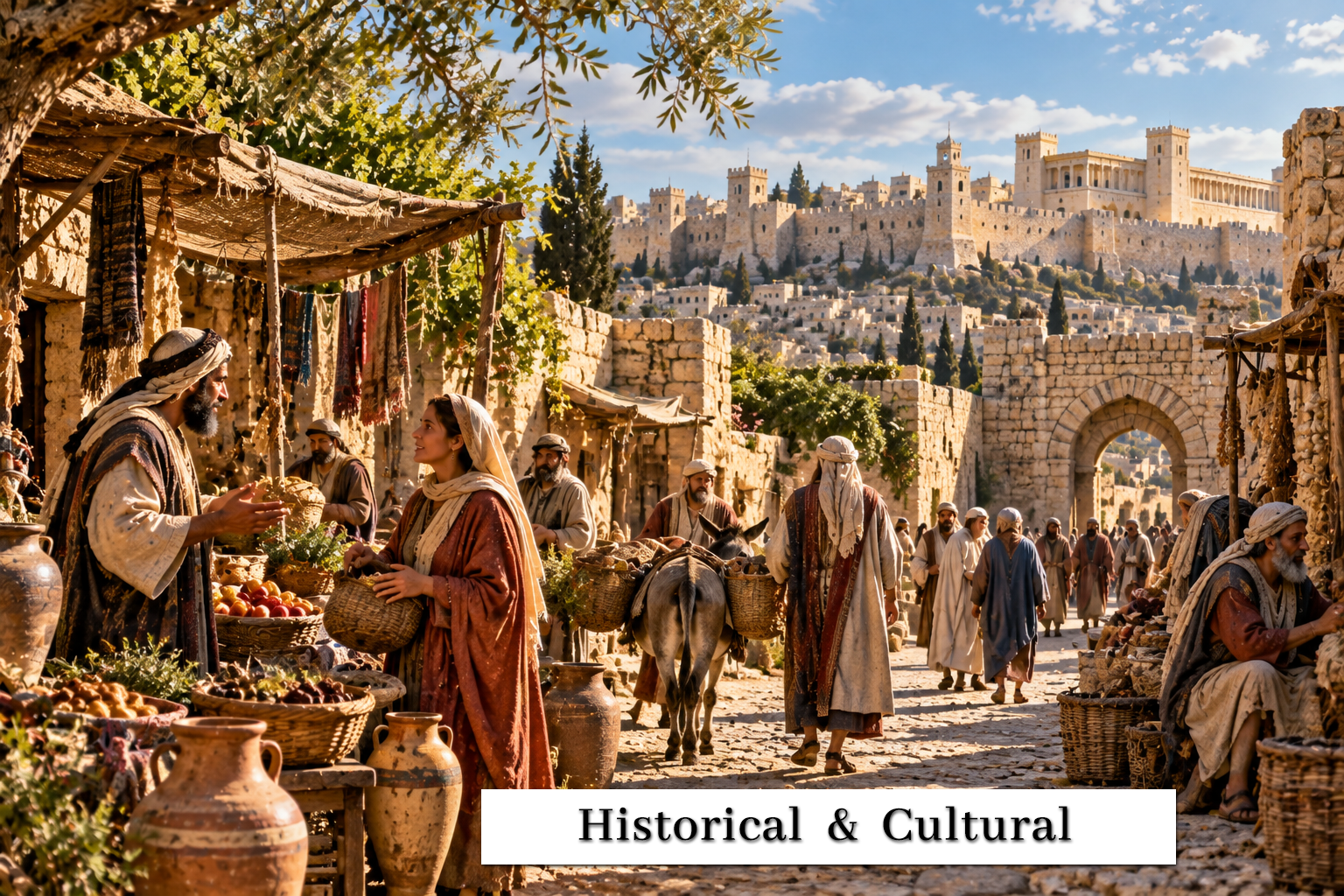
Historical and Cultural Context
Large estates and tenant cultivation were familiar features of the eastern Mediterranean economy. An owner could lease agricultural land to tenants who cultivated it while owing an agreed portion of the produce or another form of payment. An absentee owner could send servants or agents to collect what was due.
Why It Matters
The economic arrangement explains the repeated arrival of the owner's representatives. The tenants are not being confronted by strangers but by authorized agents seeking the owner's rightful return from property entrusted to them.