Jesus compares the kingdom to leaven that a woman hides or mixes into flour until the whole batch is leavened. The image comes directly from ordinary household bread making.
Jesus in Context
Leaven Hidden in Flour

Jesus pictures a woman working leaven into a large quantity of flour until its influence spreads throughout the dough.
Introduction
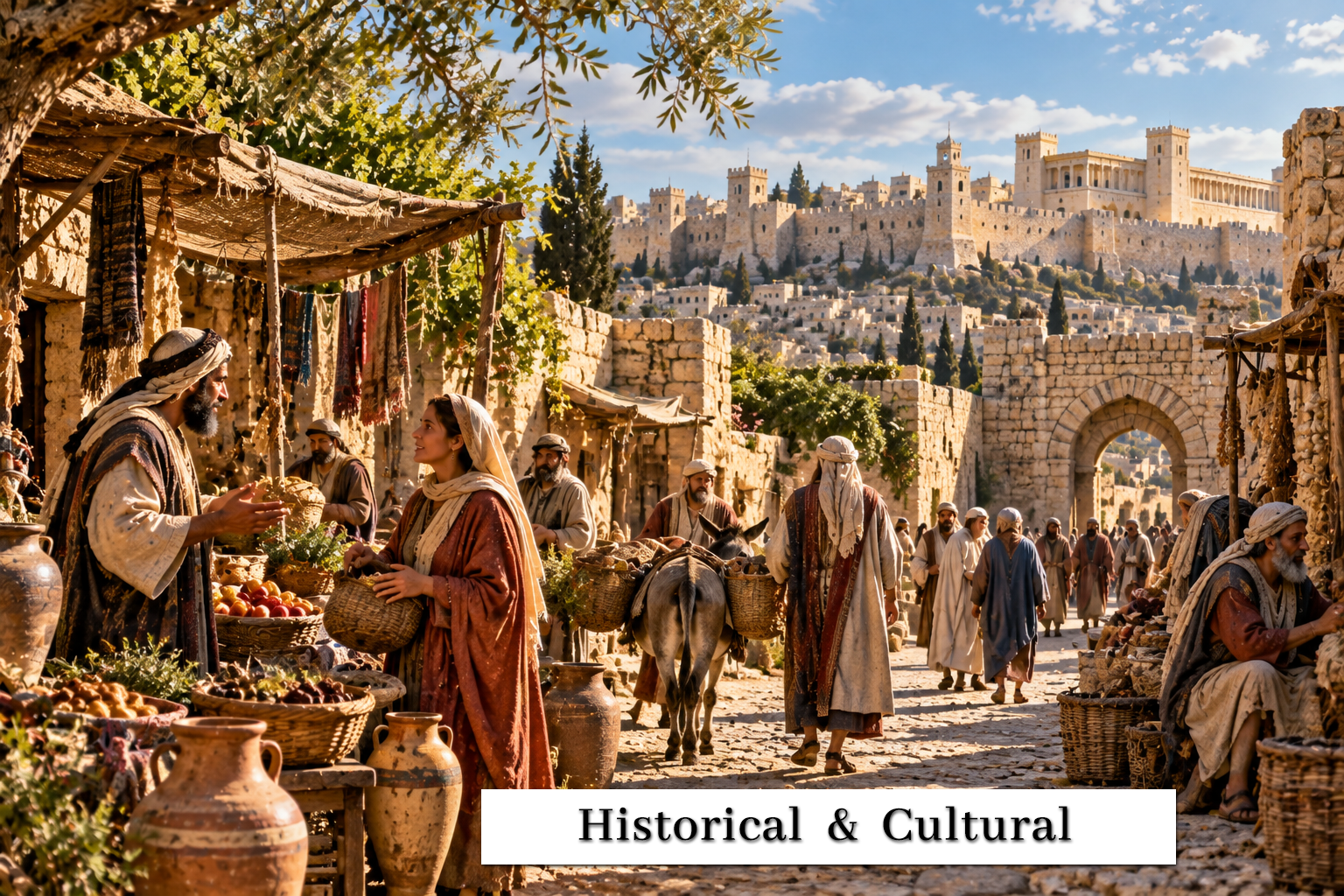
Historical and Cultural Context
Ancient households normally did not use packaged yeast. A portion of fermented dough from an earlier batch could be retained and worked into new dough, where fermentation gradually affected the whole mass. Preparing bread was a routine and labor-intensive household task.
The quantity of flour in Jesus' saying is substantial, emphasizing the amount eventually affected by a relatively small amount of leaven. Although leaven can symbolize corruption in other biblical passages, its meaning here is determined by this particular comparison: a small and initially hidden agent produces a pervasive result.
Why It Matters
The household background helps preserve the force of the image. The kingdom may begin in a way that is inconspicuous, yet its influence works outward until the whole is affected. The parable therefore complements the mustard seed: both contrast modest beginnings with a much greater result.