When the disciples come ashore, they find a charcoal fire already burning, with fish laid on it and bread nearby. The apparently ordinary detail carries unusual narrative resonance in John.
Jesus in Context
The Charcoal Fire on the Shore

The charcoal fire awaiting the disciples recalls the only other charcoal fire in John's Gospel—the fire beside which Peter denied Jesus.
Introduction
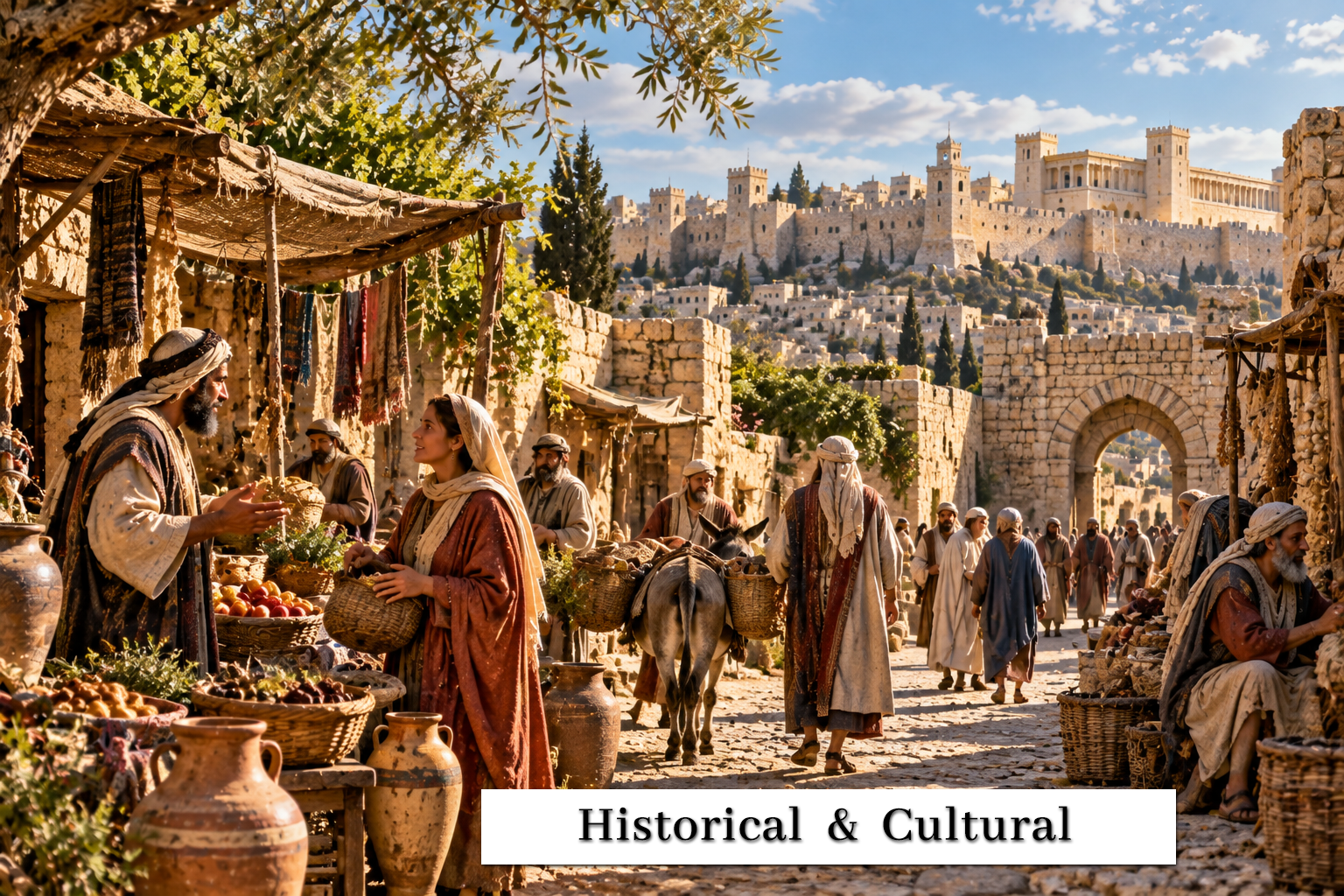
Historical and Cultural Context
The Greek word anthrakia refers specifically to a charcoal fire. John uses this uncommon term twice: servants and officers warm themselves at an anthrakia when Peter denies Jesus in John 18:18, and Jesus has an anthrakia prepared on the shore in John 21:9.
John does not explicitly say that the second fire is intended to remind Peter of the first, but the verbal repetition is conspicuous, especially because the threefold conversation with Peter follows the meal.
Why It Matters
The repeated detail links two scenes without requiring readers to invent a hidden symbolism. Peter's failure occurred beside a charcoal fire; beside another charcoal fire the risen Jesus feeds him and then addresses him personally three times.