Confronted by the risen Jesus, Thomas answers him, 'My Lord and my God.' Jesus accepts the confession and speaks of those who will believe without having seen him physically.
Jesus in Context
My Lord and My God

Thomas directly addresses the risen Jesus as 'My Lord and my God,' providing the climactic confession of Jesus' identity near the end of John's Gospel.
Introduction
Historical and Cultural Context
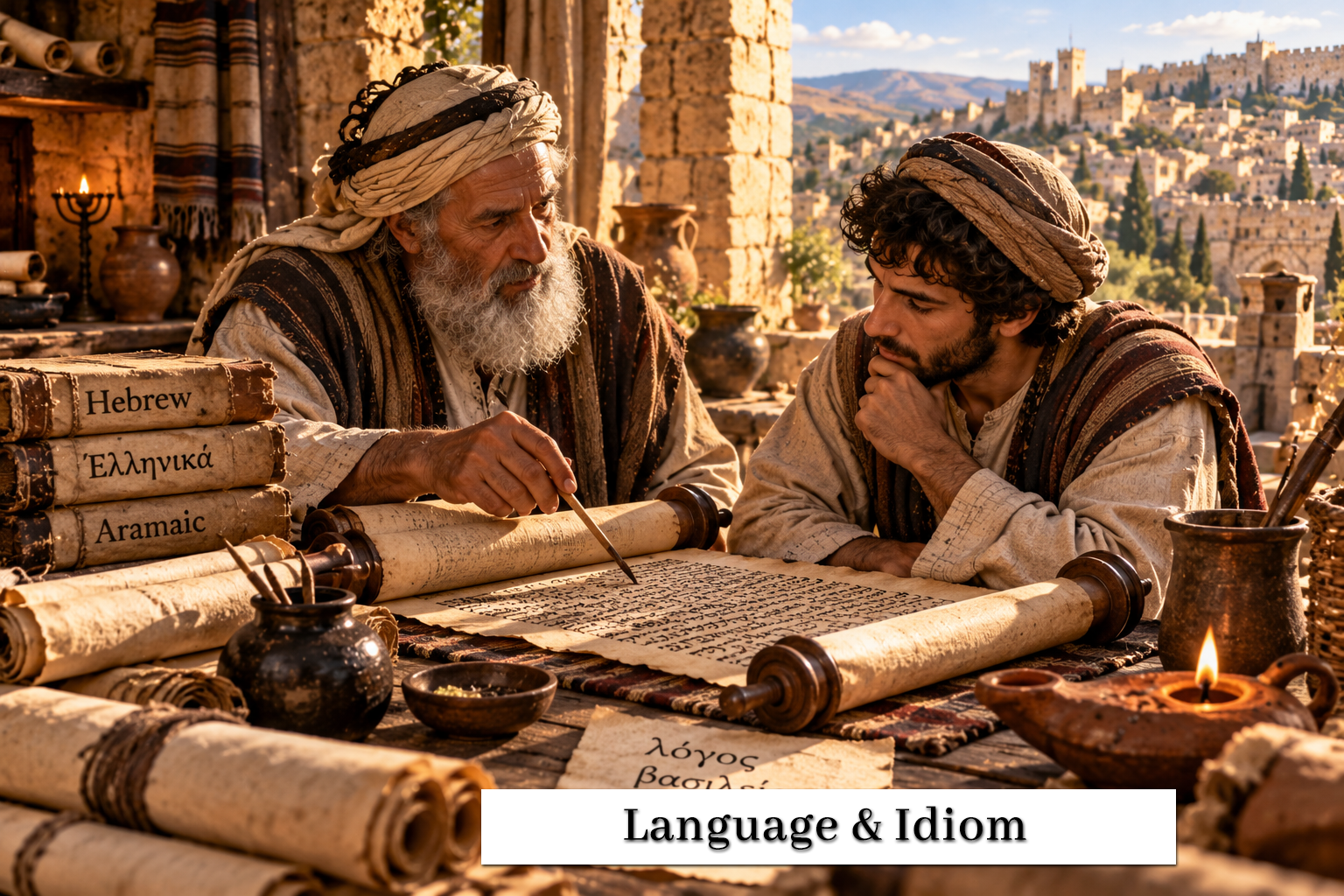
The Greek wording is direct: ho kyrios mou kai ho theos mou, 'my Lord and my God,' and John explicitly says Thomas spoke 'to him'—to Jesus. Although kyrios can range from a respectful 'sir' to the divine title 'Lord,' its pairing here with ho theos mou, 'my God,' removes any reduction of the confession to ordinary politeness. The wording also echoes biblical forms of address to God. Jesus does not correct Thomas or redirect the confession elsewhere.
Why It Matters
The linguistic evidence makes this a major climax of John's high Christology. The Gospel that opened by saying the Word was God now records a disciple directly addressing the risen Jesus as 'my God.'
Thomas' movement from demanded evidence to explicit worshipful confession also prepares John's blessing on later believers who rely on apostolic testimony without seeing Jesus in the same way.