After Pilate again declares Jesus without fault, the accusers answer that they have a law and that Jesus ought to die because he made himself the Son of God. John says Pilate becomes more afraid and questions Jesus again.
Jesus in Context
The Son of God Charge and Pilate's Fear

When Pilate's opponents invoke their law and say Jesus made himself the Son of God, the case shifts again from Roman kingship language to a religious charge that increases Pilate's fear.
Introduction
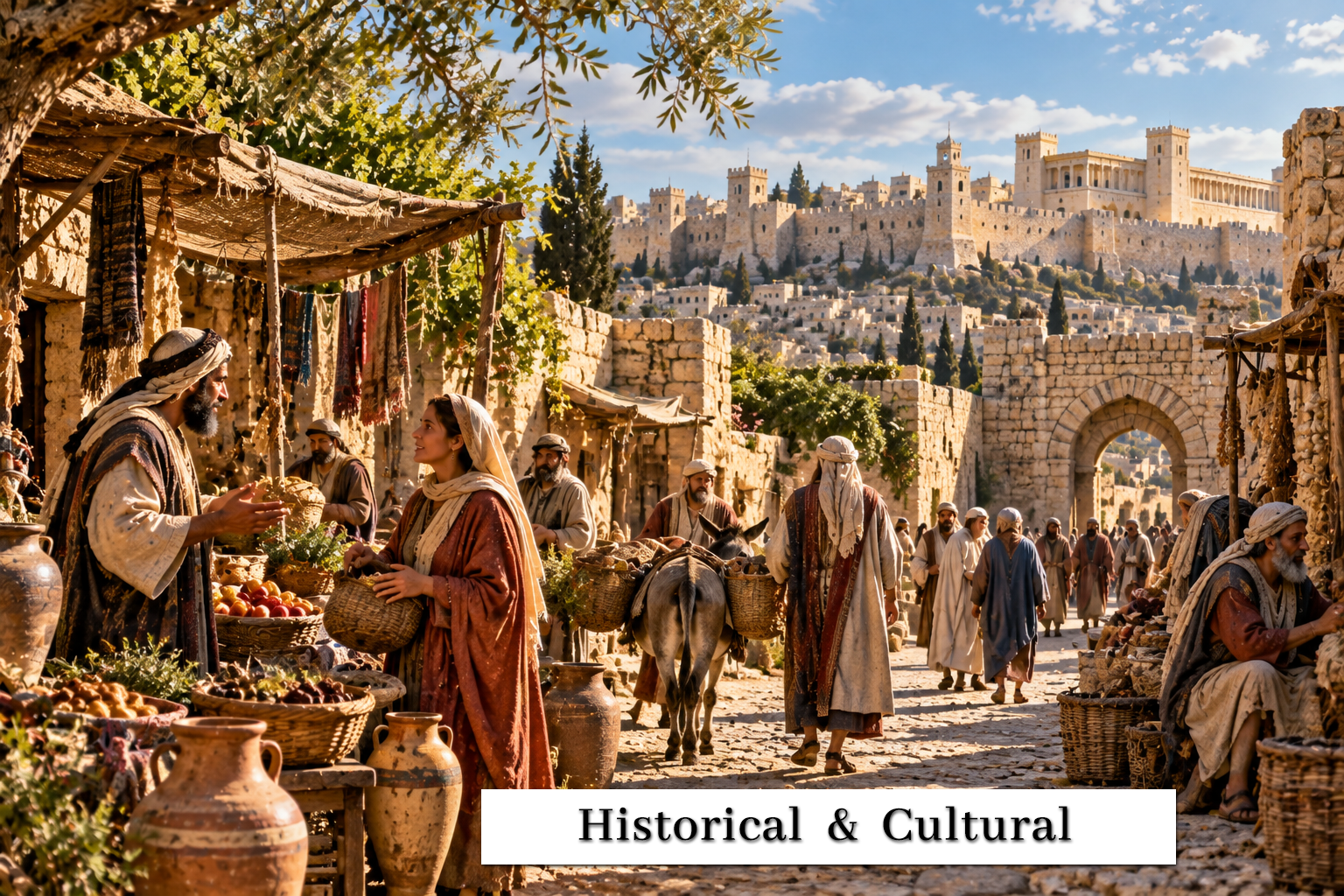
Historical and Cultural Context
The likely legal background is the Torah's treatment of blasphemous or presumptuous claims about God, though John's wording does not provide a formal transcript of a Jewish trial. 'Son of God' also had possible royal and even Greco-Roman resonances, so Pilate's increased fear should not be reduced confidently to one specific pagan belief. John tells us the trigger for the fear but not Pilate's full inner theology. Within John's Gospel, however, divine Sonship is a central and serious claim about Jesus' identity.
Why It Matters
The shift exposes the different categories operating in the proceedings. Pilate has been examining a potential political king; the accusers now articulate the deeper religious issue.
John does not treat Jesus' Sonship as merely a misunderstanding. The charge touches the Christological claim the Gospel has been developing from its opening chapter.