
Jesus in Context

Caesarea Philippi

Historical/Cultural Context •  Matthew Mark
A Visit With Jesus
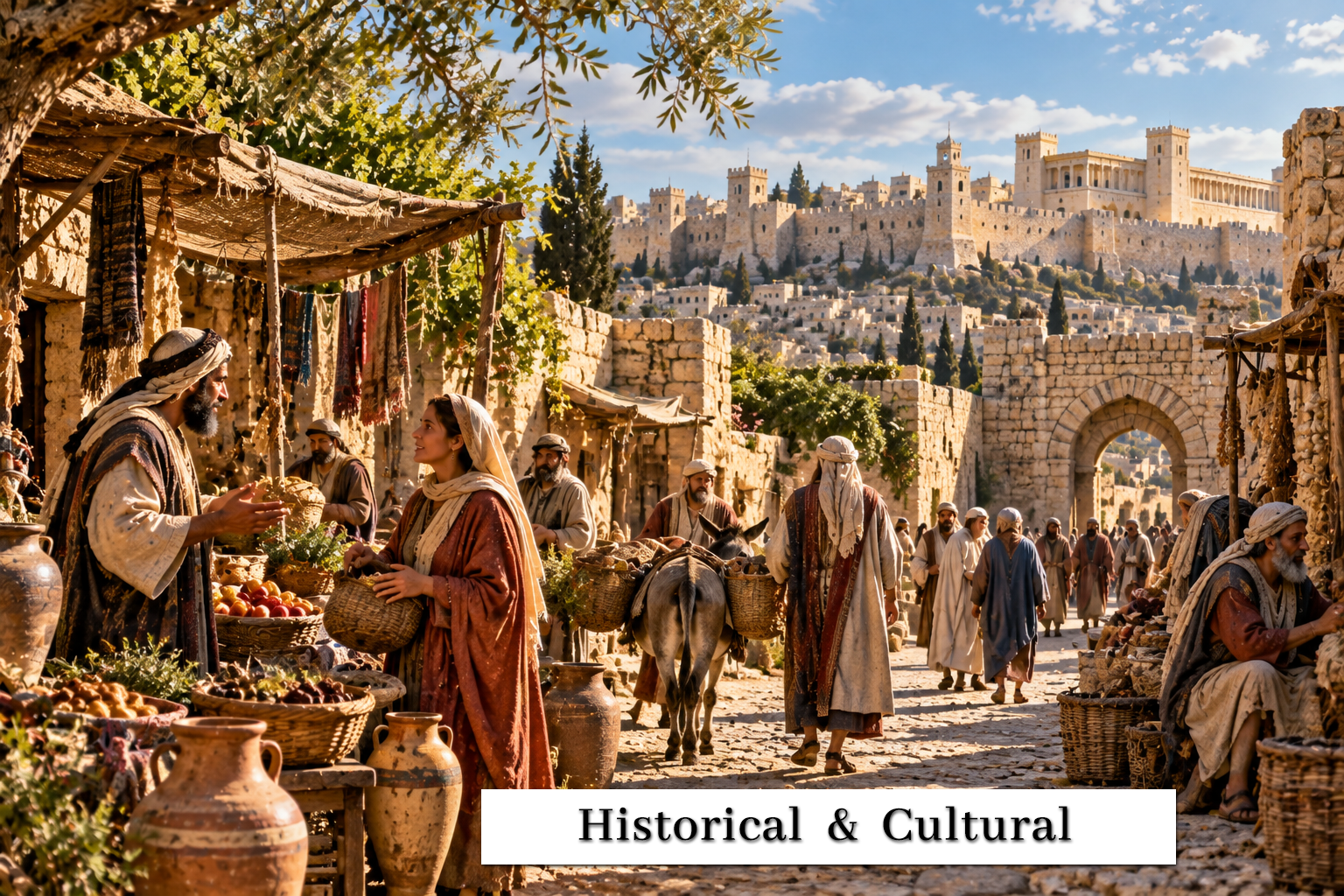
Caesarea Philippi lay in the far north of the region and carried associations with imperial power and pagan worship, providing a striking setting for Peter's confession of Jesus.
Historical/Cultural Context

Introduction

Peter's confession that Jesus is the Christ occurs in the district of Caesarea Philippi. The location is easy to pass over as a travel note, but it placed Jesus and his disciples in a distinctive northern setting away from the main centers of Jewish religious life.

The area's political name and religious landscape form a memorable backdrop to the question, "Whom do you say that I am?"

Historical and Cultural Context

The city was associated with Philip the tetrarch, who developed it and named it in honor of Caesar while distinguishing it from the coastal Caesarea. The region near the sources of the Jordan had long-standing associations with the god Pan and other non-Jewish religious activity.

The Gospel does not explicitly state that Jesus chose the location in order to contrast himself with pagan gods or Caesar, so elaborate symbolic claims should be made cautiously. What can be said securely is that the confession occurs in a politically and religiously distinctive environment.

Why It Matters

The geography adds texture to one of the Gospel's central identity scenes. Jesus asks about his identity in a place whose very name advertises imperial rule and whose surroundings were associated with other forms of worship.

The setting does not create Peter's confession, but it helps a modern reader appreciate how far-reaching the confession "You are the Christ" sounds within the world in which it was spoken.

Scripture References

Related People

Related Places