Jesus in Context

Roman Crucifixion

Political/Legal Context •  Matthew Mark Luke John
A Visit With Jesus
Crucifixion was a Roman public execution designed not only to kill but also to expose, humiliate, and warn; that social and political setting is essential to understanding the scandal of a crucified Messiah.
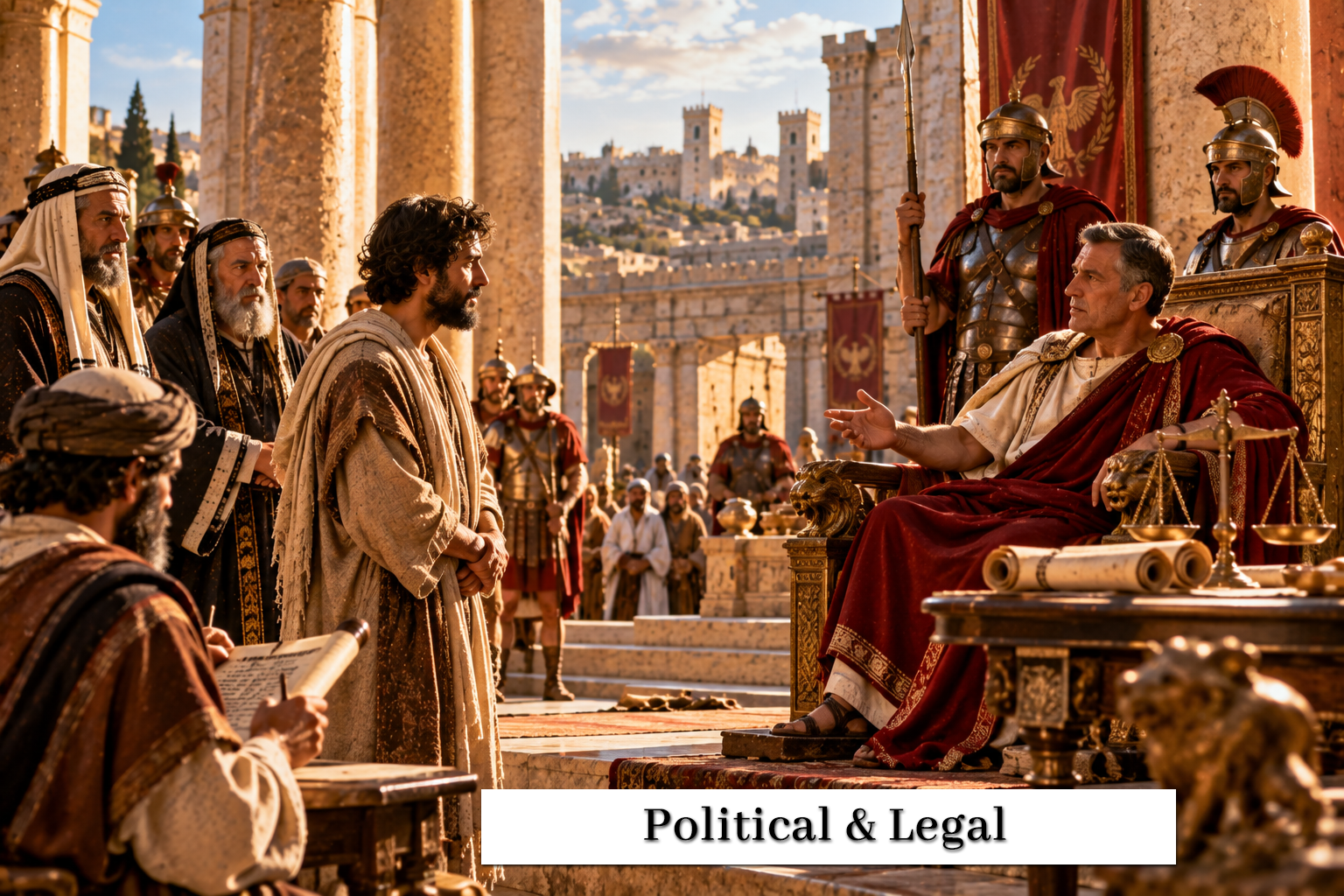
Political/Legal Context

Introduction

The Gospel writers describe Jesus' crucifixion with comparatively little explanation because their first readers already knew what Roman crucifixion meant. Modern readers are more distant from that world and can miss how deliberately public, degrading, and politically charged the punishment was.

Jesus' death takes place not as a private execution but under Roman authority and beneath a charge identifying him as "King of the Jews." The method of death itself communicates shame and imperial power.

Historical and Cultural Context

Rome used crucifixion particularly for slaves, rebels, provincials, and others whose execution could serve as a public warning. Practices varied, so there was no single mechanical procedure that must be reconstructed in every detail. Condemned persons could be scourged, forced to carry part of the execution apparatus, stripped, affixed to a cross by nails or other means, and left exposed to prolonged suffering and public ridicule.

The punishment attacked social dignity as well as the body. Exposure before spectators, helplessness, mockery, and the location of executions where they could be seen all contributed to its deterrent purpose. Roman citizens were ordinarily protected from crucifixion, reinforcing its association with degradation and subjection.

The Gospels emphasize different details but agree that Jesus was crucified under Roman authority. Speculative medical reconstructions can go beyond the evidence; the historical point does not depend on identifying one precise physiological cause of death. Crucifixion itself was a brutal Roman instrument of execution and humiliation.

Why It Matters

For the first Christian proclamation, "Christ crucified" joined two ideas that did not naturally belong together in ordinary expectations: God's Messiah and a form of death associated with shame, defeat, and Roman domination. The cultural scandal was therefore greater than the modern familiarity of the cross as a respected religious symbol may suggest.

This setting also illuminates the Gospel mockery surrounding Jesus. Royal claims, the inscription "King of the Jews," the crown and robe, and the cross all converge in a scene in which Rome appears to display and destroy a failed king. The Gospel presentation reverses that verdict: the very event intended to shame Jesus becomes central to the proclamation of who he is and what his death accomplishes.

Remembering what crucifixion meant in its own world restores some of the shock that centuries of Christian art and symbolism can unintentionally soften.

Scripture References